

The 2026 housing market forecast anticipates an 8% median home price appreciation alongside notable shifts in mortgage rates, driven by economic stability, supply-demand dynamics, and evolving monetary policies affecting affordability and investment potential.
The landscape of real estate is constantly evolving, and understanding the future trajectory is crucial for both homeowners and prospective buyers. The 2026 housing market forecast suggests a significant period of adjustment and growth, with experts predicting an approximate 8% median home price appreciation coupled with notable shifts in mortgage rates. This outlook is not merely a number; it reflects a complex interplay of economic indicators, demographic changes, and policy decisions that will redefine housing affordability and investment opportunities across the United States. Preparing for these changes means delving into the underlying forces at play.
Understanding the Economic Drivers Behind the 2026 Forecast
The projected 8% median home price appreciation in the 2026 housing market is not an isolated phenomenon; it is deeply rooted in broader economic trends. Factors such as inflation, employment rates, and overall economic growth play pivotal roles in shaping housing demand and pricing. A robust job market, for instance, typically translates into higher consumer confidence and greater purchasing power, fueling demand for homes. Conversely, persistent inflationary pressures can erode affordability, even if wages are rising.
Government policies and central bank decisions also exert considerable influence. Interest rate adjustments by the Federal Reserve, in particular, directly impact mortgage rates, which in turn affect monthly housing costs. Understanding these interconnected economic drivers is fundamental to grasping the nuances of the upcoming market shifts.
Inflationary Pressures and Their Impact
Inflation remains a critical concern for economists and homebuyers alike. While central banks aim for stable inflation, unexpected spikes or prolonged periods of high inflation can significantly alter the housing market’s trajectory. When the cost of goods and services rises, so too does the cost of construction materials and labor, pushing new home prices higher.
- Material Costs: Fluctuations in the price of lumber, steel, and other essential building materials directly affect construction budgets.
- Labor Shortages: A shortage of skilled construction workers can drive up labor costs, contributing to higher home prices.
- Consumer Spending: High inflation can reduce discretionary income, impacting a buyer’s ability to save for a down payment or afford higher mortgage payments.
The relationship between inflation and housing prices is complex, often leading to a paradoxical situation where real estate is seen as a hedge against inflation, yet its affordability is simultaneously challenged by it. Monitoring inflation trends will be key to understanding how the 2026 market unfolds.
Employment Rates and Wage Growth
A healthy labor market is a cornerstone of a strong housing market. When employment rates are high and wage growth is steady, more individuals and families have the financial stability to consider homeownership. This increased demand naturally puts upward pressure on prices. However, the distribution of wage growth matters; if gains are concentrated in specific sectors or income brackets, the impact on broad housing affordability may be uneven.
The 2026 outlook suggests continued positive trends in employment, supporting the projected appreciation. However, regional variations in job growth could lead to different housing market experiences across the country. Areas with booming industries and high-paying jobs are likely to see more aggressive price increases.
In conclusion, the economic environment, characterized by controlled inflation, strong employment, and balanced wage growth, will be the primary engine driving the anticipated 8% median home price appreciation. These factors collectively create a favorable climate for sellers while presenting new challenges and opportunities for buyers.
Projected Mortgage Rate Shifts and Borrower Impact
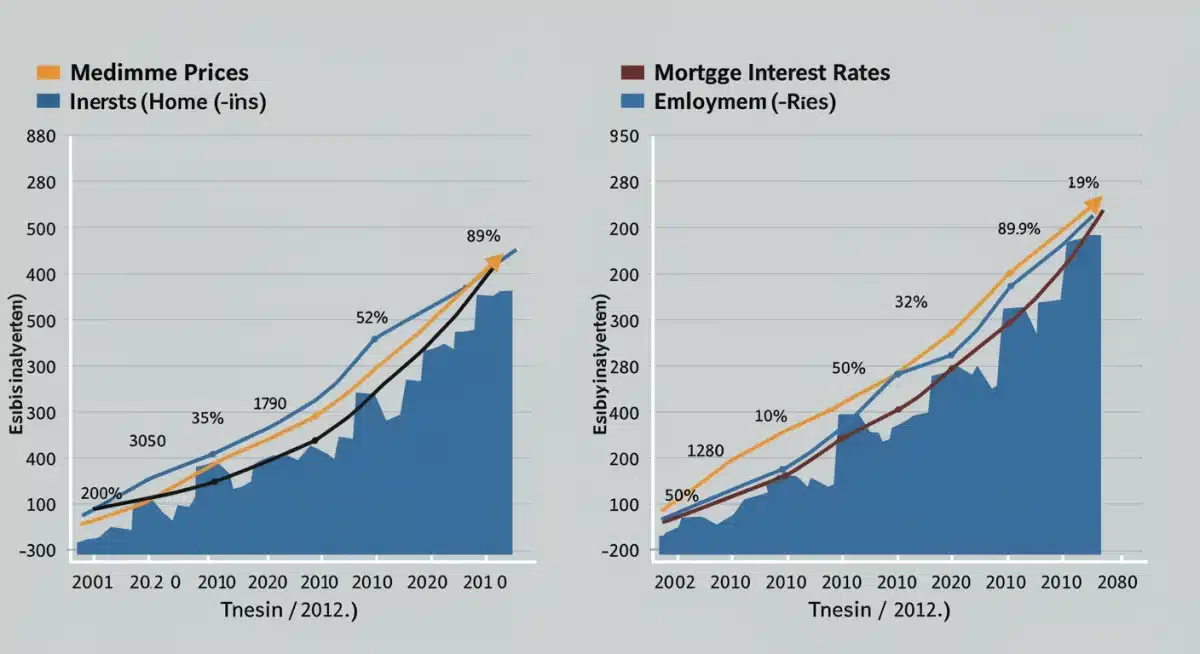
Beyond home prices, a major component of the 2026 housing market forecast involves anticipated shifts in mortgage rates. These rates are influenced by a myriad of factors, including Federal Reserve policy, economic growth, and global financial market stability. Predicting their movement is crucial for potential homebuyers, as even small fluctuations can significantly alter monthly payments and overall affordability.
Experts suggest that while rates might not return to the historic lows seen in previous years, they are expected to stabilize or even see slight adjustments, creating a more predictable borrowing environment. This predictability, however, does not necessarily mean lower rates across the board, but rather a clearer picture of what borrowers can expect when securing a loan.
Federal Reserve Policy and Interest Rates
The Federal Reserve’s monetary policy decisions are perhaps the most influential factor in determining mortgage rates. When the Fed raises its benchmark interest rate, it typically leads to higher borrowing costs across the economy, including mortgages. Conversely, a reduction in the federal funds rate can ease these costs. The 2026 outlook is informed by expectations of the Fed’s approach to managing inflation and economic growth, balancing these objectives with financial stability.
- Quantitative Tightening: The Fed’s ongoing efforts to reduce its balance sheet can put upward pressure on long-term interest rates, affecting mortgages.
- Inflation Targets: The Fed’s success in achieving its inflation targets will dictate future rate decisions, impacting the cost of borrowing.
- Economic Data: Employment reports, GDP growth, and consumer price index figures all influence the Fed’s policy stance and, consequently, mortgage rates.
Anticipating the Fed’s moves requires careful analysis of economic data and forward guidance from policymakers. Borrowers should stay informed about these developments to make timely decisions.
Impact on Affordability and Buyer Behavior
Changes in mortgage rates have a direct and profound impact on housing affordability. Higher rates mean higher monthly payments, reducing the purchasing power of homebuyers even if home prices remain stable. For those on the cusp of qualifying for a mortgage, even a small rate increase can make homeownership unattainable.
The projected rate shifts in 2026 will likely lead to a more cautious approach from buyers, with a greater emphasis on pre-approval and locking in rates when favorable. This might also encourage some buyers to consider adjustable-rate mortgages (ARMs) if initial rates are significantly lower, though this comes with its own set of risks. Understanding one’s financial limits and the long-term implications of different mortgage products will be more critical than ever.
In summary, the expected mortgage rate shifts in 2026 will be a key determinant of market activity and affordability. While rates may stabilize, their impact on monthly housing costs will remain a central consideration for all participants in the housing market.
Supply and Demand Dynamics: A Balancing Act
The fundamental principles of supply and demand continue to heavily influence the 2026 housing market forecast. The persistent imbalance between the number of available homes for sale and the strong buyer demand has been a primary driver of price appreciation in recent years. While new construction has picked up pace, it often struggles to keep up with the demographic shifts and evolving housing preferences across the United States. This ongoing tension is expected to continue shaping the market’s trajectory.
Understanding where supply is constrained and where demand is highest provides critical insights into regional market performance. A national average masks significant local variations, making localized analysis essential for both buyers and sellers.
Inventory Levels and New Construction
The inventory of homes for sale has been notoriously low in many markets, contributing to bidding wars and rapid price increases. While new construction is attempting to alleviate some of this pressure, several factors hinder its ability to fully meet demand. These include rising material costs, labor shortages, and regulatory hurdles that can slow down development. The 2026 forecast anticipates a gradual improvement in inventory, but likely not enough to completely rebalance the market.
- Permitting Delays: Local regulations and approval processes can significantly delay the start and completion of new housing projects.
- Infrastructure Constraints: The availability of land with adequate infrastructure (roads, utilities) is often limited, particularly in desirable areas.
- Developer Confidence: Economic uncertainty can make developers hesitant to launch large-scale projects, further impacting supply.
A sustained increase in new housing starts, especially for entry-level and mid-range homes, would be crucial for moderating price growth and improving affordability. Without it, the supply-demand imbalance will likely persist.
Demographic Shifts and Buyer Preferences
Demographic trends play a significant role in shaping housing demand. The large millennial generation, now reaching prime homeownership age, continues to drive a substantial portion of buyer activity. Their preferences for specific types of homes, locations, and amenities have a profound impact on market trends. Additionally, the increasing longevity of older generations means that fewer homes are entering the market as quickly as in previous decades.
The rise of remote work has also altered buyer preferences, leading to increased demand in suburban and rural areas that were once less competitive. This shift has created new pockets of high demand and price appreciation, influencing the broader national forecast. The 2026 market will continue to reflect these evolving preferences, with flexibility and home office space remaining key considerations for many buyers.
Ultimately, the delicate balancing act between housing supply and buyer demand will remain a defining characteristic of the 2026 housing market. While some improvements in inventory are expected, strong demographic-driven demand will likely ensure continued price appreciation, albeit at a more moderate pace in some regions.
Regional Market Performance: A Divergent Landscape
While the overall 2026 housing market forecast predicts an 8% median home price appreciation nationally, it is imperative to recognize that the real estate market is inherently local. Performance will vary significantly from region to region, and even from city to city within the same state. Factors such as local economic conditions, population growth, housing policies, and specific industry trends will create a divergent landscape across the United States. What might be a seller’s market in one area could be a more balanced or even a buyer’s market in another.
Understanding these regional differences is critical for anyone looking to buy, sell, or invest in real estate in 2026. A blanket national forecast, while useful for general perspective, does not provide the granular detail needed for informed decision-making.
High-Growth vs. Stabilizing Markets
Some regions, particularly those with robust job growth in tech, healthcare, or other expanding sectors, are likely to continue experiencing above-average price appreciation. These markets often attract a steady influx of new residents, sustaining high demand despite elevated prices. Conversely, other regions might see a stabilization or even a slight cooling of prices, especially if they have experienced rapid, unsustainable growth in previous years or face local economic headwinds.
Examples of factors contributing to high-growth markets include:
- Tech Hubs: Cities with a strong presence of technology companies tend to have high-paying jobs and attract a skilled workforce, driving housing demand.
- Population Influx: Regions experiencing significant net migration often see increased competition for housing.
- Limited Land Availability: Geographically constrained areas or those with strict zoning laws can limit new construction, pushing up existing home values.
On the other hand, factors leading to market stabilization or cooling might include an oversupply of new homes, a decline in local employment opportunities, or a general out-migration of residents. Analyzing these local dynamics is key.
Impact of Remote Work on Local Markets
The widespread adoption of remote and hybrid work models has profoundly reshaped housing demand patterns. Many individuals and families are no longer tethered to major metropolitan areas, leading to increased interest and price appreciation in suburban, exurban, and even rural communities. This trend is expected to continue influencing regional markets in 2026, as people prioritize affordability, space, and quality of life over proximity to a physical office.
This shift has created opportunities in previously overlooked areas but has also intensified competition and driven up prices in these emerging desirable locations. Investors and homebuyers alike need to consider how these evolving work patterns will affect specific local markets. The decentralization of the workforce means that what was once a secondary market might now be a primary one, experiencing significant growth.
In conclusion, the 2026 housing market will be a mosaic of diverse regional performances. While the national forecast provides a general direction, informed decisions will require a deep dive into the unique economic, demographic, and policy conditions of specific local markets.
Investment Opportunities and Risks in the 2026 Market
The anticipated 8% median home price appreciation in the 2026 housing market forecast naturally brings investment opportunities to the forefront, but also carries inherent risks. Investors, from individual landlords to large institutional funds, will need to carefully navigate this environment. The interplay of rising home values, fluctuating mortgage rates, and evolving rental demand creates a complex landscape where strategic planning is paramount. Understanding where to find value and how to mitigate potential downsides will be key to success.
The market will likely favor those who conduct thorough due diligence, understand local market dynamics, and have a clear investment strategy aligned with their risk tolerance. Passive investment may prove more challenging than in previous boom cycles.
Residential Real Estate as an Investment
Residential real estate has historically been a popular investment vehicle, offering potential for both capital appreciation and rental income. In a market expecting 8% price growth, the allure of capital gains is significant. However, investors must also consider the costs associated with property ownership, such as property taxes, insurance, maintenance, and potential vacancies. The projected mortgage rate shifts will also impact the cost of financing investment properties, potentially reducing cash flow for leveraged purchases.
- Rental Market Dynamics: Analyzing local rental demand and average rental yields is crucial for investors focused on income generation.
- Property Management: Successful residential real estate investment often requires effective property management, either personally or through a professional service.
- Long-Term vs. Short-Term Gains: Investors need to decide if their strategy is focused on long-term appreciation or shorter-term gains through strategies like flipping, each with different risk profiles.
The 2026 market could present opportunities for investors seeking stable assets with growth potential, but careful financial modeling and market research will be essential.
Managing Risk in a Shifting Market
Every investment carries risk, and the housing market is no exception. While appreciation is forecast, unexpected economic downturns, significant increases in interest rates, or changes in local housing policy could impact returns. Investors should prioritize diversification and maintain a healthy cash reserve to weather potential market volatility.
One primary risk in 2026 will be overpaying for properties in highly competitive markets, leaving little room for error if prices do not appreciate as expected. Another is the potential for increased regulatory scrutiny on rental properties, impacting landlord profitability. Conducting stress tests on potential investments, considering various interest rate scenarios and vacancy rates, can help mitigate these risks. Due diligence on property condition and neighborhood trends will also be more important than ever.
In essence, the 2026 housing market offers attractive investment prospects due to anticipated appreciation, but success will hinge on a disciplined approach to risk management, thorough market analysis, and a clear understanding of financial leverage.
Affordability Challenges and Solutions for Homebuyers
The projected 8% median home price appreciation in the 2026 housing market forecast, combined with fluctuating mortgage rates, will undoubtedly intensify affordability challenges for many prospective homebuyers. While a growing economy generally supports higher home values, it also necessitates innovative solutions and strategic planning for individuals and families striving to achieve homeownership. The dream of owning a home remains strong, but the path to get there is becoming increasingly complex, requiring a proactive approach to financial preparation and market navigation.
Addressing affordability goes beyond just price; it encompasses the entire cost of homeownership, including property taxes, insurance, and maintenance, all of which are subject to inflation and market fluctuations.
Strategies for Navigating High Prices
In a market characterized by rising home prices, buyers need to employ savvy strategies to make their homeownership goals a reality. This often involves a combination of financial discipline and flexibility in their search. Saving a larger down payment can reduce the loan amount and, consequently, the monthly mortgage payment, making higher-priced homes more manageable. Exploring different loan products, such as FHA or VA loans, which offer lower down payment requirements, can also be beneficial for eligible buyers.
- Budgeting and Savings: Rigorous budgeting and consistent savings are paramount to accumulate a sufficient down payment and closing costs.
- Credit Score Improvement: A higher credit score can unlock better mortgage rates, significantly reducing the long-term cost of a home.
- Exploring Alternative Locations: Being open to less competitive neighborhoods or even adjacent towns can often lead to more affordable options without sacrificing too much on amenities or commute times.
Buyers should also be prepared for potential bidding wars in desirable areas and understand the importance of making a strong, competitive offer.
Government Programs and Financial Assistance
Various government programs and financial assistance initiatives are designed to help first-time homebuyers and those with limited incomes overcome affordability barriers. These programs can offer down payment assistance, closing cost credits, or favorable loan terms. federal, state, and local governments often provide resources that can significantly ease the financial burden of purchasing a home. Staying informed about these options is crucial for maximizing buying power.
For example, some programs offer grants that do not need to be repaid, while others provide low-interest loans that can be combined with a primary mortgage. Eligibility requirements vary, so researching local and national programs thoroughly is highly recommended. Housing counseling services can also provide invaluable guidance on navigating these resources and preparing for homeownership.
In conclusion, while affordability will remain a key challenge in the 2026 housing market, proactive financial planning, strategic market navigation, and leveraging available assistance programs can significantly empower homebuyers to achieve their aspirations.
Long-Term Outlook and Future Market Trends
Looking beyond the immediate 2026 housing market forecast, it’s essential to consider the long-term outlook and emerging trends that will shape real estate for years to come. The housing market is a dynamic entity, constantly influenced by technological advancements, environmental considerations, and evolving societal values. While predicting the distant future is always speculative, understanding these underlying currents can help stakeholders prepare for sustained changes and potential disruptions.
The focus shifts from annual percentage gains to structural transformations that will redefine how, where, and why people buy and sell homes. Sustainability, smart home technology, and evolving urban planning will play increasingly significant roles.
Sustainability and Green Building
The growing emphasis on environmental sustainability is rapidly transforming the construction and real estate industries. In the long term, homes built with energy-efficient materials, renewable energy systems, and sustainable practices are likely to command a premium. Buyers are increasingly prioritizing homes that offer lower utility bills, reduced environmental impact, and a healthier living environment. This trend will drive innovation in building techniques and materials, making green homes a more common and desirable option.
- Energy Efficiency: Features like solar panels, advanced insulation, and energy-efficient appliances will become standard expectations.
- Resilience: Homes designed to withstand extreme weather events and climate change impacts will gain importance in various regions.
- Smart Home Integration: Technology that optimizes energy use and enhances comfort will be seamlessly integrated into new constructions.
Developers who embrace sustainable building practices will likely gain a competitive advantage in the future market, aligning with evolving consumer values and regulatory pressures.
Technological Advancements in Real Estate
Technology continues to revolutionize the real estate sector, from how homes are marketed and sold to how they are managed and financed. Artificial intelligence, virtual reality, and blockchain technology are already making inroads and are expected to have an even greater impact in the long term. These advancements can streamline processes, enhance transparency, and provide more personalized experiences for buyers and sellers.
For instance, AI-powered analytics can offer more precise property valuations and market predictions, while virtual reality tours can allow prospective buyers to explore homes remotely with unprecedented immersion. Blockchain could revolutionize property title transfers, making them more secure and efficient. These technological shifts will reshape the roles of real estate professionals and empower consumers with more information and control.
In conclusion, the long-term outlook for the housing market extends beyond short-term price fluctuations. It encompasses a fundamental shift towards sustainability, technological integration, and a more responsive, data-driven approach to real estate. These trends will collectively shape the future of homeownership and investment.
| Key Aspect | 2026 Forecast Summary |
|---|---|
| Median Home Price | Anticipated 8% appreciation, driven by economic stability and demand. |
| Mortgage Rates | Expected stabilization with potential slight adjustments, influenced by Fed policy. |
| Supply & Demand | Continued imbalance, with gradual inventory improvement but strong buyer demand. |
| Affordability | Challenges persist, requiring strategic planning and leveraging assistance programs. |
Frequently Asked Questions About the 2026 Housing Market
Yes, experts forecast a potential 8% median home price appreciation in 2026. This growth is primarily driven by strong economic indicators, including stable employment and wage growth, coupled with persistent demand and ongoing inventory constraints across many regions of the United States.
While specific rate predictions vary, the general outlook for 2026 suggests a period of stabilization, potentially with slight adjustments. Mortgage rates are not expected to return to historic lows, but a more predictable borrowing environment is anticipated, influenced by Federal Reserve policies and broader economic conditions.
Several factors contribute to home price appreciation, including robust economic growth, high employment rates, and wage increases that boost buyer confidence. Additionally, a continued imbalance between housing supply and strong buyer demand, exacerbated by limited new construction, plays a significant role in pushing prices upward.
Homebuyers in 2026 will likely face ongoing affordability challenges due to rising home prices and elevated mortgage rates. Competition for desirable properties may persist, requiring strategic approaches like larger down payments, improved credit scores, and exploring government assistance programs to secure homeownership.
Yes, the anticipated 8% home price appreciation presents potential investment opportunities in residential real estate. However, investors must carefully consider fluctuating mortgage rates, local rental market dynamics, and operational costs. Thorough due diligence and a clear risk management strategy are crucial for successful investment in this evolving market.
Conclusion
The 2026 housing market forecast paints a picture of continued growth and dynamic shifts, with a projected 8% median home price appreciation and evolving mortgage rate landscapes. This outlook is a testament to the complex interplay of economic stability, supply-demand fundamentals, and strategic monetary policy. For both prospective homeowners and seasoned investors, understanding these intertwined forces is not merely beneficial but essential. While challenges like affordability will persist, a well-informed and strategic approach, coupled with an awareness of regional variations and available assistance programs, can unlock significant opportunities. The future of the housing market demands adaptability and a keen eye on the macroeconomic currents that shape its every turn, promising a period of both opportunity and necessary adjustments for all participants.

 2026 IRS Tax Code Changes: Small Business Action Plan
  Bond yield volatility effects on mortgage rates US: risks?