
Bridging the Gap: 6 Initiatives Tackling the Digital Divide in U.S. Education by 2027

Anúncios
The digital age has fundamentally reshaped the landscape of education, transforming how students learn, how teachers instruct, and how educational resources are accessed. However, this transformation has also cast a stark light on a persistent and critical issue: the digital divide in U.S. education. This divide refers to the gap between those who have ready access to modern information and communication technology (ICT) and those who do not. It encompasses not just access to devices and internet connectivity but also the skills and support necessary to effectively utilize these tools for learning.
In an era where remote learning can become a necessity, and digital literacy is as crucial as traditional literacy, the consequences of this divide are profound. Students without reliable internet or adequate devices are at a significant disadvantage, impacting their academic performance, their ability to complete homework, and their preparation for a future workforce that increasingly demands digital proficiency. This issue is particularly acute in low-income communities, rural areas, and among certain minority groups, exacerbating existing educational inequalities.
Anúncios
Recognizing the urgency of this challenge, various stakeholders—from federal and state governments to non-profit organizations and private companies—are actively working to bridge this gap. Their efforts are converging on a common goal: to ensure that by 2027, every student in the United States has equitable access to the digital tools and resources needed to succeed. This article will delve into six significant initiatives currently underway or planned to tackle the digital divide education problem, providing a comprehensive overview of the strategies and progress being made.
Anúncios
Understanding the Digital Divide in U.S. Education
Before exploring the solutions, it’s essential to grasp the multifaceted nature of the digital divide education challenge. It’s not merely about owning a computer; it’s about a holistic ecosystem of access, affordability, and digital literacy. The divide manifests in several key areas:
- Access to Devices: Many students lack personal computers, laptops, or tablets at home, making it difficult to complete digital assignments or engage in online learning.
- Internet Connectivity: Even with devices, a significant number of households, particularly in rural and low-income urban areas, lack reliable, high-speed internet access. This ‘homework gap’ means students cannot connect to online resources or participate in virtual classrooms.
- Affordability: The cost of devices and internet services can be prohibitive for many families, forcing them to choose between essential needs and educational technology.
- Digital Literacy and Skills: Beyond physical access, there’s a gap in the ability to effectively use digital tools. Students, and sometimes even educators and parents, may lack the necessary digital literacy skills to navigate online platforms, critically evaluate information, or use productivity software.
- Technical Support: When issues arise with devices or internet connections, access to technical support can be limited, leading to prolonged disruptions in learning.
The COVID-19 pandemic starkly highlighted these disparities, forcing millions of students into remote learning environments where the digital divide education became an immediate barrier to continued education. While many schools and districts made heroic efforts to distribute devices and hotspots, the underlying systemic issues persisted. Addressing these complex layers requires a multi-pronged approach, which is precisely what the following initiatives aim to provide.
Initiative 1: The Emergency Connectivity Fund (ECF) Program
One of the most significant federal responses to the digital divide education accelerated by the pandemic is the Emergency Connectivity Fund (ECF) Program. Established as part of the American Rescue Plan Act of 2021, the ECF provides $7.17 billion to schools and libraries for the purchase of laptop and tablet computers, Wi-Fi hotspots, modems, routers, and broadband connectivity for students, school staff, and library patrons at their homes.
The ECF is administered by the Federal Communications Commission (FCC) and is designed to ensure that students can continue to engage in remote learning by providing the necessary tools and internet access. As of late 2023, the program has already committed billions of dollars, helping millions of students connect. The goal is to sustain this impact through 2027, ensuring that the initial investments translate into long-term equitable access. This initiative directly addresses the critical issues of device access and internet connectivity, especially for families who otherwise couldn’t afford them.
The ECF represents a crucial step towards universal connectivity for students. By funding equipment and services, it removes immediate financial barriers. However, its success hinges on continued funding and effective distribution by schools and libraries, ensuring that the devices and connections reach the students who need them most. The program also encourages schools to develop sustainable plans for technology integration beyond the funding period, fostering long-term digital equity.
Initiative 2: Expanding Broadband Infrastructure in Rural and Underserved Areas
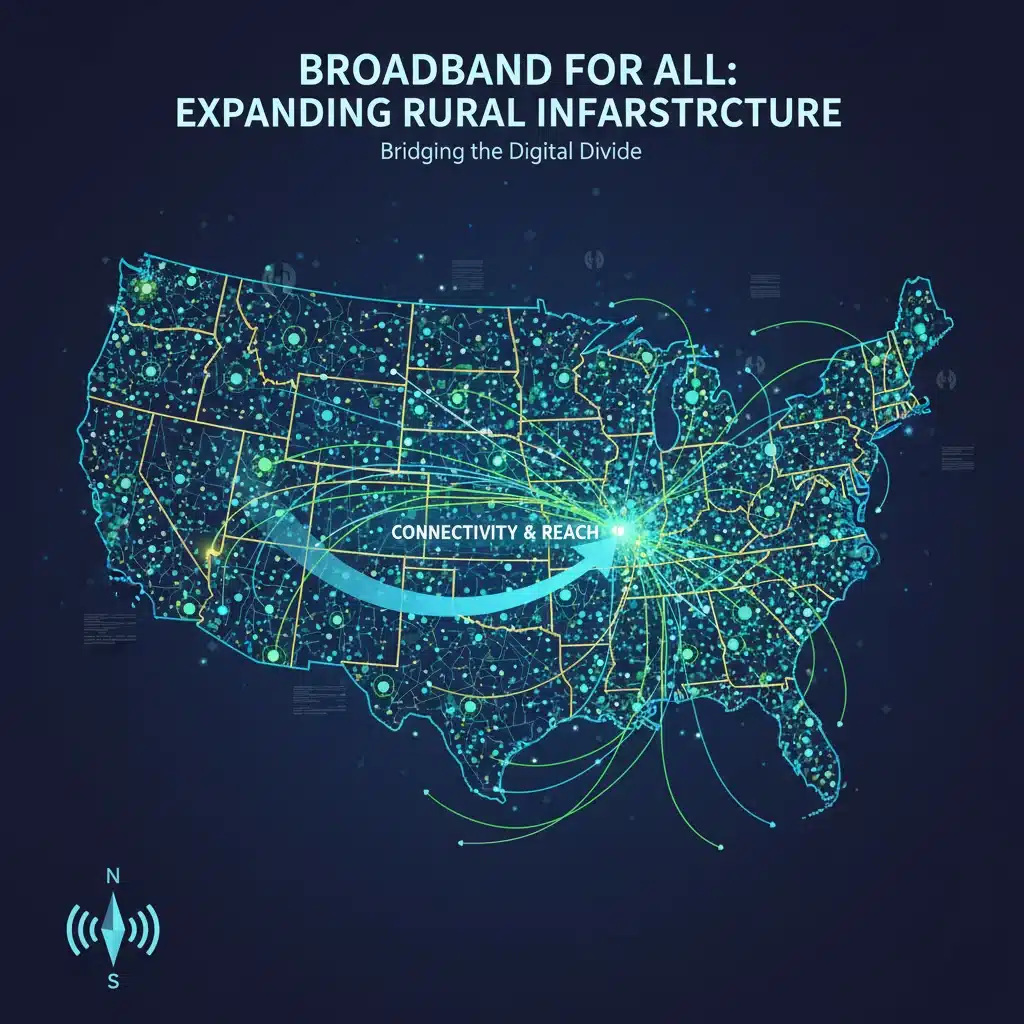
A fundamental aspect of addressing the digital divide education is ensuring that high-speed internet infrastructure reaches every corner of the nation. Many rural and remote communities still lack access to reliable broadband, making online learning a distant dream for countless students. Several federal and state programs are dedicated to expanding this critical infrastructure.
The Broadband Equity, Access, and Deployment (BEAD) Program, funded by the Bipartisan Infrastructure Law, allocates $42.45 billion to states, territories, and tribal lands to expand high-speed internet access. This massive investment aims to ensure that every American has access to affordable, reliable high-speed internet by 2027. While not exclusively focused on education, BEAD’s success is directly correlated with closing the educational digital divide, as it lays the foundational infrastructure necessary for digital learning.
State-level initiatives also play a vital role. Many states have established their own broadband offices and funding programs to incentivize internet service providers (ISPs) to build out networks in unserved and underserved areas. These efforts often involve public-private partnerships, leveraging both government funding and private sector expertise to accelerate deployment. The focus is not just on availability but also on ensuring that the broadband is affordable and robust enough to support multiple users simultaneously in a household, which is crucial for families with multiple students.

Initiative 3: Affordable Connectivity Program (ACP)
While infrastructure expansion is critical, affordability remains a significant barrier for many families. The Affordable Connectivity Program (ACP), also administered by the FCC, is designed to help low-income households afford the broadband services they need. The ACP provides a discount of up to $30 per month toward internet service for eligible households and up to $75 per month for households on qualifying Tribal lands. Eligible households can also receive a one-time discount of up to $100 to purchase a laptop, desktop computer, or tablet from participating providers.
The ACP is a direct response to the affordability component of the digital divide education. By reducing the monthly cost of internet access, it enables more families to connect their homes, transforming internet access from a luxury to an essential utility. The program has been immensely popular, enrolling millions of households across the country. Its continuation and long-term funding are crucial for sustaining the progress made in ensuring equitable internet access for students.
The program’s impact extends beyond simply providing internet; it also empowers families to choose plans that meet their educational needs, rather than settling for slower, less reliable options due to cost. This initiative directly complements infrastructure projects by making the newly available broadband accessible to those who need it most, ensuring that the investment in physical connectivity translates into actual usage and educational benefit.
Initiative 4: Digital Literacy and Skill-Building Programs
Access to devices and internet is only half the battle; students also need the skills to effectively use these tools. Recognizing this, numerous initiatives are focusing on enhancing digital literacy and skill-building programs within schools and communities. These programs aim to equip students, teachers, and even parents with the competencies needed to navigate the digital world safely and effectively for educational purposes.
Many school districts are integrating digital citizenship and media literacy curricula into their regular instruction, teaching students how to critically evaluate online information, understand cyberbullying, and protect their privacy. Non-profit organizations, often in partnership with schools, offer workshops and training sessions on everything from basic computer skills to coding and cybersecurity. These programs are particularly vital in communities where students may not have access to such resources at home.
Furthermore, there’s a growing emphasis on professional development for educators. Teachers need to be proficient in using educational technology not just for instruction but also for managing digital classrooms and fostering interactive learning experiences. Initiatives supporting teacher training in edtech integration are crucial for maximizing the impact of devices and internet access, ensuring that technology serves as a powerful tool for learning rather than just a replacement for traditional methods. By 2027, the goal is to have a digitally fluent student and educator population across the U.S.
Initiate 5: Device Distribution and Refurbishment Programs
Even with federal funding like the ECF, the sheer volume of devices needed across the U.S. remains immense. To complement these efforts, various organizations and local governments run device distribution and refurbishment programs. These initiatives collect, repair, and distribute used computers and other devices to students and families who cannot afford new ones.
Many non-profit organizations specialize in this area, often partnering with corporations that donate their older equipment. These devices are then wiped, refurbished, and loaded with essential educational software before being distributed through schools or community centers. This not only helps bridge the device gap but also promotes environmental sustainability by extending the lifecycle of electronics.
School districts themselves are also investing in 1:1 device programs, where every student is provided with a laptop or tablet for use both at school and at home. While ambitious, these programs are becoming increasingly common, especially in districts with dedicated funding or philanthropic support. The aim by 2027 is to ensure that personal devices are no longer a luxury but a standard component of every student’s educational toolkit, directly addressing the hardware aspect of the digital divide education.
Initiative 6: Community Hubs and Public Access Points
Despite significant efforts to provide home internet and devices, some students may still face challenges due to unstable home environments, lack of quiet study spaces, or intermittent connectivity issues. To address this, there’s a growing focus on establishing and enhancing community hubs and public access points where students can reliably connect to the internet and access digital resources.
Public libraries have long served as vital community technology centers, offering free internet access, computers, and often technical assistance. Initiatives are underway to expand library hours, increase the number of available computers, and provide dedicated learning spaces for students. Community centers, Boys & Girls Clubs, and other local organizations are also stepping up, often equipped with donated devices and supported by volunteer staff.
Some innovative programs even involve outfitting school buses with Wi-Fi, turning them into ‘mobile hotspots’ that can park in underserved neighborhoods, allowing students to connect from nearby homes. These community-based solutions provide critical safety nets, ensuring that even if home access is inconsistent, students still have reliable options to complete their digital work and engage in online learning. These hubs are crucial for a truly equitable approach to the digital divide education.
The Path Forward: Sustaining Progress Towards 2027
Addressing the digital divide education is not a one-time fix but an ongoing commitment. The initiatives outlined above represent significant strides, but their long-term success hinges on several factors:
- Sustained Funding: Programs like ECF and ACP require continued federal and state appropriations to maintain their impact. Without consistent financial support, the progress made could easily erode.
- Policy Alignment: Coordinated policies across federal, state, and local levels are essential to avoid duplication of efforts and ensure that resources are directed where they are most needed.
- Public-Private Partnerships: Collaboration between government, non-profits, and the private sector (tech companies, ISPs) is crucial for leveraging expertise, resources, and innovation.
- Data-Driven Decisions: Continuously collecting and analyzing data on connectivity, device access, and digital literacy rates will allow for targeted interventions and adaptive strategies.
- Community Engagement: Engaging with local communities, understanding their specific needs, and empowering them to be part of the solution is vital for effective implementation.
- Focus on Equity: The core principle must always be equity, ensuring that initiatives specifically target and prioritize the most vulnerable and underserved student populations.
By 2027, the aspiration is for the digital divide education to be significantly narrowed, if not fully closed. This means every student, regardless of their socioeconomic background or geographic location, will have the necessary devices, reliable internet access, and the digital skills to thrive in an increasingly connected world. Achieving this vision will unlock immense potential, fostering innovation, enhancing educational outcomes, and preparing a generation of students for the challenges and opportunities of the 21st century.
Conclusion
The digital divide education is a complex societal challenge with far-reaching implications for individual students and the nation as a whole. However, through a concerted effort involving comprehensive federal programs, state-level initiatives, and dedicated community efforts, significant progress is being made. The six initiatives discussed – the Emergency Connectivity Fund, broadband infrastructure expansion, the Affordable Connectivity Program, digital literacy programs, device distribution, and community access points – collectively form a robust strategy to ensure digital equity in education.
As we move towards 2027, the focus must remain steadfast on implementation, sustainability, and adaptability. The goal is not just to provide temporary fixes but to build a resilient and equitable digital learning ecosystem for all U.S. students. By bridging the digital divide education, we empower students to access knowledge, develop critical skills, and participate fully in a future that is undeniably digital, ultimately strengthening the fabric of our society and economy.
