
Fortify Your Finances: Essential Cybersecurity for Online Banking in 2026
Anúncios
In an increasingly digital world, online banking has transformed the way we manage our finances. The convenience of accessing accounts, transferring funds, and paying bills from anywhere at any time is undeniable. However, this digital convenience comes with inherent risks. As technology advances, so do the tactics of cybercriminals, making robust online banking cybersecurity more critical than ever. With 2026 just around the corner, understanding and implementing the latest security measures is not just advisable; it’s essential for protecting your hard-earned assets.
The financial sector is a prime target for cyberattacks due to the sensitive nature of the data it holds. From sophisticated phishing schemes to advanced malware and ransomware, the threats are constantly evolving. A single breach can lead to significant financial loss, identity theft, and severe emotional distress. Therefore, both financial institutions and individual users bear the responsibility of maintaining a strong defense. This comprehensive guide will delve into the essential cybersecurity measures for online banking in 2026, offering practical advice and insights to help you navigate the digital financial landscape securely.
Anúncios
The Evolving Threat Landscape: Why Online Banking Cybersecurity is Paramount in 2026
The digital realm is a battleground where cybercriminals relentlessly seek vulnerabilities. In 2026, the threats facing online banking users are more sophisticated and pervasive than ever before. Understanding these threats is the first step towards building an impenetrable defense. We are seeing a rise in AI-driven phishing attacks, highly personalized and difficult to detect, as well as an increase in supply chain attacks targeting financial software providers. Mobile banking, while convenient, also introduces new vectors for attack, including malicious apps and insecure Wi-Fi connections.
Anúncios
Furthermore, the proliferation of IoT (Internet of Things) devices connected to home networks can create backdoors that cybercriminals exploit to gain access to personal information, which can then be used to compromise banking accounts. The sheer volume of data processed daily by financial institutions makes them attractive targets, and a successful breach can have cascading effects, impacting millions of customers. This constant evolution of threats necessitates a proactive and adaptive approach to online banking cybersecurity.
Staying informed about the latest cybercrime trends is crucial. Regularly checking reputable cybersecurity news sources and advisories from your bank can provide early warnings about new threats. Education is a powerful tool in this fight, empowering users to recognize and avoid common traps set by cybercriminals. The goal is not just to react to attacks but to prevent them from occurring in the first place by building a resilient security posture.
Foundational Pillars of Secure Online Banking
Before diving into advanced strategies, let’s revisit the fundamental practices that form the bedrock of strong online banking cybersecurity. These measures, though seemingly basic, are often the most effective in deterring common cyberattacks.
1. Strong, Unique Passwords and Passphrases
The first line of defense for any online account is your password. In 2026, relying on simple, easily guessable passwords is an open invitation for trouble. Cybercriminals employ sophisticated brute-force attacks and dictionary attacks that can crack weak passwords in seconds. Therefore, your passwords for online banking must be:
- Long and Complex: Aim for at least 12-16 characters. Combine uppercase and lowercase letters, numbers, and special symbols.
- Unique: Never reuse passwords across different accounts. If one service is compromised, all your accounts using the same password become vulnerable. A password manager can help you generate and store unique, strong passwords securely.
- Random: Avoid using personal information, common words, or predictable patterns. Passphrases, which are sequences of unrelated words, can be easier to remember while still being very strong. For example, ‘correct-horse-battery-staple’ is far more secure than ‘Password123’.
Regularly updating your passwords, especially for critical accounts like online banking, adds another layer of security. While some argue against forced password changes due to users choosing weaker, memorable ones, the consensus remains that a strong, unique password is non-negotiable.
2. Embrace Multi-Factor Authentication (MFA)
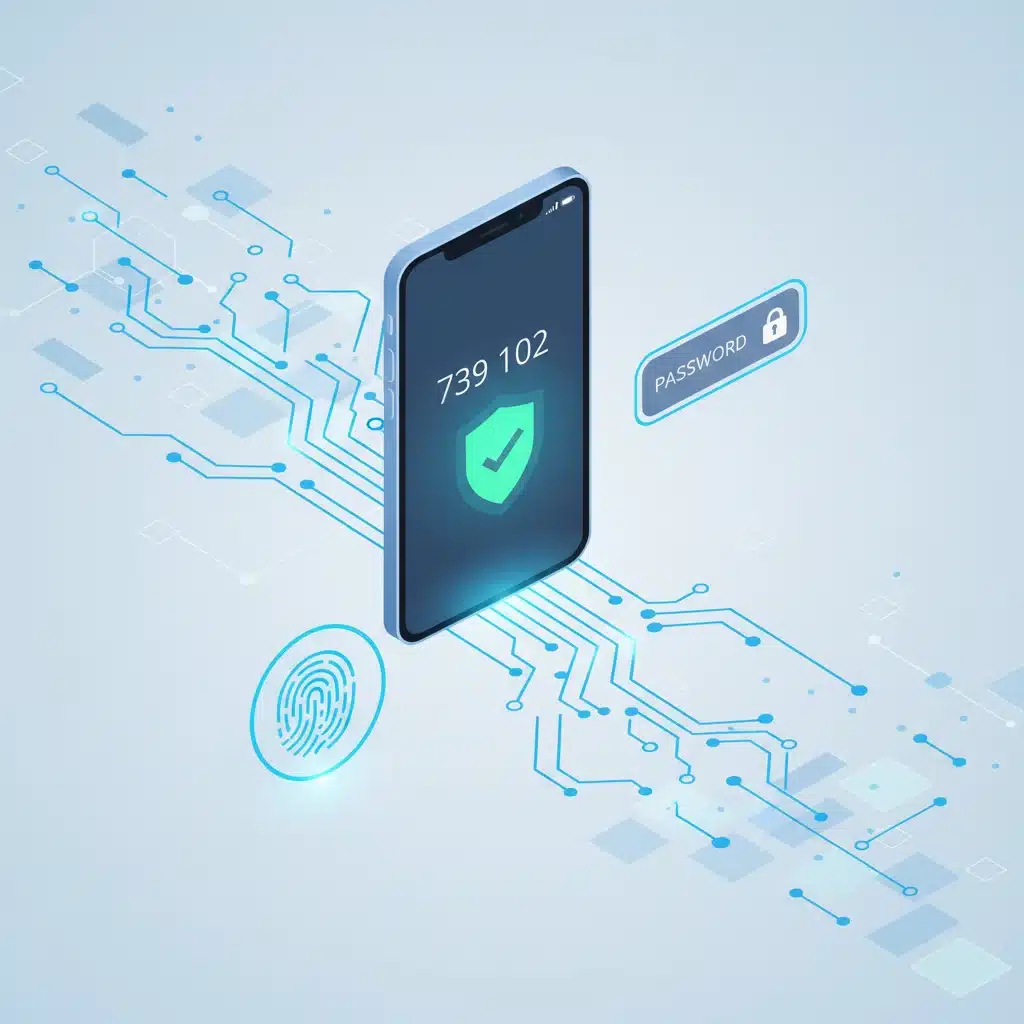
If passwords are your first line of defense, Multi-Factor Authentication (MFA) is your impenetrable second wall. MFA requires users to provide two or more verification factors to gain access to an account. This typically involves something you know (your password), something you have (a mobile device, a hardware token), and/or something you are (a fingerprint, facial scan).
For online banking, MFA is rapidly becoming a standard requirement, and for good reason. Even if a cybercriminal manages to steal your password, they won’t be able to access your account without the second factor. Common MFA methods include:
- SMS Codes: A one-time code sent to your registered mobile phone. While convenient, SIM-swapping attacks make this less secure than app-based MFA.
- Authenticator Apps: Apps like Google Authenticator or Authy generate time-sensitive codes. These are generally more secure than SMS codes as they don’t rely on your mobile carrier.
- Biometrics: Fingerprint scans, facial recognition, or iris scans offer a highly secure and convenient way to authenticate. Many modern smartphones and banking apps support this.
- Hardware Tokens: Physical devices that generate codes or require a physical tap/insertion. These offer the highest level of security but are less common for everyday consumer banking.
Always enable MFA on your online banking accounts and any other critical services. It’s one of the simplest yet most effective ways to bolster your online banking cybersecurity.
Advanced Strategies for Online Banking Cybersecurity in 2026
Beyond the foundational elements, a truly robust cybersecurity posture requires a deeper understanding of digital hygiene and proactive measures. These advanced strategies are crucial for staying ahead of the curve in 2026.
3. Secure Your Devices and Networks
Your devices (computers, smartphones, tablets) are the gateways to your online banking. Ensuring their security is paramount:
- Keep Software Updated: Operating systems, web browsers, and banking apps should always be kept up-to-date. Software updates often include critical security patches that fix newly discovered vulnerabilities that cybercriminals could exploit. Enable automatic updates whenever possible.
- Use Reputable Antivirus/Anti-Malware: Install and maintain a comprehensive antivirus and anti-malware solution on all your devices. These programs can detect and remove malicious software that could steal your banking credentials or compromise your system. Regularly scan your devices.
- Firewall Protection: Ensure your operating system’s firewall is enabled. A firewall acts as a barrier between your device and the internet, blocking unauthorized access.
- Secure Wi-Fi Networks: Avoid conducting online banking over public Wi-Fi networks (e.g., coffee shops, airports). These networks are often unsecured and can be easily intercepted by malicious actors. If you must use public Wi-Fi, use a Virtual Private Network (VPN) to encrypt your traffic. At home, ensure your Wi-Fi router has a strong, unique password, WPA3 encryption (if available), and that its firmware is updated.
4. Vigilance Against Phishing and Social Engineering
Phishing remains one of the most prevalent and dangerous threats to online banking cybersecurity. Cybercriminals send deceptive emails, text messages, or even make phone calls pretending to be your bank or another trusted entity, attempting to trick you into revealing sensitive information or clicking on malicious links. In 2026, these attacks are becoming increasingly sophisticated, leveraging AI to craft highly convincing messages.
- Scrutinize Emails and Messages: Always be suspicious of unsolicited communications asking for personal or financial information. Check the sender’s email address for inconsistencies, look for grammatical errors, and hover over links (without clicking!) to see the actual URL.
- Don’t Click Suspicious Links: Never click on links in suspicious emails or messages. Instead, if you need to access your bank’s website, type the URL directly into your browser or use your bank’s official app.
- Verify Requests: If you receive a call or message claiming to be from your bank and asking for sensitive information, hang up and call your bank directly using the official number found on their website or your bank statements. Do not use a number provided in the suspicious communication.
- Be Wary of Urgency: Phishing attempts often create a sense of urgency or fear (‘Your account will be suspended if you don’t act now!’). This is a classic social engineering tactic designed to bypass your critical thinking.
5. Monitor Your Accounts Regularly
Even with the best preventative measures, a breach can sometimes occur. Regular account monitoring is your safety net for detecting fraudulent activity quickly and minimizing potential damage. Make it a habit to:
- Review Statements: Carefully examine your bank and credit card statements as soon as they become available. Look for any unauthorized transactions, no matter how small.
- Set Up Transaction Alerts: Most banks offer free services that send you email or text alerts for certain types of transactions (e.g., purchases over a certain amount, international transactions, or ATM withdrawals). Enable these alerts for proactive monitoring.
- Check Credit Reports: Periodically review your credit reports from the major credit bureaus. This can help you identify if new accounts have been opened in your name without your knowledge, a sign of identity theft.
If you spot anything suspicious, report it to your bank immediately. Time is of the essence when dealing with potential fraud.
The Role of Financial Institutions in Online Banking Cybersecurity
While individual responsibility is paramount, financial institutions also play a critical role in safeguarding your funds. Banks invest heavily in state-of-the-art cybersecurity infrastructure, employing advanced encryption, intrusion detection systems, and dedicated security teams. They are constantly adapting their defenses to counter new threats. Banks also offer various tools and features to enhance your security, such as:
- Encryption: All reputable online banking platforms use strong encryption (look for ‘https://’ in the URL and a padlock icon) to protect your data during transmission.
- Fraud Detection Systems: Banks utilize sophisticated AI and machine learning algorithms to detect unusual spending patterns or suspicious transactions in real-time, often flagging and even blocking them before you’re aware.
- Secure Messaging: Most banks offer secure messaging portals within their online banking platforms, which are safer than email for sensitive communications.
- Security Advisories: Banks regularly publish security tips, warnings about current scams, and educational resources for their customers. Pay attention to these communications.
It’s a collaborative effort: banks provide the robust infrastructure, and users maintain good cyber hygiene. Understanding this partnership is key to comprehensive online banking cybersecurity.
Preparing for the Future: Emerging Trends in Online Banking Cybersecurity for 2026 and Beyond
The cybersecurity landscape is dynamic, and 2026 will undoubtedly bring new challenges and innovations. Here’s a glimpse into what’s on the horizon and how it will impact online banking cybersecurity:
- AI and Machine Learning in Defense: Just as AI is used by attackers, it’s also a powerful tool for defense. Banks will increasingly leverage AI for real-time threat detection, anomaly identification, and predictive security analytics, making their systems more resilient and responsive.
- Passwordless Authentication: The industry is moving towards passwordless authentication, which could involve a combination of biometrics, device-based authentication, and FIDO (Fast Identity Online) standards. This aims to eliminate the weakest link in the security chain – the password itself.
- Behavioral Biometrics: Beyond static biometrics (fingerprints), behavioral biometrics analyze how you interact with your device – your typing rhythm, mouse movements, swipe patterns – to verify your identity continuously, adding an invisible layer of security.
- Quantum-Resistant Cryptography: As quantum computing advances, current encryption methods could theoretically be broken. Research is ongoing into quantum-resistant cryptography to future-proof data security, a critical area for financial institutions.
- Enhanced Regulatory Scrutiny: Governments and regulatory bodies will likely impose stricter cybersecurity requirements on financial institutions, further pushing for robust data protection and incident response protocols.
Staying informed about these emerging trends and adapting your personal security practices accordingly will be vital for maintaining optimal online banking cybersecurity in the years to come.
Practical Checklist for Your Online Banking Cybersecurity
To summarize, here’s a quick checklist to ensure your online banking security is up to par for 2026:
- Create Strong, Unique Passwords: Use a password manager and avoid reusing passwords.
- Enable Multi-Factor Authentication (MFA): Use authenticator apps or biometrics for an extra layer of security.
- Keep All Software Updated: Operating systems, browsers, and banking apps should be current.
- Install Antivirus/Anti-Malware: Protect all devices used for banking.
- Use Secure Wi-Fi: Avoid public Wi-Fi for banking; use a VPN if necessary.
- Be Wary of Phishing: Never click suspicious links or provide information via unsolicited communications.
- Monitor Bank Statements Regularly: Check for any unauthorized transactions.
- Set Up Transaction Alerts: Get notified of suspicious activity in real-time.
- Use Official Banking Apps/Websites: Always type URLs directly or use trusted apps.
- Understand Your Bank’s Security Features: Familiarize yourself with the tools they provide.
Conclusion: Your Proactive Role in Online Banking Cybersecurity
The digital age has brought unprecedented convenience to financial management, but it also demands a heightened sense of vigilance. As we navigate 2026 and beyond, the responsibility for strong online banking cybersecurity is a shared one. While financial institutions dedicate immense resources to protecting your data, your active participation through smart digital habits and adherence to best practices is indispensable.
By implementing strong, unique passwords, embracing multi-factor authentication, securing your devices and networks, and remaining vigilant against sophisticated phishing attempts, you can significantly reduce your risk of becoming a victim of cybercrime. Regular monitoring of your accounts acts as a crucial safety net, ensuring that any potential breaches are detected and addressed swiftly.
Remember, cybersecurity is not a one-time setup; it’s an ongoing process of learning, adapting, and reinforcing your defenses. By staying informed about the latest threats and adopting a proactive approach, you can enjoy the benefits of online banking with peace of mind, knowing your financial assets are well-protected against the challenges of the digital future.
Your financial well-being in the digital age hinges on your commitment to strong cybersecurity. Make these essential measures a part of your routine, and fortify your finances against the evolving landscape of online threats. The future of secure online banking is a collaborative effort, and your contribution is vital.
