
Tech Sector Investment: Capitalizing on 18% US Market Growth

Anúncios
Smart Investment Moves: Capitalizing on the Current Tech Sector Growth of 18% in the U.S. Market
The United States technology sector is not just growing; it’s soaring. With an impressive 18% growth rate, the opportunities for smart tech sector investment are unprecedented. This robust expansion is driven by relentless innovation, increasing digital adoption across industries, and a global demand for cutting-edge solutions. For investors, understanding this landscape and making informed decisions is crucial to harnessing this growth and building a resilient, high-performing portfolio. This comprehensive guide will delve into the intricacies of the US tech market, offering actionable insights and strategic approaches to maximize your returns while navigating potential risks.
Anúncios
The digital revolution, far from being a nascent trend, has become the bedrock of modern economies. From artificial intelligence and cloud computing to cybersecurity and biotechnology, technological advancements are reshaping how we live, work, and interact. This pervasive influence translates directly into lucrative opportunities for tech sector investment. However, the sheer breadth and dynamism of the sector can be overwhelming. This article aims to demystify the process, providing a clear roadmap for both seasoned and novice investors looking to participate in this exciting growth story.
Understanding the 18% Growth Phenomenon in US Tech
What exactly is fueling this remarkable 18% growth in the US tech sector? Several interconnected factors contribute to this impressive figure. Firstly, the pandemic accelerated digital transformation across virtually every industry. Businesses that once hesitated to adopt cloud solutions or e-commerce platforms were compelled to do so, creating a surge in demand for software, hardware, and IT services. This forced adoption has now become a permanent shift, underpinning sustained growth.
Anúncios
Secondly, innovation continues at an unrelenting pace. The US remains a global hub for research and development, attracting top talent and significant venture capital. Areas like artificial intelligence, machine learning, quantum computing, and advanced robotics are moving from theoretical concepts to practical applications at an astonishing speed. Companies at the forefront of these innovations are not only creating new markets but also disrupting existing ones, generating substantial value for investors in tech sector investment.
Thirdly, strong government and private sector support for technological advancement further bolsters the sector. Investments in infrastructure, R&D tax credits, and a supportive regulatory environment (comparatively, in certain areas) foster a fertile ground for tech companies to thrive. Furthermore, the US stock market’s liquidity and global appeal make it an attractive destination for capital seeking growth opportunities, funnelling more funds into promising tech ventures.
Finally, the scalability of tech products and services is a key differentiator. A software solution developed once can be deployed globally with relatively low marginal costs, allowing companies to achieve exponential growth and profitability. This inherent scalability makes tech sector investment particularly appealing for those seeking high-growth potential.
Identifying Key Sub-Sectors for Tech Sector Investment
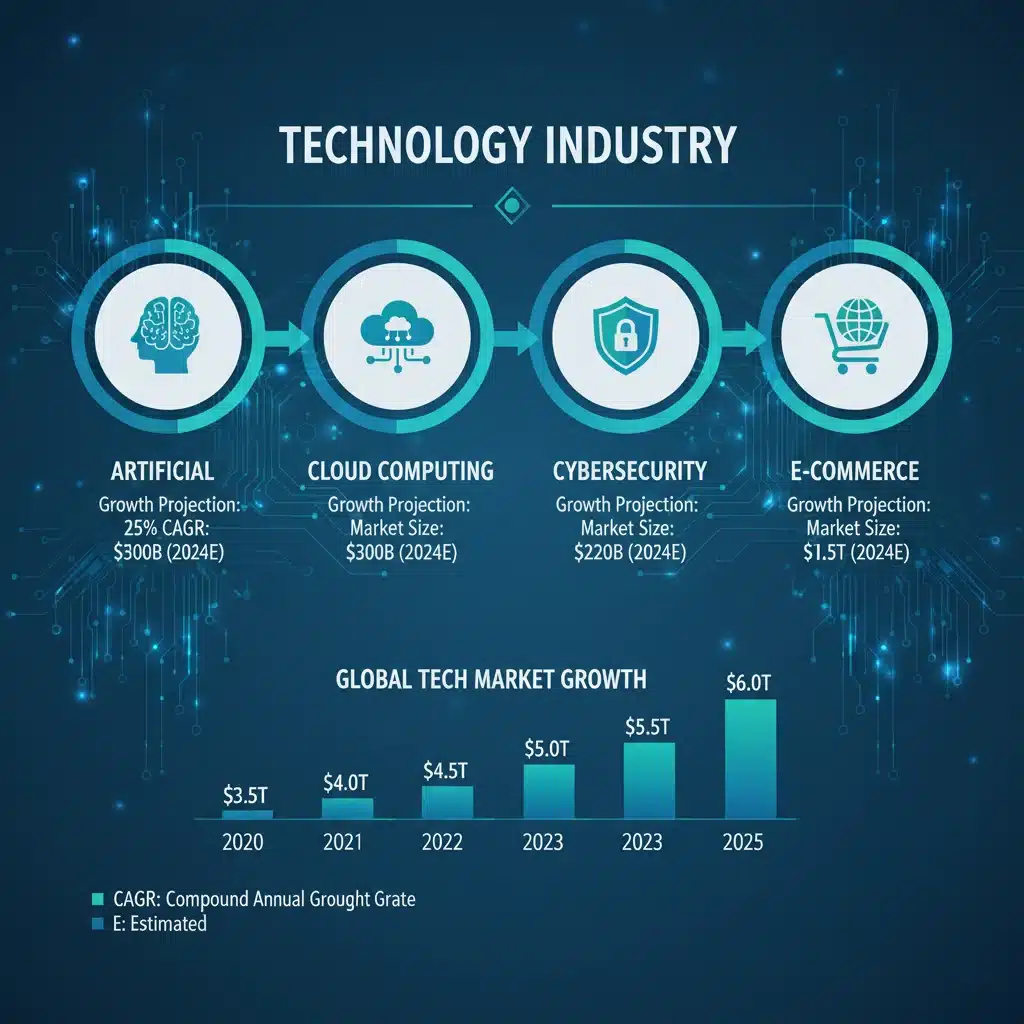
The term ‘tech sector’ is broad, encompassing a vast array of industries. To make informed investment decisions, it’s essential to break it down into key sub-sectors that are currently experiencing significant growth or are poised for future expansion. Here are some of the most promising areas:
Artificial Intelligence (AI) and Machine Learning (ML)
AI and ML are no longer buzzwords; they are foundational technologies transforming every aspect of business and daily life. From predictive analytics and autonomous vehicles to personalized medicine and intelligent automation, AI’s applications are boundless. Companies developing AI infrastructure, algorithms, and applications are prime candidates for tech sector investment. Think about firms specializing in natural language processing, computer vision, and AI-driven data analysis.
Cloud Computing
The migration to the cloud continues unabated. Infrastructure-as-a-Service (IaaS), Platform-as-a-Service (PaaS), and Software-as-a-Service (SaaS) providers are indispensable for businesses of all sizes. The demand for scalable, secure, and accessible computing resources ensures sustained growth in this area. Companies offering cloud storage, computing power, and specialized cloud software solutions represent excellent tech sector investment opportunities.
Cybersecurity
As our lives become increasingly digital, the threat of cyberattacks grows exponentially. Cybersecurity is no longer an optional expense but a critical necessity for individuals, businesses, and governments. The demand for robust security solutions, including network security, endpoint protection, identity management, and threat intelligence, is constantly rising. Investing in leading cybersecurity firms offers exposure to a non-cyclical, high-growth segment of the tech market.
E-commerce and Digital Payments
While mature, e-commerce continues to evolve and expand globally. The convenience and efficiency of online shopping ensure its dominance. Complementing this is the rapid growth of digital payment solutions, including mobile payments, contactless transactions, and cryptocurrency infrastructure. Companies facilitating these digital transactions and platforms are strong contenders for tech sector investment.
Biotechnology and Health Tech
The intersection of technology and healthcare is creating revolutionary advancements. From genomics and personalized medicine to remote patient monitoring and AI-powered diagnostics, health tech is poised for massive growth. Companies leveraging technology to improve health outcomes, reduce costs, and enhance accessibility to care offer significant long-term investment potential.
Strategic Approaches to Tech Sector Investment
Navigating the tech sector requires a strategic approach. Here are several methodologies investors can employ:
1. Growth Investing
This strategy focuses on companies expected to grow at an above-average rate compared to the overall market. In the tech sector, this often means investing in innovative companies with strong intellectual property, expanding market share, and high revenue growth. While potentially offering high returns, growth investing also carries higher risk, as these companies may trade at premium valuations based on future expectations.
2. Value Investing in Tech
While often associated with traditional industries, value investing can also be applied to tech. This involves identifying tech companies that are undervalued by the market relative to their intrinsic worth. These might be established tech giants whose stock has temporarily fallen out of favor, or smaller, overlooked companies with solid fundamentals. It requires diligent research to distinguish genuinely undervalued assets from struggling businesses.
3. Diversification Across Sub-Sectors
Given the volatility and rapid changes within the tech landscape, diversification is paramount. Instead of putting all your eggs in one tech basket, spread your investments across different sub-sectors (e.g., AI, cloud, cybersecurity). This mitigates risk and ensures you’re exposed to multiple growth drivers within the broader tech sector investment theme.
4. Investing in ETFs and Mutual Funds
For investors who prefer a more hands-off approach or lack the time for extensive individual stock research, tech-focused Exchange Traded Funds (ETFs) and mutual funds offer an excellent solution. These funds provide instant diversification across a basket of tech stocks, often managed by professionals. Look for funds with low expense ratios and a clear investment mandate aligned with your goals.
5. Long-Term Horizon
The tech sector is prone to short-term fluctuations and hype cycles. Successful tech sector investment often requires a long-term perspective. Focusing on companies with strong fundamentals, sustainable competitive advantages, and clear long-term growth trajectories can help weather market volatility and capture the compounding power of innovation over years, not just months.
Due Diligence: Researching Tech Companies
Before committing capital to any tech sector investment, thorough due diligence is essential. Here’s what to look for:
- Strong Management Team: Experienced, visionary leadership with a proven track record is critical in fast-evolving tech environments.
- Competitive Advantage (Moat): Does the company have a sustainable competitive edge? This could be proprietary technology, network effects, strong brand loyalty, or high switching costs for customers.
- Financial Health: Analyze revenue growth, profitability, cash flow, debt levels, and valuation metrics (P/E, P/S, EV/EBITDA). Be wary of companies with unsustainable burn rates or excessive debt.
- Market Opportunity: Is the company operating in a large and growing market? What is its market share, and what are the barriers to entry for competitors?
- Innovation Pipeline: Is the company continuously innovating and developing new products or services? A strong R&D focus indicates future growth potential.
Mitigating Risks in Tech Sector Investment
While the 18% growth is enticing, the tech sector is not without its risks. Understanding and mitigating these risks is crucial for successful tech sector investment:
Valuation Risk
Many tech companies, especially high-growth ones, trade at premium valuations. If growth expectations are not met, or if market sentiment shifts, these stocks can experience significant pullbacks. It’s important to have a clear understanding of what you’re paying for and whether the valuation is justified by future prospects.
Technological Obsolescence
Innovation is a double-edged sword. Today’s cutting-edge technology can become obsolete tomorrow. Companies that fail to adapt and innovate risk being left behind. This underscores the importance of investing in companies with strong R&D and a history of successful adaptation.
Regulatory Scrutiny
Big Tech companies, in particular, face increasing regulatory scrutiny regarding antitrust, data privacy, and content moderation. New regulations could impact business models and profitability. Stay informed about potential legislative changes that could affect your tech sector investment.
Cybersecurity Threats
Ironically, even cybersecurity companies face risks. A major data breach at a tech company can severely damage its reputation and financial standing. Ensure the companies you invest in have robust internal security protocols.
Economic Downturns
While some tech sub-sectors (like cybersecurity) can be resilient, others are more cyclical. During economic downturns, discretionary spending on new gadgets or enterprise software upgrades might decrease, impacting revenue growth. A diversified portfolio can help buffer against such impacts.

The Future of Tech Sector Investment: Beyond the Horizon
Looking ahead, the trajectory of tech sector investment remains steep. Emerging technologies are constantly pushing the boundaries of what’s possible, creating new avenues for growth and disruption. Consider the potential impact of:
- Quantum Computing: Still in its early stages, quantum computing promises to revolutionize fields like cryptography, drug discovery, and materials science.
- Web3 and Blockchain: Beyond cryptocurrencies, blockchain technology is poised to transform data security, supply chain management, and digital ownership.
- Metaverse: The concept of persistent, interconnected virtual worlds could open up entirely new economies and entertainment paradigms.
- Sustainable Tech (Green Tech): Technology applied to solve environmental challenges, such as renewable energy solutions, carbon capture, and sustainable agriculture, represents a significant growth area.
These nascent technologies, while carrying higher risk, also offer the potential for exponential returns for early and strategic tech sector investment. Staying abreast of these developments and understanding their long-term implications is key to positioning your portfolio for future success.
Building a Resilient Tech Portfolio
A resilient tech portfolio is one that can withstand market fluctuations and capitalize on long-term trends. Here are some final tips:
- Allocate Appropriately: Determine what percentage of your overall portfolio you are comfortable allocating to tech, considering your risk tolerance and investment horizon.
- Rebalance Regularly: Periodically review your portfolio and rebalance to maintain your desired asset allocation. This ensures you’re not overexposed to any single sector or stock.
- Stay Informed: The tech landscape changes rapidly. Continuously educate yourself on new technologies, market trends, and company-specific news.
- Consult a Financial Advisor: If you’re unsure about making complex investment decisions, consider seeking advice from a qualified financial advisor who can tailor strategies to your individual needs.
Conclusion: Seizing the Opportunity in Tech Sector Investment
The 18% growth in the US tech sector presents a compelling opportunity for investors. By understanding the underlying drivers of this growth, identifying promising sub-sectors, employing strategic investment approaches, and diligently managing risks, you can position your portfolio to thrive in this dynamic environment. While the allure of quick gains can be strong, a disciplined, long-term approach focused on innovation, strong fundamentals, and diversification will ultimately yield the most sustainable and significant returns in your tech sector investment journey. The future is digital, and investing wisely in the companies building that future is one of the smartest moves you can make today.
Embrace the challenge, conduct your research, and prepare to be part of the exciting evolution of the US tech market. The opportunities are vast, and with careful planning, your portfolio can reflect the incredible growth story unfolding before us.
