
Maximize Your 401(k) in 2026: New Limits & Smart Investment Strategies

Retirement planning is a journey, not a destination, and understanding the tools at your disposal is paramount to a successful voyage. Among the most powerful tools for building a robust retirement nest egg is the 401(k). As we look ahead to 2026, anticipating the new contribution limits and refining our investment strategies becomes a critical exercise for anyone serious about financial security. This comprehensive guide will delve into what you need to know to maximize your 401(k) in 2026, exploring the expected changes, advanced investment tactics, and common pitfalls to avoid.
The 401(k) is more than just a savings account; it’s a tax-advantaged investment vehicle designed to help employees save for retirement. Contributions are typically made pre-tax, reducing your current taxable income, and your investments grow tax-deferred until withdrawal in retirement. Many employers also offer matching contributions, which is essentially free money – a benefit you absolutely do not want to leave on the table. Understanding how to effectively utilize these features, especially with new limits on the horizon, is key to accelerating your retirement savings.
Understanding the 401(k) Landscape: What to Expect in 2026
Each year, the Internal Revenue Service (IRS) adjusts the contribution limits for 401(k) plans and other retirement accounts to account for inflation. While the official 2026 limits are not yet released, we can make educated predictions based on historical trends and economic forecasts. These adjustments are crucial because they dictate how much you can contribute on a tax-advantaged basis, directly impacting your potential for long-term wealth accumulation.
Historically, 401(k) contribution limits have seen steady increases. For instance, the general employee contribution limit for 2024 was $23,000, with an additional $7,500 catch-up contribution for those aged 50 and over. Given ongoing inflation and wage growth, it’s reasonable to expect these limits to rise for 2026. A conservative estimate might see the general limit increase by $500 to $1,000, potentially reaching $24,000 or even $24,500. Catch-up contributions for those 50 and older might also see a modest bump, perhaps to $8,000.
Why are these limits so important? Because contributing the maximum allowed amount is one of the most effective ways to supercharge your retirement savings. Every dollar contributed up to the limit benefits from tax deferral and, if applicable, employer matching. Over decades, these benefits compound significantly, turning seemingly small annual contributions into substantial retirement funds. To truly maximize your 401(k) in 2026, staying informed about these limits and adjusting your contributions accordingly is non-negotiable.
Strategic Approaches to Maximize Your 401(k) Contributions
Simply knowing the limits isn’t enough; you need a strategy to meet and ideally exceed them. Here are several actionable strategies to help you maximize your 401(k) in 2026:
1. Automate and Increase Your Contributions
The easiest way to ensure you’re contributing consistently is to automate your deductions directly from your paycheck. Set it and forget it. Even better, commit to increasing your contribution percentage by 1% or 2% each year, especially when you receive a raise. This incremental approach, often called ‘pay yourself first,’ makes it less painful to reach the maximum limit over time. If you start early, even small increases can have a huge impact due to the power of compounding.
2. Don’t Miss Out on Employer Matching Contributions
This is arguably the most critical step. Many employers offer to match a certain percentage of your contributions. For example, they might match 50% of your contributions up to 6% of your salary. If you don’t contribute at least 6%, you’re leaving free money on the table. Always contribute enough to get the full employer match. It’s an immediate, guaranteed return on your investment, often 50% or 100%, which is hard to beat anywhere else.
3. Utilize Catch-Up Contributions (If Applicable)
If you’re aged 50 or older by the end of 2026, you’re eligible to make additional ‘catch-up’ contributions above the standard limit. This provision is designed to help older workers who may have started saving later or want to boost their retirement funds in their prime earning years. These extra contributions can significantly accelerate your savings in the years leading up to retirement. If the 2026 catch-up limit is, for example, $8,000, and you’re eligible, you could potentially contribute up to $32,500 ($24,500 + $8,000) in total. This is a powerful tool to maximize your 401(k) in 2026.
4. Consider Roth 401(k) Options
Some 401(k) plans offer a Roth option. With a Roth 401(k), your contributions are made with after-tax dollars, meaning they don’t reduce your current taxable income. However, qualified withdrawals in retirement are entirely tax-free. This can be highly advantageous if you expect to be in a higher tax bracket in retirement than you are today. It also provides diversification in how your retirement income is taxed, offering flexibility in your later years. Weigh the pros and cons of traditional vs. Roth contributions based on your current and projected future tax situations.
5. Understand the Mega Backdoor Roth Strategy (If Available)
For high-income earners whose employers allow it, the ‘mega backdoor Roth’ strategy can be an advanced way to contribute even more to a Roth account beyond the standard limits. This involves making after-tax non-Roth contributions to your 401(k), then converting those funds into a Roth 401(k) or rolling them over into a Roth IRA. This strategy allows you to contribute significantly more after-tax money that can then grow and be withdrawn tax-free in retirement, effectively bypassing traditional Roth contribution income limits. This is a more complex strategy and requires careful consideration of your plan’s rules and tax implications, but it’s a powerful way to maximize your 401(k) in 2026 for those who qualify.
Optimizing Your Investment Strategy Within Your 401(k)
Contributing the maximum is only half the battle; how you invest those contributions within your 401(k) is equally important. A well-thought-out investment strategy can significantly impact your retirement savings growth.
1. Diversification is Key
Don’t put all your eggs in one basket. A diversified portfolio spreads your investments across various asset classes (stocks, bonds, real estate, cash equivalents) and different sectors and geographies. This helps mitigate risk; if one asset class performs poorly, others may perform well, balancing out your returns. Most 401(k) plans offer a range of mutual funds and exchange-traded funds (ETFs) that provide diversification. Look for funds that invest in large-cap, mid-cap, and small-cap stocks, as well as international equities and various types of bonds.
2. Understand Your Risk Tolerance and Time Horizon
Your investment strategy should align with your personal risk tolerance and how many years you have until retirement. Younger investors with a longer time horizon can typically afford to take on more risk, leaning heavier into equities for greater growth potential. As you approach retirement, you might shift towards a more conservative allocation, increasing your exposure to bonds and cash to preserve capital. Rebalance your portfolio periodically to ensure it remains aligned with your goals and risk profile.
3. Leverage Low-Cost Index Funds and ETFs
Fees can eat into your returns over time. Opt for low-cost index funds or ETFs that track broad market indices (like the S&P 500) rather than actively managed funds with higher expense ratios. These passive funds often outperform actively managed funds over the long term and come with significantly lower fees, allowing more of your money to grow. This is a straightforward yet highly effective way to maximize your 401(k) in 2026‘s growth potential.
4. Consider Target-Date Funds
For those who prefer a hands-off approach, target-date funds can be an excellent option. These funds automatically adjust their asset allocation over time, becoming more conservative as you approach your target retirement date. They offer built-in diversification and rebalancing, making them a convenient choice for many investors. Just ensure you understand the fund’s underlying expenses and its specific glide path (how it adjusts its allocation over time).
5. Rebalance Periodically
Over time, market fluctuations can cause your portfolio’s asset allocation to drift from your target. Periodically rebalancing (e.g., once a year) involves selling some of your overperforming assets and buying more of your underperforming ones to bring your portfolio back to its desired allocation. This helps maintain your risk level and can even be a ‘buy low, sell high’ strategy in disguise.
Beyond the 401(k): Complementary Retirement Savings Vehicles
While the 401(k) is a cornerstone of retirement planning, it’s often not the only tool you should be using. For a truly comprehensive strategy to maximize your 401(k) in 2026 and your overall retirement savings, consider these complementary accounts:
1. Individual Retirement Accounts (IRAs)
Traditional and Roth IRAs offer additional tax-advantaged savings opportunities. If you’ve maxed out your 401(k) (especially if you’re not getting an employer match), an IRA is often the next logical step. Contribution limits are separate from 401(k)s, and IRAs often offer a wider range of investment options. Consider a Roth IRA if your income allows, or a Traditional IRA if you prefer upfront tax deductions.
2. Health Savings Accounts (HSAs)
Often referred to as the ‘triple tax advantage’ account, an HSA is an incredibly powerful savings vehicle if you have a high-deductible health plan (HDHP). Contributions are tax-deductible, investments grow tax-free, and qualified withdrawals for medical expenses are also tax-free. If you don’t use the funds for medical expenses, after age 65, they can be withdrawn for any purpose and taxed as ordinary income, much like a traditional IRA. This makes HSAs a stealth retirement account for many, and a fantastic way to further maximize your 401(k) in 2026‘s impact by freeing up other funds.
3. Taxable Brokerage Accounts
Once you’ve exhausted all tax-advantaged options, a taxable brokerage account is where you can continue to invest. While these accounts don’t offer the same tax benefits, they provide ultimate flexibility in terms of withdrawals and investment choices. They can serve as a bridge to retirement or provide funds for other financial goals.

Common 401(k) Mistakes to Avoid
Even with the best intentions, some common missteps can hinder your retirement savings. Being aware of these can help you stay on track to maximize your 401(k) in 2026.
1. Not Contributing Enough to Get the Employer Match
As mentioned, this is free money. Missing out on the employer match is one of the biggest financial mistakes you can make. Always prioritize contributing at least enough to secure the full match.
2. Cashing Out Your 401(k) When Changing Jobs
When you leave a job, you have several options for your 401(k): leave it with the old employer (if allowed), roll it over into your new employer’s 401(k), or roll it over into an IRA. Cashing it out should almost always be avoided. You’ll likely face a 10% early withdrawal penalty (if under 59.5) plus ordinary income taxes on the entire amount, severely depleting your savings and sacrificing future tax-deferred growth.
3. Taking a 401(k) Loan
While some plans allow 401(k) loans, it’s generally advisable to avoid them. You’re borrowing from your future self, and if you leave your job, the loan often becomes due immediately. If you can’t repay it, it’s treated as a taxable withdrawal with penalties. This can derail your efforts to maximize your 401(k) in 2026 and beyond.
4. Being Too Conservative (Especially When Young)
Younger investors often have a long runway for their investments to grow. Being too conservative (e.g., investing heavily in cash or bonds) means missing out on the significant growth potential of equities. While market fluctuations can be unsettling, a long-term perspective and a diversified, growth-oriented portfolio are typically best for those far from retirement.
5. Ignoring Your Investments
Set it and forget it applies to automatic contributions, but not to your investment allocation. Periodically review your portfolio (at least annually) to ensure it still aligns with your goals, risk tolerance, and time horizon. Rebalance as needed and stay informed about the performance of your chosen funds.
Planning for the Future: Action Steps for 2026
- Review Your Current Contributions: Check your current contribution percentage. Are you on track to meet or exceed the potential new limits? If not, plan to adjust your contributions at the beginning of the year or with your first raise.
- Understand Your Employer’s Plan: Familiarize yourself with your 401(k) plan’s specifics, including employer match rules, investment options, fee structure, and any Roth 401(k) or after-tax contribution possibilities.
- Reassess Your Investment Allocation: Review your current fund choices. Are they diversified? Do they align with your risk tolerance and time horizon? Consider low-cost index funds or target-date funds if appropriate.
- Consult a Financial Advisor: If you find retirement planning overwhelming or have complex financial situations, consider seeking advice from a qualified financial advisor. They can help you create a personalized strategy to maximize your 401(k) in 2026 and integrate it into your broader financial plan.
- Stay Informed: Keep an eye out for the official IRS announcement of the 2026 401(k) contribution limits, typically released in late October or early November of the preceding year (e.g., late 2025 for 2026 limits).
The Power of Compounding and Early Saving
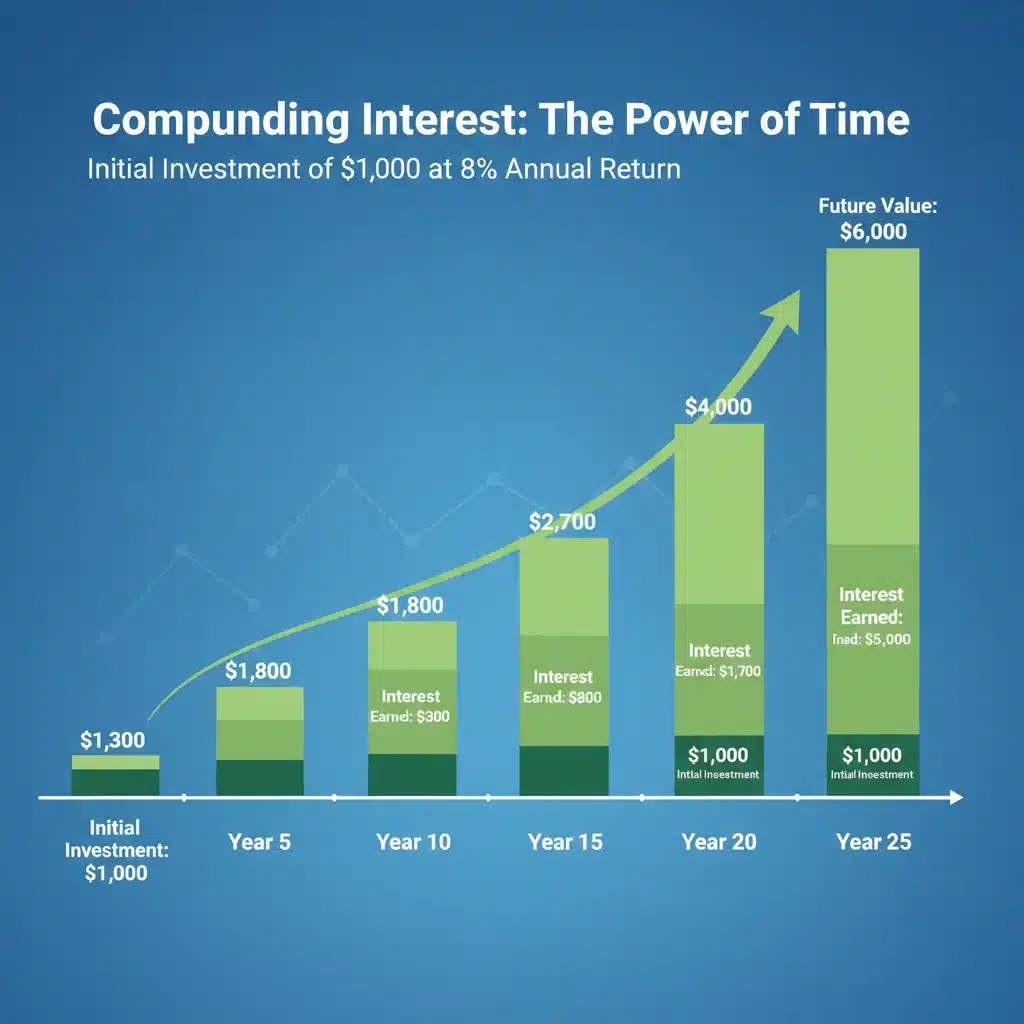
The earlier you start contributing to your 401(k) and the more consistently you contribute, the greater the benefit of compounding interest. Compounding is the process where your investments earn returns, and then those returns themselves start earning returns. Over decades, this snowball effect can turn modest contributions into significant wealth. For example, a 25-year-old contributing $500 a month to a 401(k) earning an average 7% annual return could accumulate over $1 million by age 65. If they wait until age 35, that same $500 a month contribution might only yield around $480,000 by 65, illustrating the immense power of starting early and consistently contributing to maximize your 401(k) in 2026 and beyond.
Even if you haven’t started early, 2026 is an opportunity to make a fresh start or redouble your efforts. Every dollar saved and invested today has more time to grow than a dollar saved tomorrow. The new limits for 2026 provide a tangible target to aim for, encouraging you to reassess and potentially increase your savings rate.
Conclusion: Your Path to a Secure Retirement
Successfully navigating the world of retirement savings requires diligence, awareness, and a proactive approach. By understanding the anticipated 401(k) contribution limits for 2026, implementing smart investment strategies, and avoiding common pitfalls, you can significantly enhance your financial security in retirement. The goal is not just to save, but to save smart and invest wisely, allowing the power of tax advantages and compounding to work in your favor.
Take control of your financial future today. Review your current 401(k) contributions, adjust your investment strategy as needed, and commit to making the most of the opportunities 2026 will present. By taking these steps, you will be well on your way to building the retirement you envision. Remember, every dollar you contribute and every strategic decision you make brings you closer to achieving your long-term financial goals and truly helping you maximize your 401(k) in 2026.
