
Federal Reserve Rate Hike: Impact on Mortgages & Loans
Anúncios
Navigating the New Federal Reserve Interest Rate Hike: What a 0.25% Increase Means for Your Mortgage and Loans
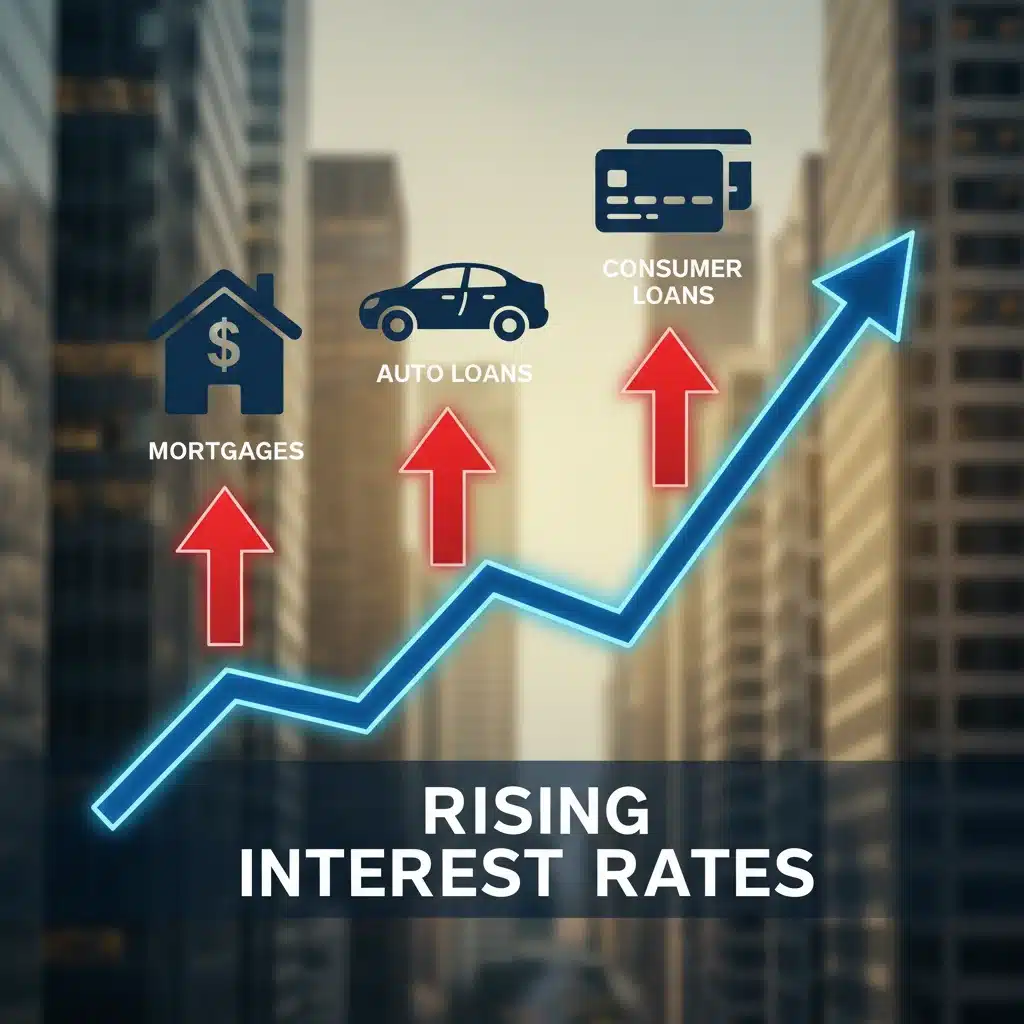
The financial world often feels like a complex web of numbers and decisions, with the Federal Reserve acting as a central weaver, subtly but significantly influencing the patterns of our economic lives. Recently, the Federal Reserve announced another interest rate hike, increasing the federal funds rate by 0.25%. While a quarter of a percentage point might seem negligible at first glance, its ripple effects can be profound, especially for your mortgage, auto loans, credit card debt, and overall financial planning. Understanding the implications of this Fed rate hike is not just for economists; it’s crucial for every individual and household navigating the current economic landscape.
This article aims to demystify the recent Fed rate hike, breaking down what it means for various aspects of your personal finances. We will explore the direct and indirect impacts on mortgages, both fixed and adjustable-rate, delve into how it affects other forms of debt like auto loans and credit cards, and provide actionable strategies to help you adapt and even thrive in this evolving environment. By the end of this comprehensive guide, you will have a clearer picture of the situation and be better equipped to make informed financial decisions.
Anúncios
Understanding the Federal Reserve’s Role and the Latest Fed Rate Hike
Before we dive into the specific impacts, let’s briefly revisit the Federal Reserve’s primary function. The Fed, as it’s commonly known, is the central banking system of the United States. Its dual mandate is to maximize employment and maintain stable prices, which includes controlling inflation. One of its most powerful tools for achieving these goals is setting the federal funds rate. This is the target rate for overnight lending between banks. While it’s not the rate consumers directly pay, it serves as a benchmark that influences a cascade of other interest rates throughout the economy.
Anúncios
When the Fed increases the federal funds rate, it generally aims to slow down economic growth and curb inflation. By making it more expensive for banks to borrow money, banks, in turn, pass these higher costs on to consumers and businesses in the form of higher interest rates on loans. Conversely, when the Fed lowers rates, it’s typically trying to stimulate economic activity.
The recent 0.25% Fed rate hike is part of an ongoing strategy to combat persistent inflation that has been a significant concern over the past couple of years. While inflation has shown signs of moderating, it remains above the Fed’s long-term target of 2%. This latest increase signals the Fed’s continued commitment to bringing inflation under control, even if it means potentially cooling off the economy further.
It’s important to note that the Fed’s decisions are not made in a vacuum. They consider a wide array of economic indicators, including inflation data, employment figures, consumer spending, and global economic conditions. Each Fed rate hike is a calculated move, and understanding its underlying rationale can help you anticipate future economic trends.
The Immediate Impact of the Fed Rate Hike on Mortgages
For many homeowners and prospective buyers, mortgages are the largest financial commitment. The Fed rate hike has a direct and often immediate impact on mortgage rates, though the specifics depend on the type of mortgage you have or are considering.
Adjustable-Rate Mortgages (ARMs)
If you have an adjustable-rate mortgage (ARM), you are likely to feel the effects of the Fed rate hike relatively quickly. ARMs have interest rates that are tied to a specific financial index, and as that index moves in response to the federal funds rate, your mortgage rate will adjust accordingly. A 0.25% increase in the federal funds rate means that, when your ARM’s adjustment period comes around (which could be annually, semi-annually, or even monthly depending on your loan terms), your interest rate will likely increase. This translates to higher monthly mortgage payments.
For example, if you have an ARM with a current rate of 5.0% and it adjusts upward by 0.25%, your new rate could be 5.25%. While this might seem like a small increment, over the life of a substantial loan, it can add up to thousands of dollars. Homeowners with ARMs should review their loan documents to understand their adjustment schedule and rate caps, which limit how much the interest rate can increase in a given period and over the life of the loan. Proactive planning, such as exploring refinancing options to a fixed-rate mortgage if rates are still favorable, could be a prudent step.
Fixed-Rate Mortgages
For those with fixed-rate mortgages, the direct impact of the Fed rate hike is less immediate. Your interest rate is locked in for the entire duration of your loan, meaning your monthly principal and interest payments will not change due to this specific Fed rate hike. This stability is one of the primary benefits of a fixed-rate mortgage, providing predictability in your housing costs regardless of market fluctuations.
However, the Fed rate hike still affects the broader fixed-rate mortgage market. If you are in the process of applying for a new fixed-rate mortgage or considering refinancing, you will likely encounter higher rates than before the hike. While fixed-rate mortgages are more closely tied to the yield on 10-year Treasury bonds than the federal funds rate, these bonds are influenced by the Fed’s monetary policy. When the Fed raises rates, it generally pushes Treasury yields higher, which in turn leads to higher fixed mortgage rates. This means that borrowing for a new home or refinancing an existing one will now be more expensive.
Prospective homebuyers should factor these higher rates into their affordability calculations. A higher interest rate means that for the same monthly payment, you can afford a smaller loan amount, or for the same loan amount, your monthly payments will be higher. This can impact purchasing power and overall housing market demand.

Beyond Mortgages: How the Fed Rate Hike Affects Other Loans and Debt
The influence of the Fed rate hike extends far beyond the housing market, touching almost every other form of consumer and business credit. Understanding these broader impacts is essential for a holistic view of your financial health.
Auto Loans
Similar to mortgages, auto loan rates are also influenced by the federal funds rate. When the Fed implements a Fed rate hike, it becomes more expensive for banks and lenders to borrow money, and they pass these increased costs on to consumers in the form of higher interest rates on car loans. If you are planning to purchase a new or used car, you can expect to pay a higher interest rate than you would have before the hike. This means higher monthly payments and a greater total cost of the vehicle over the life of the loan.
For example, a 0.25% increase on a $30,000 car loan over five years might add a relatively small amount to your monthly payment, but it still increases the total interest paid. If you have an existing auto loan with a fixed rate, you are unaffected. However, if you have a variable-rate auto loan (less common but they do exist), your payments could increase.
Prospective car buyers should factor these higher financing costs into their budget. It might be a good time to reconsider the total price of the vehicle or explore options like saving for a larger down payment to reduce the financed amount and mitigate the impact of higher interest rates.
Credit Cards and Other Variable-Rate Debt
Perhaps the most immediate and widespread impact of a Fed rate hike for many consumers is on credit card debt. Most credit cards have variable interest rates, meaning they are directly tied to the prime rate, which itself moves in lockstep with the federal funds rate. When the Fed raises rates by 0.25%, credit card Annual Percentage Rates (APRs) typically follow suit very quickly, often within one or two billing cycles.
If you carry a balance on your credit cards, a 0.25% increase means that the interest you accrue on that balance will be higher. While 0.25% might seem small, credit card APRs are already high, often ranging from 15% to 25% or more. An additional quarter of a percent on an already large balance can translate to a noticeable increase in your minimum payment or, at the very least, a longer time to pay off your debt if you’re only making minimum payments.
This also applies to other forms of variable-rate debt, such as home equity lines of credit (HELOCs) and some personal loans. If you have these types of loans, you should anticipate an increase in your interest payments.
For consumers with credit card debt, this Fed rate hike serves as a strong reminder of the importance of paying down high-interest balances as quickly as possible. Strategies like balance transfers to cards with promotional 0% APRs (if available and you can pay it off within the promotional period) or debt consolidation loans (though these too will have higher rates now) become even more critical.
Student Loans
The impact on student loans varies. Federal student loans typically have fixed interest rates, meaning the Fed rate hike will not affect existing federal loan payments. However, new federal student loans issued after the rate hike might carry slightly higher fixed rates, though these are set annually by Congress and not directly by the Fed.
Private student loans, on the other hand, can be either fixed or variable. If you have a variable-rate private student loan, your interest rate and monthly payments will likely increase following the Fed rate hike. It’s crucial to check your loan terms and understand how your rate is determined and when it adjusts.
The Broader Economic Picture and Your Savings
While higher borrowing costs are a downside of the Fed rate hike, there can be a silver lining for savers. When interest rates rise, banks typically offer higher interest rates on savings accounts, money market accounts, and Certificates of Deposit (CDs). This means your money can earn more interest, helping it grow faster.
However, the increase in savings rates often lags behind the increase in lending rates. So, while you might see a slight uptick in your savings account yield, it might not fully offset the increased cost of borrowing. It’s still a good time to shop around for high-yield savings accounts or consider locking in higher rates with CDs if you have an emergency fund or other savings you don’t need immediate access to.
The Fed rate hike also reflects a broader economic strategy to cool down an overheated economy and bring inflation under control. While this can lead to slower economic growth and potentially impact employment, the long-term goal is to achieve price stability, which benefits everyone. Understanding this bigger picture helps contextualize the individual financial adjustments you might need to make.

Strategies to Navigate the Fed Rate Hike Effectively
In light of the recent Fed rate hike, proactive financial planning is more important than ever. Here are actionable strategies to help you manage your finances and mitigate the impact of rising interest rates:
1. Review Your Budget and Financial Accounts
The first step is always to understand your current financial situation. Take the time to review your budget, income, and expenses. Identify all your debts, noting whether they have fixed or variable interest rates. Pay particular attention to variable-rate debts like credit cards and HELOCs, as these will be the first to see increased costs due to the Fed rate hike. Knowing where your money goes and where your debts lie is the foundation for effective financial management.
2. Prioritize High-Interest Debt Repayment
With interest rates on the rise, carrying high-interest debt, especially on credit cards, becomes even more expensive. Make it a priority to pay down these debts as aggressively as possible. Consider strategies like the debt snowball (paying off the smallest balance first for psychological wins) or the debt avalanche (paying off the highest interest rate debt first to save the most money). Even small extra payments can make a significant difference over time.
3. Explore Refinancing Options (Carefully)
If you have an adjustable-rate mortgage (ARM) or other variable-rate loans, now might be a good time to explore refinancing into a fixed-rate loan. While fixed rates have also increased, they might still offer more predictability and protection against future Fed rate hikes. However, be sure to weigh the costs of refinancing (closing costs, fees) against the potential savings or stability. This decision requires careful calculation and perhaps consultation with a financial advisor or mortgage professional.
4. Boost Your Savings and Emergency Fund
Higher interest rates on savings accounts and CDs present an opportunity to grow your emergency fund and other savings more quickly. Make sure your savings are in a high-yield account to maximize returns. A robust emergency fund is crucial for financial resilience, especially in an uncertain economic environment. Aim for at least three to six months’ worth of living expenses.
5. Reassess Major Purchases
If you were planning a major purchase that requires financing, such as a car or a new home, reassess your budget in light of higher interest rates. The cost of borrowing has increased, which means your monthly payments will be higher for the same loan amount. You might need to adjust your budget, save for a larger down payment, or consider delaying the purchase if it’s not absolutely essential.
6. Consult with Financial Professionals
Navigating economic shifts can be complex. Don’t hesitate to seek advice from financial advisors, mortgage brokers, or credit counselors. They can provide personalized guidance based on your specific financial situation and help you develop a tailored strategy to cope with the Fed rate hike and other economic changes.
Conclusion: Adapting to a Changing Interest Rate Environment
The Federal Reserve’s 0.25% interest rate hike, while seemingly modest, is a significant event with far-reaching implications for your personal finances. From mortgages and auto loans to credit card debt and savings, understanding how this Fed rate hike impacts your money is the first step toward effective financial management.
While higher borrowing costs can be challenging, they also highlight the importance of financial discipline, strategic planning, and leveraging opportunities where they arise, such as higher savings rates. By reviewing your debts, prioritizing high-interest repayment, exploring refinancing options, and boosting your savings, you can effectively navigate this changing interest rate environment.
Stay informed, be proactive, and remember that adapting your financial strategies to current economic realities is key to maintaining and improving your financial well-being. The recent Fed rate hike is not just a headline; it’s a call to action for every financially responsible individual to take a closer look at their financial blueprint and make the necessary adjustments for a secure future.
