

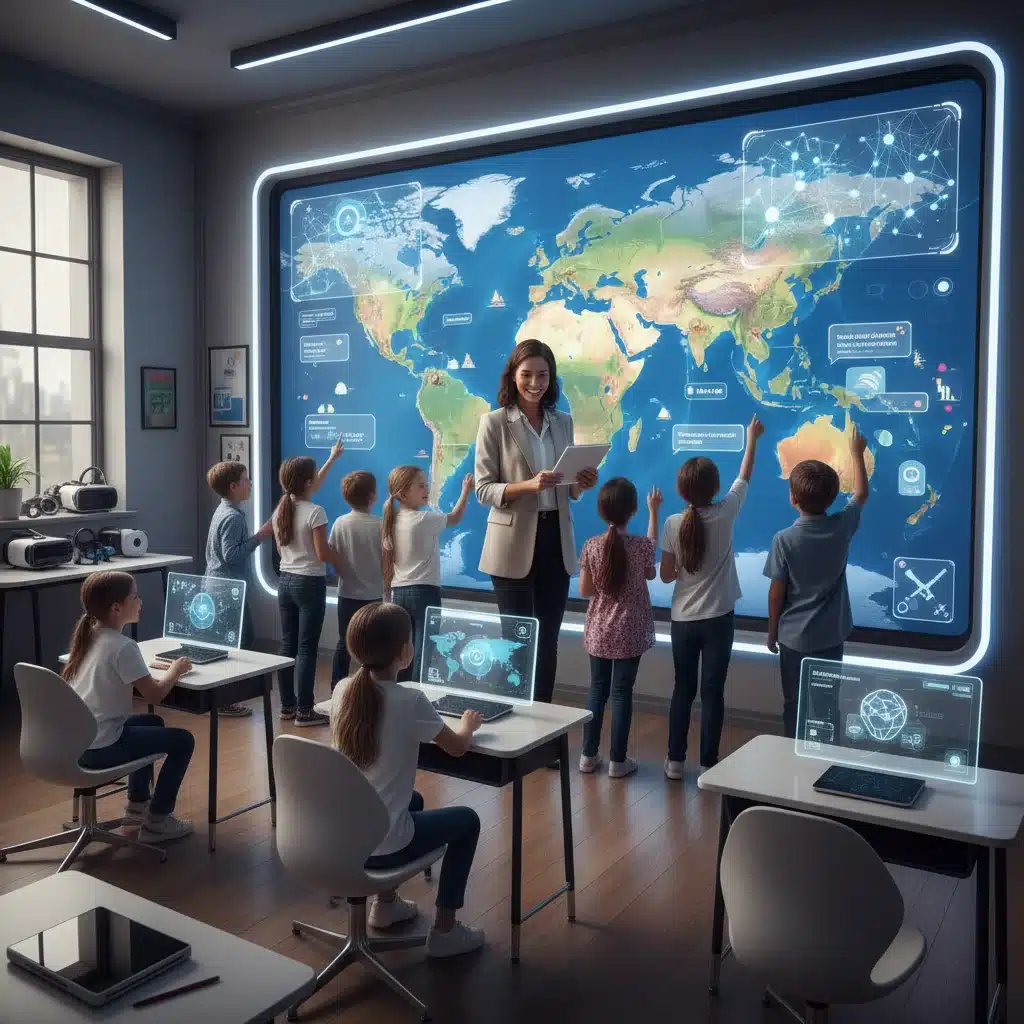
The landscape of education is undergoing a profound transformation, driven by an accelerating wave of technological innovation. At the forefront of this revolution is Artificial Intelligence (AI), a force that promises to redefine how students learn, how educators teach, and how classrooms operate. In the United States, educators are increasingly exploring the potential of AI to enhance learning outcomes, streamline administrative tasks, and create more personalized and engaging educational experiences. This article delves into the rise of AI in U.S. classrooms and outlines 3 practical strategies for educators to effectively integrate new AI tools, ensuring a future-ready learning environment.
The integration of AI into educational settings is not merely about adopting new gadgets; it’s about fundamentally rethinking pedagogical approaches. From intelligent tutoring systems that adapt to individual student needs to AI-powered grading tools that free up valuable teacher time, the applications are vast and growing. However, successful integration requires more than just access to technology; it demands a clear understanding of how these tools can be leveraged to support educational goals, address challenges, and prepare students for a world increasingly shaped by AI.
The Dawn of a New Era: Why AI in U.S. Classrooms Matters
The conversation around AI in U.S. classrooms has shifted from speculative future-gazing to immediate practical implementation. This shift is driven by several compelling factors. Firstly, the ubiquity of AI in daily life means that students need to understand its principles, capabilities, and ethical implications. Integrating AI into the curriculum is no longer optional; it’s a necessity for fostering digital literacy and critical thinking skills essential for future careers and informed citizenship. Secondly, AI offers unprecedented opportunities to address long-standing challenges in education, such as large class sizes, diverse learning needs, and the administrative burden on teachers.
AI’s ability to process vast amounts of data can provide educators with invaluable insights into student performance, learning patterns, and areas where intervention might be needed. This data-driven approach can lead to more targeted instruction and personalized learning pathways, catering to each student’s unique pace and style. Moreover, AI can automate repetitive tasks, allowing teachers to dedicate more time to direct instruction, mentorship, and creative lesson planning. As we explore AI classroom strategies, it’s crucial to recognize the transformative potential these tools hold for both educators and learners.
Understanding the Current Landscape of AI in Education
Before diving into specific AI classroom strategies, it’s important to grasp the current state of AI adoption in U.S. education. While still in its nascent stages for widespread implementation, many schools and districts are piloting AI tools for various purposes. These include:
- Personalized Learning Platforms: AI algorithms analyze student progress and adapt content difficulty, providing customized exercises and feedback.
- Automated Grading and Feedback: AI tools can grade objective assessments, provide instant feedback on essays, and identify common errors.
- Intelligent Tutoring Systems: These systems offer one-on-one support, explaining concepts and guiding students through problem-solving.
- Content Creation and Curation: AI can assist teachers in generating lesson plans, quizzes, and finding relevant educational resources.
- Administrative Support: AI can help with scheduling, attendance tracking, and communication with parents.
The rapid evolution of AI technologies means that educators must remain adaptable and informed. Continuous professional development and a willingness to experiment are key to harnessing the power of AI effectively. The goal is not to replace human teachers but to augment their capabilities, making them more efficient and effective, and ultimately enriching the learning experience for students.
Strategy 1: Personalized Learning Pathways with AI-Powered Adaptive Tools
One of the most impactful AI classroom strategies centers on its ability to deliver truly personalized learning experiences. Traditional classrooms often struggle to cater to the diverse learning styles, paces, and prior knowledge of individual students. AI-powered adaptive learning platforms overcome this challenge by dynamically adjusting content and difficulty based on real-time student performance and engagement.
How it Works in Practice
Imagine a student struggling with a particular math concept. Instead of being left behind, an AI adaptive learning platform identifies this difficulty and immediately provides supplementary resources, alternative explanations, or different types of practice problems. Conversely, a student who has mastered a concept can be accelerated to more advanced material, preventing boredom and fostering continuous growth. This individualized approach ensures that every student is challenged appropriately, maximizing their potential.
For educators, implementing this strategy involves selecting robust AI adaptive learning platforms that align with curriculum goals. Training is essential for teachers to understand how to interpret the data generated by these platforms and how to use those insights to inform their instruction. The role of the teacher shifts from being the sole disseminator of information to a facilitator of learning, guiding students through their personalized pathways and providing targeted support where AI identifies specific needs.
Benefits of Personalized Learning with AI
- Increased Student Engagement: When learning is tailored to their needs, students are more likely to stay engaged and motivated.
- Improved Learning Outcomes: Addressing individual gaps and strengths leads to better comprehension and retention of material.
- Efficiency for Educators: AI automates the differentiation process, freeing teachers to focus on higher-level instruction and one-on-one interactions.
- Data-Driven Instruction: Educators gain access to rich data on student progress, allowing for informed pedagogical decisions.
The successful implementation of this AI classroom strategy requires a commitment to understanding and utilizing the data AI provides. It’s not just about the tool, but how educators use the insights from the tool to refine their teaching and support their students. This strategy emphasizes the powerful synergy between human educators and intelligent technology.

Strategy 2: Empowering Educators with AI for Administrative and Content Creation Tasks
Beyond direct student interaction, AI offers significant potential to alleviate the administrative burden on educators, allowing them to focus more on teaching and less on paperwork. This AI classroom strategy involves leveraging AI tools to automate routine tasks, generate educational content, and provide valuable insights that enhance teaching efficiency.
Streamlining Administrative Workloads
Teachers spend a considerable amount of time on non-instructional tasks, from grading assignments to managing communications. AI can significantly reduce this workload. For instance, AI-powered grading tools can quickly evaluate objective tests and even provide preliminary feedback on written assignments. AI can assist with scheduling, attendance tracking, and organizing digital resources, thereby freeing up precious hours that can be reinvested in lesson planning, professional development, or direct student support.
Consider the time saved by an AI tool that can summarize lengthy academic papers for teachers conducting research, or an AI assistant that helps draft parent communications based on specific student progress reports. These applications, while seemingly minor individually, accumulate to a substantial reduction in administrative overhead, enhancing job satisfaction and reducing burnout.
AI as a Content Creation and Curriculum Development Assistant
Another powerful application within this AI classroom strategy is using AI to assist with content creation and curriculum development. AI tools can generate lesson plans, create diverse quiz questions, suggest relevant multimedia resources, and even help in designing engaging classroom activities. For example, an educator could use an AI tool to brainstorm ideas for a science project, generate multiple versions of a history quiz, or find age-appropriate articles on a current event.
This doesn’t mean AI replaces the teacher’s creativity or expertise. Instead, it acts as a powerful assistant, providing a starting point, generating variations, and helping to overcome creative blocks. Teachers can then refine, personalize, and contextualize the AI-generated content to perfectly match their students’ needs and their pedagogical goals. This collaborative approach between human ingenuity and AI efficiency leads to richer, more dynamic learning materials.
Key Advantages for Educators
- Reduced Workload: Automate repetitive and time-consuming tasks.
- Enhanced Efficiency: Quickly generate diverse educational content and resources.
- Improved Focus: More time for direct student interaction and instructional planning.
- Access to Insights: AI can help analyze trends in student queries or common misconceptions, informing future teaching.
Implementing this strategy requires educators to become familiar with various AI tools and to develop a critical eye for evaluating AI-generated content. The goal is to leverage AI as a productivity enhancer, not as a replacement for human judgment and pedagogical skill. This approach to AI classroom strategies ensures that technology serves the educator, enabling them to be more effective and impactful.
Strategy 3: Fostering AI Literacy and Critical Thinking Through Direct Engagement
The third crucial AI classroom strategy moves beyond using AI as a tool for teaching and learning, to teaching about AI itself. In an increasingly AI-driven world, it is imperative that students develop AI literacy – understanding what AI is, how it works, its ethical implications, and its societal impact. This strategy involves integrating AI concepts into the curriculum and providing opportunities for students to directly engage with AI technologies.
Integrating AI Concepts into the Curriculum
AI literacy doesn’t necessarily require advanced computer science courses. Concepts related to AI, such as algorithms, data bias, machine learning, and ethical considerations, can be woven into various subjects. For instance, in social studies, discussions can revolve around the societal impact of AI on jobs or privacy. In English classes, students can analyze how AI is portrayed in literature or develop critical thinking skills by evaluating AI-generated text. Math classes can explore the statistical foundations of AI algorithms.
This approach helps demystify AI, making it less of a black box and more of an understandable, albeit complex, technology. By embedding AI literacy across the curriculum, educators ensure that all students, regardless of their career aspirations, are equipped with a foundational understanding of this transformative technology.
Hands-On Engagement with AI Tools
Another vital component of this AI classroom strategy is providing students with opportunities for direct, hands-on engagement with AI tools. This could involve:
- Using AI-powered creative tools: Students can experiment with AI art generators, music composers, or story writers to understand how AI processes information and generates outputs.
- Exploring AI programming concepts: Simple visual programming languages or online platforms can introduce students to basic AI concepts like training a machine learning model.
- Analyzing AI outputs: Students can critically evaluate the strengths and limitations of AI-generated content, learning about potential biases or inaccuracies.
- Participating in AI ethics discussions: Engaging in debates and projects that explore the ethical dilemmas posed by AI, such as fairness, accountability, and transparency.
Such direct engagement helps students move beyond passive consumption of AI to active, critical interaction. It fosters problem-solving skills, encourages creativity, and develops a nuanced understanding of AI’s capabilities and limitations. This practical experience is invaluable for preparing students for future roles in an AI-powered economy.

The Importance of Ethical AI Discussions
A critical aspect of fostering AI literacy is engaging students in discussions about ethical AI. As AI becomes more integrated into society, understanding issues like data privacy, algorithmic bias, and the responsible use of AI becomes paramount. Educators can facilitate these discussions, encouraging students to think critically about the societal implications of AI and to consider how to develop and use AI ethically. This arm of the AI classroom strategies ensures that students are not just users of technology, but thoughtful and responsible citizens in an AI-driven world.
Overcoming Challenges in AI Integration
While the potential of AI in U.S. classrooms is immense, its integration is not without challenges. Educators must consider several factors to ensure successful and equitable implementation of these AI classroom strategies.
Access and Equity
One of the primary concerns is ensuring equitable access to AI tools and digital infrastructure. The digital divide, which disproportionately affects students from low-income backgrounds or rural areas, could be exacerbated if AI tools are not made universally accessible. Schools and districts must prioritize investments in robust internet connectivity, devices, and AI software to ensure all students can benefit from these advancements.
Teacher Training and Professional Development
The effectiveness of any AI tool ultimately depends on the educator using it. Comprehensive professional development is crucial for teachers to not only understand how to operate AI platforms but also how to integrate them pedagogically. Training should focus on practical applications, data interpretation, and fostering critical thinking about AI. Educators need to feel confident and competent in using AI to enhance their teaching, rather than feeling overwhelmed or replaced.
Data Privacy and Security
The use of AI in education often involves collecting and analyzing student data. Ensuring the privacy and security of this sensitive information is paramount. Schools must implement robust data governance policies, comply with relevant regulations (like FERPA), and select AI tools from reputable vendors that prioritize data protection. Transparent communication with parents and students about data usage is also essential to build trust.
Ethical Considerations and Bias
AI algorithms can inadvertently perpetuate or amplify existing biases present in the data they are trained on. Educators need to be aware of these potential biases in AI tools and teach students to critically evaluate AI outputs. Integrating ethical discussions about AI into the curriculum, as highlighted in Strategy 3, is vital for developing responsible digital citizens.
Curriculum Alignment and Assessment
Integrating AI effectively requires careful consideration of how it aligns with existing curriculum standards and assessment methods. AI tools should complement, not complicate, learning objectives. Educators need to explore how AI can support the assessment of complex skills, such as problem-solving, creativity, and critical thinking, which are often difficult to measure with traditional methods.
The Future of Learning with AI in U.S. Classrooms
The journey of integrating AI into U.S. classrooms is just beginning, but its trajectory is clear: AI will play an increasingly central role in shaping the future of education. By embracing these AI classroom strategies, educators can move beyond simply adopting technology to truly transforming the learning experience. The goal is to cultivate a dynamic, personalized, and engaging educational environment that prepares students not just for current challenges but for the unforeseen opportunities of tomorrow.
The synergistic relationship between human educators and AI is key. AI can handle the data processing, the personalization algorithms, and the administrative heavy lifting, while teachers provide the empathy, critical thinking, mentorship, and human connection that no algorithm can replicate. This collaborative model promises to unlock new levels of educational effectiveness and equity.
As we look forward, continuous research, development, and thoughtful implementation will be essential. Pilot programs, feedback loops from educators and students, and ongoing professional development will refine these AI classroom strategies and ensure that AI serves as a powerful force for good in education. The future classroom will be one where AI empowers educators, engages students, and truly prepares them to thrive in an ever-evolving world.
Embracing AI is not just about keeping pace with technological advancement; it’s about reimagining education for the 21st century. By focusing on personalized learning, empowering educators, and fostering AI literacy, U.S. classrooms can become beacons of innovation, equipping the next generation with the skills and understanding needed to navigate and shape an AI-powered future.

 Future Skills: What U.S. Employers Seek in Graduates
  K-12 funding boost for underserved districts US: why now