
Navigating 2026 Crypto Regulations: SEC Guidelines & Digital Asset Impact

Anúncios
Navigating 2026 Crypto Regulations: A Deep Dive into New SEC Guidelines Impacting Digital Asset Portfolios
The world of cryptocurrency is no stranger to rapid evolution, but as we look towards 2026, the landscape is poised for perhaps its most significant transformation yet. The Securities and Exchange Commission (SEC) is expected to finalize and implement a new wave of guidelines that will fundamentally reshape how digital assets are classified, traded, and managed. For investors, project developers, and indeed, anyone involved in the blockchain space, understanding these impending SEC guidelines and their profound impact on digital asset portfolios is not just beneficial, but absolutely critical. This comprehensive guide will delve into the anticipated changes, offering insights into what to expect and how to prepare for the future of regulated crypto.
Anúncios
The Shifting Sands of Crypto Regulation: Why 2026 is a Crucial Year
For years, the cryptocurrency market has operated in a regulatory gray area, characterized by a patchwork of state-specific rules, evolving interpretations, and a general lack of cohesive federal oversight. While this environment fostered innovation, it also led to significant market volatility, investor protection concerns, and challenges for institutional adoption. Recognizing the growing maturity and systemic importance of digital assets, global regulatory bodies, spearheaded by the SEC in the United States, have been working diligently to establish clear frameworks. The year 2026 is widely anticipated as the target for many of these efforts to coalesce into actionable, enforceable regulations.
The impetus for these changes is multifaceted. Firstly, the sheer scale of the crypto market demands it. With trillions of dollars in market capitalization and millions of participants, the lack of clear rules poses risks to financial stability. Secondly, a series of high-profile failures and fraudulent activities within the crypto space have underscored the urgent need for investor protection. Finally, as traditional financial institutions increasingly explore blockchain technology, they require regulatory clarity to participate fully and responsibly. The convergence of these factors makes 2026 a watershed moment for Crypto Regulations 2026.
Anúncios
Historical Context: The Road to 2026
To fully appreciate the significance of what’s coming, it’s helpful to glance back at the regulatory journey. Early attempts at crypto regulation often involved applying existing securities laws to digital assets, leading to debates over whether a particular token constituted a security or a commodity. The SEC, under various administrations, has consistently maintained that many cryptocurrencies, especially those offered through Initial Coin Offerings (ICOs), are indeed securities and therefore fall under their purview. Landmark enforcement actions against projects that failed to register their offerings have set precedents, but a comprehensive, forward-looking framework has remained elusive.
The Commodity Futures Trading Commission (CFTC) has also played a role, primarily regulating Bitcoin and Ethereum as commodities. This dual oversight, often overlapping and sometimes conflicting, has created confusion. However, ongoing dialogues between these agencies, coupled with legislative proposals, suggest a more harmonized approach is on the horizon. The goal for Crypto Regulations 2026 is not just to regulate, but to provide a clear, predictable environment that fosters legitimate innovation while mitigating risks.
Key Pillars of Anticipated SEC Guidelines in 2026
While the final text of the 2026 SEC guidelines remains subject to ongoing deliberation, several key areas are expected to form the bedrock of the new regulatory landscape. These pillars aim to address the fundamental challenges of the digital asset space, moving it closer to traditional financial markets in terms of transparency, accountability, and investor protection.
1. Enhanced Asset Classification Frameworks
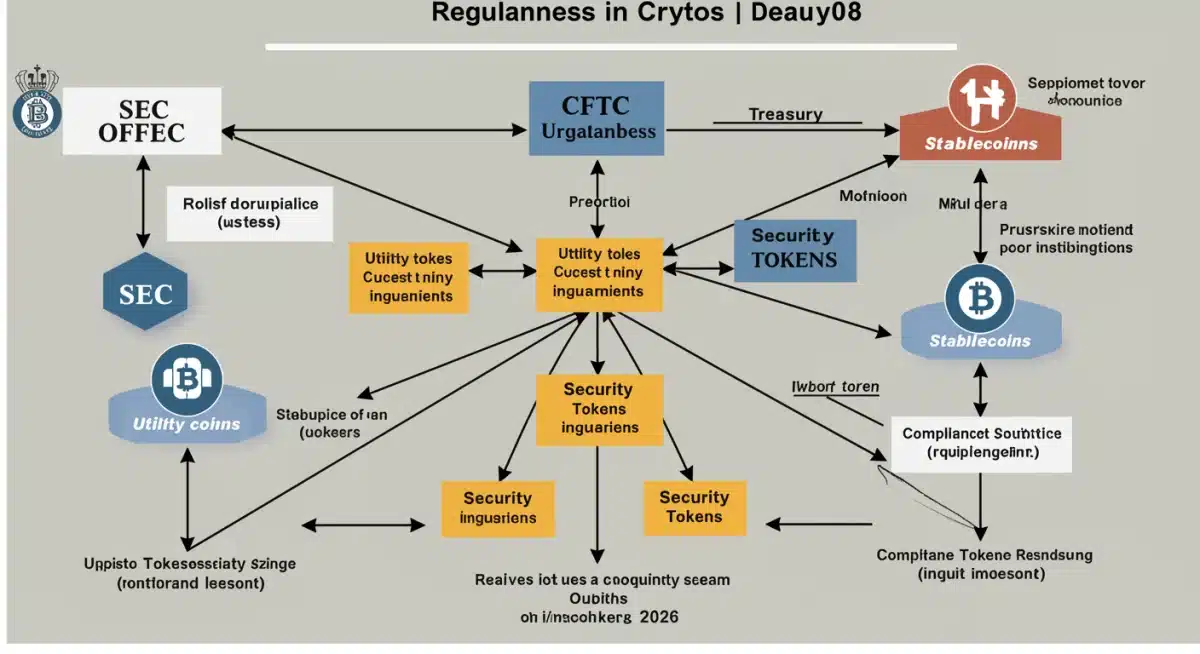
One of the most persistent challenges has been the classification of digital assets. Is a token a security, a commodity, a currency, or something entirely new? The SEC’s updated guidelines are highly likely to provide a much clearer and more nuanced framework for classifying digital assets. This could involve:
- Detailed Howey Test Application: Expect more explicit guidance on how the Howey Test (a Supreme Court precedent used to determine if a transaction qualifies as an ‘investment contract’ and thus a security) applies to various token structures, including utility tokens, governance tokens, and NFTs.
- Distinction Between Securities and Commodities: Collaboration with the CFTC may lead to a clearer delineation, potentially through a joint task force or legislative mandate, reducing jurisdictional ambiguity.
- Specific Stablecoin Regulations: Stablecoins, particularly those pegged to fiat currencies, have attracted significant attention due to their potential systemic risk. Expect robust regulations concerning their reserves, auditing requirements, and operational transparency. This will be a critical component of Crypto Regulations 2026.
This clarity will be invaluable for project developers seeking to launch new tokens, as it will provide a predictable path for compliance from inception. For investors, it will offer greater certainty regarding the regulatory status and associated protections for their holdings.
2. Stricter Registration and Disclosure Requirements
A cornerstone of securities regulation is the requirement for issuers to register their offerings and provide comprehensive disclosures to investors. The new SEC guidelines are expected to extend and strengthen these requirements for digital asset offerings:
- Mandatory Registration for Security Tokens: Projects issuing tokens deemed securities will likely face stringent registration processes, similar to traditional equity offerings. This includes detailed financial statements, risk disclosures, and information about management.
- Ongoing Reporting Obligations: Beyond initial registration, issuers may be required to provide regular updates on their financial health, project development milestones, and any material changes that could affect investors.
- Transparency in Decentralized Autonomous Organizations (DAOs): The SEC is likely to grapple with the unique structure of DAOs. While direct registration might be challenging, expect guidelines that promote transparency in governance, treasury management, and decision-making processes within DAOs that issue tokens classified as securities.
These measures aim to bring a higher level of accountability and transparency to the digital asset market, mirroring the standards of traditional finance. This will significantly impact how new projects are launched and how existing ones operate under Crypto Regulations 2026.
3. Enhanced Oversight of Crypto Exchanges and Intermediaries
Centralized cryptocurrency exchanges, custodians, and other intermediaries play a pivotal role in the digital asset ecosystem. The SEC’s 2026 guidelines are expected to bring these entities under more rigorous oversight:
- Registration as Exchanges or Broker-Dealers: Many crypto exchanges may be compelled to register as national securities exchanges or broker-dealers, subjecting them to a host of new rules regarding market manipulation prevention, operational resilience, and customer asset protection.
- Custody Rules for Digital Assets: New rules are anticipated to ensure that custodians of digital assets meet specific standards for security, insurance, and segregation of client funds, similar to those in traditional finance.
- Anti-Money Laundering (AML) and Know Your Customer (KYC) Expansion: While already in place to some extent, expect even more stringent AML/KYC requirements across all regulated crypto platforms, aiming to combat illicit finance.
- Trading Rules and Market Integrity: Guidelines will likely address issues like front-running, wash trading, and other manipulative practices, aiming to foster fair and orderly markets. This is a critical area for the success of Crypto Regulations 2026.
The increased scrutiny on intermediaries will professionalize the crypto trading environment, potentially reducing risks associated with exchange hacks, insolvencies, and unfair trading practices. However, it may also lead to increased operational costs for these platforms, which could be passed on to users.
4. Investor Protection and Education Initiatives
A core mandate of the SEC is investor protection. The 2026 guidelines are expected to include proactive measures to safeguard retail investors in the crypto market:
- Risk Disclosure Standards: Clearer and more prominent risk disclosures will likely be mandated for all digital asset offerings and platforms, ensuring investors are fully aware of the speculative nature and potential for loss.
- Suitability Requirements: For certain complex or high-risk digital asset products, intermediaries might be required to assess the suitability of an investment for a particular client, similar to traditional financial advisory services.
- Public Education Campaigns: The SEC may launch or expand educational initiatives to inform the public about the risks and opportunities in the crypto market, helping investors make more informed decisions.
These measures are designed to empower investors with the knowledge and protections necessary to navigate the often-complex world of digital assets, making Crypto Regulations 2026 a boon for consumer confidence.
Impact on Digital Asset Portfolios: What Investors Need to Know
The implementation of these new SEC guidelines in 2026 will have far-reaching consequences for how investors construct, manage, and interact with their digital asset portfolios. Understanding these impacts is crucial for adapting strategies and mitigating potential risks.
1. Enhanced Due Diligence and Research
With clearer classification frameworks and stricter disclosure requirements, investors will have access to more standardized and reliable information about digital assets. This means:
- Focus on Registered Offerings: Investors may increasingly favor tokens that have undergone formal SEC registration, as these will offer greater regulatory certainty and transparency.
- Scrutiny of Whitepapers and Financials: The quality and completeness of project whitepapers, financial audits, and ongoing reports will become even more critical in evaluating an investment.
- Understanding Regulatory Status: Investors will need to understand whether their holdings are classified as securities or commodities, as this dictates the regulatory protections and obligations associated with them.
The era of investing based solely on hype or anecdotal evidence will likely diminish, replaced by a greater emphasis on fundamental analysis and regulatory compliance. This shift will define investment strategies under Crypto Regulations 2026.
2. Potential for Increased Institutional Adoption
Regulatory clarity is a primary prerequisite for widespread institutional adoption of digital assets. As the SEC guidelines solidify, we can expect:
- New Investment Products: The development and approval of more regulated crypto investment products, such as spot ETFs for a broader range of cryptocurrencies, could accelerate.
- Traditional Finance Integration: Banks, hedge funds, and asset managers will find it easier to allocate capital to digital assets, knowing the regulatory boundaries and compliance requirements.
- Reduced Counterparty Risk: Stricter oversight of exchanges and custodians will reduce the risk associated with storing and trading digital assets through third parties, making institutional participation more palatable.
This influx of institutional capital could bring greater stability and liquidity to the market, but also potentially greater correlation with traditional financial markets. This is a key outcome anticipated from Crypto Regulations 2026.
3. Impact on Decentralized Finance (DeFi)
DeFi, by its very nature, challenges traditional regulatory paradigms. The SEC’s approach to DeFi under the 2026 guidelines will be a critical area to watch:
- Protocol-Level Scrutiny: While directly regulating decentralized protocols is complex, the SEC may focus on specific interfaces, liquidity providers, or developers who exert significant control over a protocol, potentially requiring them to comply with registration or disclosure rules.
- Stablecoin Integration in DeFi: New stablecoin regulations will directly impact DeFi protocols that rely heavily on stablecoins for lending, borrowing, and trading.
- Risk Disclosure for DeFi Products: Expect pressure for DeFi platforms to provide clearer risk disclosures to users, particularly concerning smart contract vulnerabilities, impermanent loss, and protocol solvency.
DeFi projects will need to innovate not just technologically, but also in developing compliance-friendly structures that maintain decentralization while meeting regulatory expectations. This balancing act will be crucial for DeFi’s evolution under Crypto Regulations 2026.

4. Tax Implications and Reporting
While primarily under the purview of the IRS, SEC regulations can indirectly influence tax reporting. Increased transparency and standardized reporting from exchanges and custodians will likely make it easier for tax authorities to track crypto transactions, leading to:
- More Comprehensive Tax Reporting: Expect more robust 1099-B style reporting from regulated platforms, simplifying tax calculations but also ensuring greater compliance.
- Potential for New Tax Guidance: As the regulatory landscape clarifies, the IRS may issue updated guidance on various crypto-related tax events, including staking rewards, DeFi yields, and NFT transactions.
Investors should prepare for a future where crypto tax compliance is as straightforward (and mandatory) as traditional asset reporting, a direct consequence of the evolving Crypto Regulations 2026.
Preparing Your Digital Asset Portfolio for 2026
Given the imminent changes, proactive preparation is key. Here’s how investors can position their digital asset portfolios for success in a regulated 2026:
1. Stay Informed and Educated
The regulatory environment will be dynamic. Continuously monitor official announcements from the SEC, CFTC, and other relevant bodies. Follow reputable crypto news sources and engage with thought leaders in the regulatory space. Understanding the nuances of new rules will be your first line of defense and opportunity.
2. Review Your Portfolio for Regulatory Compliance
Assess your current holdings. Are you invested in tokens that might be reclassified? Do you understand the potential implications for each asset? Consider diversifying into projects that are actively working towards regulatory compliance or those that are less likely to fall under strict securities classifications (e.g., established commodities like Bitcoin, though even these may see new oversight).
3. Choose Regulated Platforms and Services
As exchanges and custodians come under stricter SEC oversight, prioritize platforms that demonstrate a clear commitment to compliance. Look for services that are licensed, regularly audited, and offer robust security measures. This will not only protect your assets but also simplify tax reporting.
4. Understand and Document Your Transactions
Maintain meticulous records of all your cryptocurrency transactions – purchases, sales, transfers, swaps, staking rewards, and any other taxable events. This will be invaluable for tax compliance and for demonstrating the legitimacy of your holdings if ever required. Utilize crypto tax software to streamline this process.
5. Consult with Legal and Financial Professionals
For significant portfolios or complex investment strategies, seeking advice from legal and financial professionals specializing in digital assets is highly recommended. They can provide tailored guidance on navigating the new Crypto Regulations 2026, optimizing your portfolio for compliance, and understanding potential tax liabilities.
Challenges and Opportunities Ahead
While the impending Crypto Regulations 2026 promise greater stability and investor protection, they are not without challenges. Over-regulation could stifle innovation, particularly for smaller projects or those committed to true decentralization. The cost of compliance could also be a barrier to entry for new market participants. However, these challenges are often accompanied by significant opportunities.
The clarity provided by robust regulations could unlock trillions in institutional capital, leading to a new era of growth and maturation for the digital asset market. It could also foster greater public trust, making cryptocurrency a more accessible and accepted part of mainstream finance. Projects that successfully adapt to the new regulatory landscape will likely emerge stronger, more resilient, and better positioned for long-term success.
Conclusion: A New Era for Digital Assets
The year 2026 stands as a pivotal moment for the cryptocurrency industry. The anticipated new SEC guidelines are not merely incremental changes; they represent a fundamental restructuring of the regulatory environment for digital assets. While the journey towards full implementation may be complex, the ultimate goal is a more transparent, secure, and legitimate crypto market.
For investors, this means a shift towards more informed decision-making, a greater emphasis on regulatory compliance, and potentially, a more stable and mature market. By staying informed, adapting strategies, and embracing the new regulatory paradigm, participants in the digital asset space can not only navigate the challenges but also capitalize on the immense opportunities that Crypto Regulations 2026 will undoubtedly bring. The future of finance is here, and it’s increasingly regulated.
