

Federal Reserve’s Latest Economic Outlook Predicts 2.5% GDP Growth for the Upcoming Year
The financial world is abuzz with the Federal Reserve’s latest economic outlook, a comprehensive and highly anticipated report that provides critical insights into the nation’s economic trajectory. At the heart of this recent assessment is a notable prediction: a projected 2.5% GDP growth for the upcoming year. This forecast, while seemingly a single number, encapsulates a complex interplay of economic indicators, policy decisions, and global forces. Understanding the nuances behind this prediction is crucial for businesses, investors, policymakers, and the general public alike, as it offers a roadmap for potential opportunities and challenges ahead. The Federal Reserve, often referred to as the ‘Fed,’ holds immense sway over the U.S. economy, and its pronouncements are meticulously dissected for clues about future market conditions, inflation, employment, and interest rates. This article will delve deep into the Fed GDP Outlook, exploring the factors contributing to this specific growth projection, its potential implications, and how various sectors might respond.
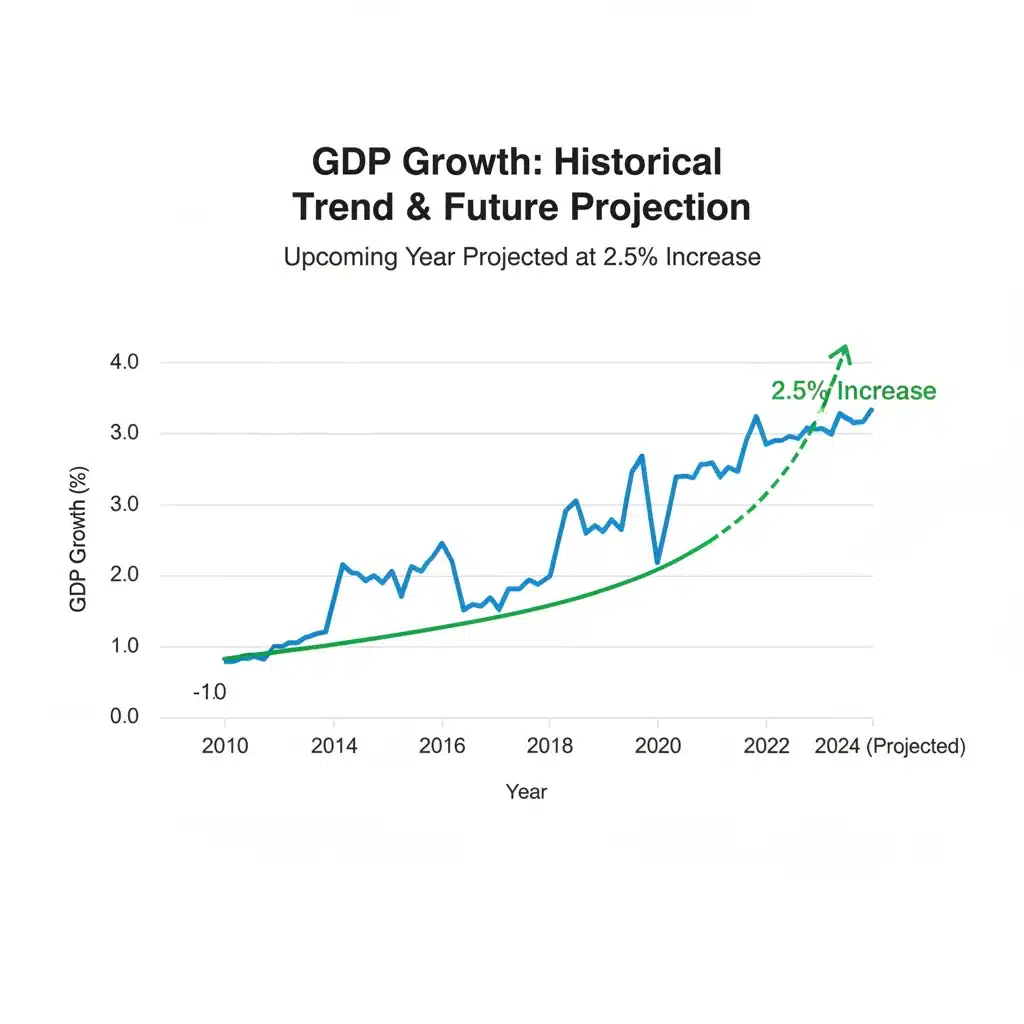
The Gross Domestic Product (GDP) is the total monetary or market value of all the finished goods and services produced within a country’s borders in a specific time period. As a broad measure of overall domestic production, it functions as a comprehensive scorecard of a given country’s economic health. A 2.5% growth rate, particularly in the current global economic climate, suggests a resilient and expanding economy, indicating that the Fed believes the U.S. is on a path of sustainable recovery and expansion. This figure is not merely an arbitrary number; it is the culmination of extensive data analysis, econometric modeling, and expert consensus within the Federal Reserve system. It reflects a careful weighing of various economic forces, including consumer spending patterns, business investment, government expenditures, and net exports. For many, this forecast provides a beacon of stability and optimism, signaling a period of potential prosperity and increased economic activity.
Understanding the Federal Reserve’s Mandate and Forecasting Process
To fully appreciate the significance of the Fed GDP Outlook, it’s essential to understand the Federal Reserve’s dual mandate: to promote maximum employment and stable prices. These two objectives are often intertwined, and the Fed’s economic projections are instrumental in guiding its monetary policy decisions to achieve these goals. The forecasting process within the Federal Reserve is rigorous and multifaceted, involving a vast network of economists, researchers, and policymakers. It begins with the collection and analysis of an enormous amount of economic data, ranging from employment figures and inflation rates to manufacturing output and housing starts. This raw data is then fed into sophisticated econometric models that are designed to simulate various economic scenarios and predict future trends.
Beyond quantitative analysis, the Fed also incorporates qualitative assessments from its regional Federal Reserve banks, which provide on-the-ground insights into local economic conditions across the country. These anecdotal reports, often gathered through surveys and interviews with businesses and community leaders, offer a valuable complement to the statistical data, painting a more complete picture of the economic landscape. The Federal Open Market Committee (FOMC), the Fed’s primary monetary policymaking body, then convenes periodically to review these forecasts and discuss the appropriate course of action. It’s during these meetings that the consensus view on the economic outlook, including the GDP growth projection, is formed and often communicated to the public through official statements and reports.
The transparency of the Fed’s forecasting process, though sometimes criticized for its complexity, is crucial for market stability. By providing its economic projections, the Fed aims to reduce uncertainty, guide market expectations, and facilitate more informed decision-making by businesses and individuals. When the Fed projects a 2.5% GDP growth, it’s not just a prediction; it’s a statement reflecting their current assessment of the economy’s underlying strength and their policy intentions to support that growth while keeping inflation in check. This forward guidance is a powerful tool, influencing everything from investment strategies to consumer confidence.
Key Drivers Behind the 2.5% GDP Growth Projection
The Federal Reserve’s projection of 2.5% GDP growth for the upcoming year is not an isolated number but rather the result of several underlying economic factors that are expected to contribute positively to the nation’s economic performance. Identifying these key drivers is paramount to understanding the robustness and sustainability of the anticipated growth. One significant factor is the continued strength of the labor market. A robust job market typically translates into higher consumer confidence and increased disposable income, which in turn fuels consumer spending – a major component of GDP. The Fed likely anticipates a sustained low unemployment rate and perhaps even further wage growth, providing a solid foundation for economic expansion.
Another critical driver is business investment. When businesses are confident about future economic conditions, they are more likely to invest in new equipment, technology, and expansion projects. This investment not only creates jobs but also enhances productivity and contributes directly to GDP. The Fed’s forecast suggests an expectation of favorable business sentiment, possibly spurred by stable interest rates or specific policy incentives. Furthermore, government spending and investment, particularly in infrastructure or other strategic areas, can also provide a significant boost to GDP. While the Fed’s role is not to dictate fiscal policy, its projections often take into account announced or anticipated government initiatives that could impact economic activity.
Technological innovation and productivity gains are also silent but powerful contributors to economic growth. Advances in technology can lead to more efficient production processes, new industries, and increased output per worker, all of which enhance GDP. The Fed’s forecast may implicitly incorporate an expectation of continued innovation driving economic dynamism. Finally, the global economic environment plays a role. While the U.S. economy is large and relatively self-sufficient, it is not immune to international trade and global demand. A stable or improving global economic outlook can support U.S. exports and international investment, further bolstering domestic GDP. The Fed GDP Outlook therefore reflects a complex equilibrium of these diverse forces, all pointing towards a positive economic trajectory.
Implications for Businesses and Consumers
A projected 2.5% GDP growth has wide-ranging implications for both businesses and consumers, shaping decisions and strategies across various sectors. For businesses, this forecast generally signals an environment ripe for expansion and increased profitability. Companies may feel more confident in hiring new employees, investing in research and development, and expanding their market reach. Sectors that are particularly sensitive to consumer spending, such as retail, hospitality, and entertainment, could experience a significant uplift. Manufacturing and construction might also see increased demand as businesses invest in new facilities and consumers engage in home improvements or new home purchases. Access to capital might remain favorable, as banks, encouraged by a stable economic outlook, could be more willing to lend.
However, businesses will also need to be mindful of potential challenges. Increased demand could lead to supply chain pressures and upward pressure on raw material costs. Furthermore, a strong economy can sometimes lead to tighter labor markets, making it more challenging to find and retain skilled workers, potentially leading to wage inflation. Strategic planning around these factors will be crucial for businesses looking to capitalize on the anticipated growth. Companies should review their operational efficiencies, explore automation where feasible, and foster strong employee retention programs to navigate a competitive landscape.
For consumers, the Fed GDP Outlook of 2.5% growth generally translates into greater job security, potential wage increases, and increased opportunities for personal financial advancement. A growing economy often means more job openings, making it easier for individuals to find employment or seek better career opportunities. This improved employment picture can boost consumer confidence, leading to increased spending on goods and services, including larger purchases like homes and vehicles. However, consumers should also be aware of the potential for inflation. While the Fed aims for stable prices, robust economic growth can sometimes create inflationary pressures. Therefore, budgeting and financial planning, including saving and investing, remain important to build resilience against any potential price increases.
Interest rates are another critical factor. While the Fed’s primary focus is on the federal funds rate, a strong economic outlook can influence broader market interest rates, affecting everything from mortgage rates to credit card APRs. Consumers planning major purchases financed by loans should monitor these trends closely. Overall, the 2.5% GDP growth projection paints a picture of a dynamic economy with both opportunities and considerations for individuals and enterprises alike. Understanding these implications allows for more informed decision-making and better preparation for the economic landscape ahead.
The Role of Monetary Policy in Achieving the Forecast
The Federal Reserve’s projection of 2.5% GDP growth is not merely a passive prediction; it is intrinsically linked to its proactive monetary policy decisions. The Fed utilizes a range of tools to influence economic activity and steer the economy towards its dual mandate of maximum employment and price stability. The federal funds rate, the target rate for overnight lending between banks, is perhaps the most well-known of these tools. By adjusting this rate, the Fed influences borrowing costs throughout the economy, impacting everything from consumer loans to business investments. A lower federal funds rate tends to stimulate economic activity by making borrowing cheaper, while a higher rate tends to cool down an overheating economy.
In the context of a 2.5% GDP growth forecast, the Fed’s current and anticipated monetary policy stance is crucial. If the Fed believes that the economy is on a sustainable growth path without excessive inflationary pressures, it might maintain a relatively accommodative stance, keeping interest rates at levels that support continued expansion. Conversely, if inflationary pressures begin to build, or if growth appears to be accelerating too rapidly, the Fed might consider tightening monetary policy to prevent the economy from overheating. The challenge for the Fed is to strike a delicate balance: fostering growth without inadvertently triggering high inflation.
Beyond interest rates, the Fed also employs other tools, such as quantitative easing (QE) or quantitative tightening (QT), which involve buying or selling government securities to influence the money supply. These actions can impact long-term interest rates and overall market liquidity. The guidance provided by the FOMC, often through post-meeting statements and press conferences, also plays a significant role. This forward guidance helps to shape market expectations and provides clarity on the Fed’s future policy intentions, which in turn influences investment and spending decisions. Therefore, the Fed GDP Outlook of 2.5% is not just an observation but also an implicit reflection of the Fed’s confidence in its ability to manage monetary policy effectively to achieve this growth target while managing potential risks.
Potential Risks and Challenges to the Forecast
While the Federal Reserve’s projection of 2.5% GDP growth offers an optimistic outlook, it’s crucial to acknowledge that economic forecasts are inherently subject to uncertainty. Several potential risks and challenges could impact the realization of this growth target. One significant domestic risk is the persistence of inflation. If inflation proves to be more stubborn than anticipated, the Fed might be compelled to adopt a more aggressive monetary tightening stance, which could slow economic growth more significantly than currently projected. Unexpected shocks to supply chains or commodity prices could also fuel inflationary pressures, complicating the Fed’s efforts to maintain price stability while supporting growth.
Another domestic challenge could arise from a weakening in consumer confidence or business investment. If unforeseen events or a prolonged period of economic uncertainty cause consumers to cut back on spending or businesses to delay investments, the momentum for 2.5% GDP growth could falter. Political instability or significant policy shifts at the domestic level could also introduce uncertainty and impact economic decisions. For instance, debates over fiscal policy, government spending, or regulatory changes can create headwinds for businesses and investors.

On the international front, geopolitical events pose a constant risk. Conflicts, trade disputes, or significant economic downturns in major global economies could disrupt international trade, impact supply chains, and reduce demand for U.S. exports, thereby affecting domestic GDP. Fluctuations in global energy prices, often influenced by geopolitical tensions, can also have a ripple effect on the U.S. economy, impacting production costs and consumer spending power. Furthermore, the ongoing evolution of global financial markets and the potential for financial contagion from international crises remain a concern. Unforeseen financial shocks in other parts of the world could transmit instability to the U.S. economy.
The Fed GDP Outlook also relies on certain assumptions about productivity growth and technological adoption. If these factors do not materialize as expected, or if there are unexpected slowdowns in innovation, the underlying capacity for economic growth could be diminished. Therefore, while the 2.5% GDP growth forecast is a positive indicator, it is essential to remain vigilant about these potential headwinds and for policymakers to be prepared to adjust strategies as economic conditions evolve. The Fed’s ability to navigate these complexities will be critical in achieving its stated goals and maintaining the economy on a stable growth path.
Comparing the Fed’s Forecast with Other Economic Projections
The Federal Reserve’s 2.5% GDP growth forecast is a crucial benchmark, but it doesn’t exist in a vacuum. Various other institutions, both public and private, also produce their own economic projections, and comparing these different outlooks provides a more comprehensive understanding of the consensus and divergences within the economic community. Major financial institutions, such as Wall Street banks and investment firms, often publish their own GDP forecasts. These projections are typically based on their proprietary models and market intelligence, and they can sometimes differ from the Fed’s, reflecting slightly different assumptions about future policy, market behavior, or global events. Analysts often scrutinize these differences to gauge market sentiment and identify potential areas of disagreement.
International organizations like the International Monetary Fund (IMF) and the World Bank also regularly release global and country-specific economic outlooks. While their focus is broader, their U.S. GDP projections offer an external perspective that can either corroborate or challenge the Fed’s domestic assessment. A significant divergence between the Fed’s forecast and those of international bodies could signal differing views on global economic headwinds or the effectiveness of domestic policies. Academic institutions and independent economic think tanks also contribute to the landscape of economic forecasting. Their models and analyses, often free from immediate policy or market pressures, can offer fresh insights and alternative perspectives on the drivers of economic growth.
It’s rare for all these forecasts to align perfectly, but a general consensus around a particular growth trajectory, such as the Fed GDP Outlook of 2.5%, can instill greater confidence in the overall economic direction. Conversely, wide discrepancies might indicate significant uncertainties or fundamental disagreements about the economy’s underlying health or future policy responses. Understanding these comparisons helps to contextualize the Fed’s projection, allowing for a more nuanced interpretation of its implications. It also highlights the dynamic and often complex nature of economic forecasting, where different methodologies and perspectives can lead to varied, yet equally valid, conclusions.
Conclusion: Navigating the Path to 2.5% GDP Growth
The Federal Reserve’s latest economic outlook, predicting a robust 2.5% GDP growth for the upcoming year, offers a significant and generally optimistic assessment of the U.S. economy’s trajectory. This forecast is a product of meticulous analysis, incorporating a wide array of economic data, sophisticated modeling, and expert judgment. It reflects an expectation of continued strength in the labor market, sustained business investment, and a supportive monetary policy environment. For businesses, this projection signals potential opportunities for expansion, increased profitability, and strategic growth. For consumers, it generally translates into improved job prospects, potential wage growth, and a more stable financial outlook, fostering greater confidence in spending and investment decisions.
However, it is equally important to approach this forecast with a balanced perspective, acknowledging the inherent uncertainties and potential challenges that could influence its realization. Risks such as persistent inflation, unexpected domestic economic shocks, and geopolitical instability on the global stage could all impact the growth trajectory. The Federal Reserve’s role in navigating these complexities through agile and data-driven monetary policy decisions will be paramount in steering the economy towards its dual mandate of maximum employment and price stability. The Fed GDP Outlook is not a guarantee, but rather a guiding light, indicating the most probable path forward based on current information and expert analysis.
Ultimately, the journey towards achieving and sustaining a 2.5% GDP growth will require continued vigilance from policymakers, strategic adaptability from businesses, and informed decision-making from consumers. By understanding the drivers behind this forecast, its implications, and the potential risks, all stakeholders can better prepare for the economic landscape ahead. The Federal Reserve’s pronouncement serves as a critical piece of the economic puzzle, offering valuable insights into the nation’s financial health and the collective efforts required to foster enduring prosperity.

 US Asian Trade Agreement: Economic Impact Analysis 5 Years Out
  Homeland Security Updates: Global Travel Advisories & Safety Protocols
  NASA’s New Space Discovery: Implications for Future Missions