

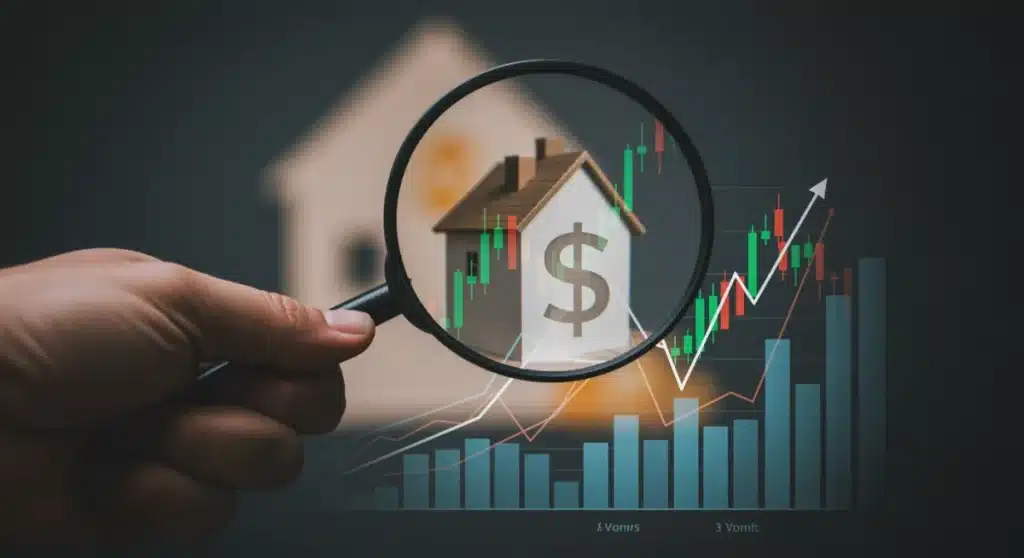
The Federal Reserve’s interest rate adjustments directly influence borrowing costs for mortgages and various loans, making it crucial for consumers to understand the short-term implications for their household finances.
As the economic landscape continues to evolve, understanding the implications of Federal Reserve rate hikes on your personal finances is more critical than ever. For many Americans, these adjustments directly translate to changes in the cost of borrowing for major life purchases, primarily mortgages and various types of loans. This article aims to provide a comprehensive 3-month outlook, helping you navigate the potential shifts and make informed financial decisions.
Understanding the Federal Reserve’s Role in Interest Rates
The Federal Reserve, often referred to as the Fed, is the central banking system of the United States. Its primary mandate includes maintaining maximum employment, stable prices, and moderate long-term interest rates. To achieve these goals, the Fed utilizes various monetary policy tools, with adjusting the federal funds rate being one of the most prominent.
When the Fed decides to raise or lower the federal funds rate, it directly influences the interest rates that commercial banks charge each other for overnight lending. This, in turn, has a ripple effect throughout the entire financial system, impacting everything from savings account yields to the cost of consumer loans and mortgages. These decisions are not made lightly; they consider a wide array of economic indicators, including inflation, employment data, and global economic conditions.
The mechanism of rate adjustments
The Federal Open Market Committee (FOMC) meets eight times a year to assess economic conditions and determine the appropriate stance for monetary policy. Their decisions on the federal funds rate target range are widely anticipated and can cause significant market movements. A rate hike, for instance, signals a tightening of monetary policy, typically done to combat inflation.
- Federal Funds Rate: The target rate for interbank overnight lending.
- Discount Rate: The interest rate charged by the Federal Reserve to commercial banks for short-term loans.
- Reserve Requirements: The amount of funds banks must hold in reserve against deposits.
Understanding these fundamental mechanisms is crucial for comprehending why a Fed announcement can have such a profound impact on your wallet. The direct correlation between the federal funds rate and consumer lending rates means that any change by the Fed is likely to be reflected in your mortgage payments or loan terms.
In essence, the Fed’s actions are a powerful lever in the economy. By understanding its role and how it influences interest rates, individuals can better anticipate financial changes and prepare for potential impacts on their borrowing costs over the next three months.
Current Economic Climate and the Fed’s Stance
The current economic climate is characterized by a complex interplay of persistent inflation, a robust labor market, and evolving global geopolitical factors. These elements collectively shape the Federal Reserve’s approach to monetary policy, particularly concerning interest rate adjustments. The Fed’s primary concern remains taming inflation, which has proven more stubborn than initially anticipated, without triggering a severe economic downturn.
Recent economic data, such as the Consumer Price Index (CPI) and Producer Price Index (PPI) reports, provide critical insights into inflationary pressures. While some sectors have shown signs of cooling, others, particularly services, continue to exhibit price increases. This mixed bag of economic signals makes the Fed’s job challenging, requiring a delicate balance between tightening monetary policy and avoiding excessive economic contraction.
Inflationary pressures and labor market strength
The strength of the U.S. labor market, with low unemployment rates and consistent job growth, has provided the Fed with some leeway to continue its tightening cycle. A strong job market often translates to higher wages, which can contribute to inflationary pressures. However, it also signifies a resilient economy capable of absorbing higher interest rates to some extent.
- Consumer Price Index (CPI): Key indicator of inflation for consumers.
- Employment Cost Index (ECI): Measures changes in the cost of labor.
- Retail Sales Data: Reflects consumer spending patterns, a driver of economic activity.
The Fed’s communication has consistently emphasized a data-dependent approach, indicating that future rate decisions will hinge on incoming economic reports. This means that any significant shifts in inflation or employment data could prompt a change in their forward guidance. For consumers, this translates to a need for vigilance, as the Fed’s stance can quickly adapt to new economic realities, directly influencing borrowing costs.
Overall, the current economic environment is one of cautious optimism tempered by persistent challenges. The Fed’s ongoing commitment to price stability suggests that interest rate adjustments will continue to be a key tool, making it imperative for individuals to stay informed about their potential financial implications.
3-Month Outlook for Mortgage Rates
The next three months are poised to be a critical period for mortgage rates, heavily influenced by the Federal Reserve’s ongoing monetary policy and broader economic indicators. While predicting exact movements is challenging, a general outlook can help prospective homebuyers and those considering refinancing to prepare. The Fed’s continued focus on inflation means that any signs of sustained price stability could lead to a pause or even a slight adjustment in their rate hike trajectory, which would directly impact mortgage rates.
Mortgage rates, particularly for fixed-rate loans, tend to track the yield on the 10-year Treasury bond, which in turn is influenced by inflation expectations and the federal funds rate. If inflation begins to consistently trend downwards, the bond market might anticipate less aggressive Fed action, potentially leading to a stabilization or even a modest decline in mortgage rates. Conversely, a resurgence in inflation or a stronger-than-expected economy could prompt further rate increases.
Fixed-rate mortgages vs. adjustable-rate mortgages (ARMs)
For those with fixed-rate mortgages, the immediate impact of future Fed rate hikes is minimal, as their interest rate is locked in. However, for individuals considering new fixed-rate mortgages, the prevailing rates will reflect the current economic outlook and Fed expectations. Adjustable-rate mortgages (ARMs), on the other hand, are much more sensitive to short-term interest rate changes.
- Fixed-Rate Mortgage: Stable monthly payments, insulated from rate fluctuations.
- Adjustable-Rate Mortgage (ARM): Initial lower rate, but payments can change with market rates.
- Refinancing: Opportunity to secure a lower rate if market conditions improve.
Over the next three months, ARM holders could see their payments adjust upwards if the Fed continues to raise rates. This makes it crucial for ARM holders to review their loan terms and consider strategies like refinancing to a fixed rate if market conditions become favorable. For first-time homebuyers, understanding the potential volatility of ARMs in a rising rate environment is paramount.
In summary, while the trajectory of mortgage rates remains somewhat uncertain, the prevailing sentiment points towards continued volatility, with rates likely to remain elevated or even increase slightly if inflation persists. Strategic planning, such as locking in a rate or exploring refinancing options, will be key for navigating this period effectively.
Impact on Personal Loans and Credit Cards
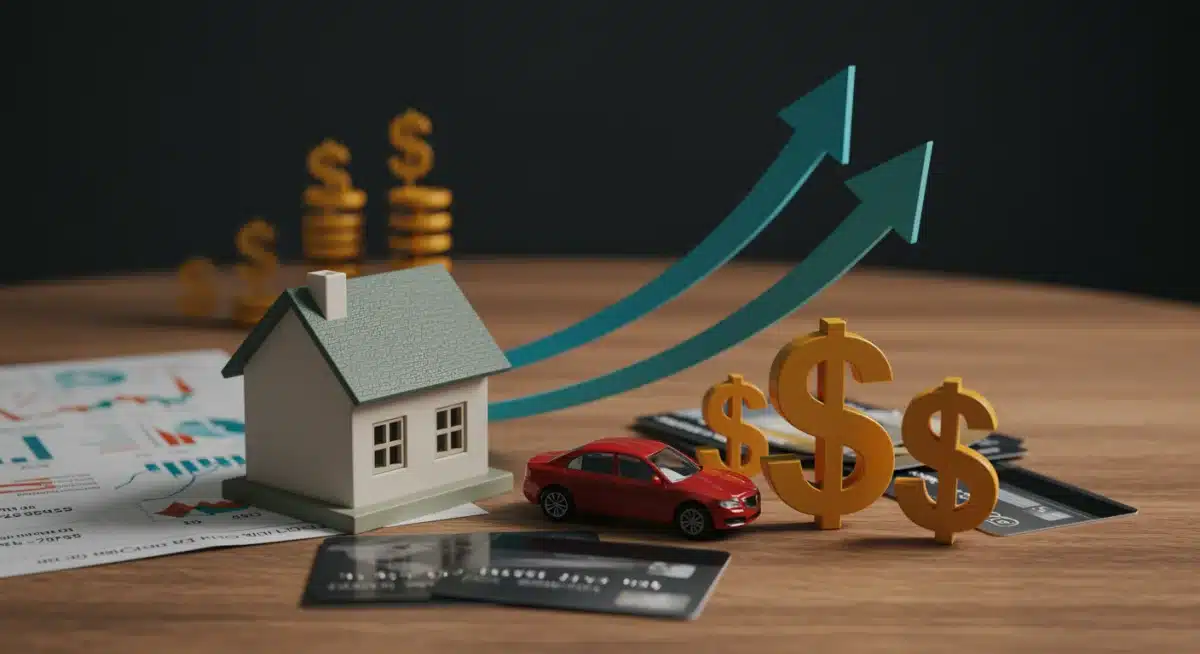
Beyond mortgages, the Federal Reserve’s interest rate hikes have a direct and often immediate impact on a wide array of personal loans and credit cards. For consumers carrying balances on these types of credit, the coming three months could see an increase in their monthly payments and overall borrowing costs. This is because most personal loans and nearly all credit cards have variable interest rates that are tied to benchmark rates like the prime rate, which moves in lockstep with the federal funds rate.
When the Fed raises its target rate, banks quickly adjust their prime rate, subsequently increasing the annual percentage rates (APRs) on credit cards, lines of credit, and many personal loans. This means that a consumer’s existing debt, even if they are not taking out new loans, can become more expensive. It’s a critical factor for household budgeting and financial planning during periods of monetary tightening.
Strategies for managing variable-rate debt
Given the likelihood of continued rate volatility, adopting proactive strategies for managing variable-rate debt is essential. This includes prioritizing high-interest debt repayment and exploring options to consolidate or fix rates where possible. The goal is to minimize exposure to rising interest costs and free up cash flow.
- Credit Card Debt: Focus on paying down balances with the highest APRs first.
- Personal Loans: Review terms; consider refinancing to a fixed-rate loan if available and beneficial.
- Home Equity Lines of Credit (HELOCs): Be aware that HELOC rates are typically variable and will increase.
The 3-month outlook suggests that consumers should prepare for potentially higher interest charges on their credit card balances and personal loans. This period serves as a crucial reminder to review current debt obligations, understand how interest rate changes affect them, and implement strategies to mitigate the financial burden. Proactive management can help maintain financial stability amidst a rising rate environment.
Auto Loans and Student Loans: What to Expect
The ripple effects of Federal Reserve interest rate hikes extend to auto loans and student loans, albeit with varying degrees of immediacy and impact. For consumers in the market for a new vehicle or those managing existing student loan debt, understanding these nuances is crucial for financial planning over the next three months. Auto loan rates, particularly for new purchases, tend to react relatively quickly to Fed actions, while federal student loan rates are set annually and are less directly tied to immediate Fed movements.
When the Fed raises rates, the cost of borrowing for auto lenders increases, which they then pass on to consumers in the form of higher APRs on new car loans. This can make monthly payments more expensive, potentially limiting purchasing power or pushing buyers towards less expensive vehicles. Used car loans are often even more sensitive to interest rate changes due to perceived higher risk.
Federal vs. private student loans
Student loans present a bifurcated scenario. Federal student loan interest rates are typically fixed for the life of the loan and are set by Congress based on the 10-year Treasury note yield, usually once a year. Therefore, current federal loan holders are largely insulated from immediate Fed rate hikes. However, new federal loans issued in the next academic year could see higher rates if the underlying Treasury yields continue to climb.
- New Auto Loans: Expect higher APRs, increasing monthly payments.
- Existing Federal Student Loans: Rates are fixed; no immediate change.
- Private Student Loans: Often have variable rates; payments could increase.
Private student loans, on the other hand, often have variable interest rates tied to market benchmarks like the prime rate or LIBOR (though LIBOR is being phased out). Holders of variable-rate private student loans could see their interest payments increase over the next three months if the Fed continues its tightening cycle. For those considering new private student loans, the rates offered will reflect the current higher interest rate environment.
In conclusion, while existing federal student loan holders may breathe a sigh of relief, anyone considering new auto loans or holding variable-rate private student loans should anticipate higher borrowing costs. Monitoring these segments of your personal finance is essential to avoid unexpected financial strain and to plan effectively for upcoming expenditures or debt management.
Strategies for Navigating a Rising Rate Environment
Navigating a rising interest rate environment requires proactive financial strategies to minimize costs and optimize your financial position. For U.S. consumers facing the prospect of continued Federal Reserve rate hikes over the next three months, understanding and implementing these strategies can make a significant difference in managing household budgets and long-term financial health. The key is to assess your current debt obligations and future borrowing needs with a clear understanding of market trends.
One of the most immediate and impactful actions is to prioritize paying down high-interest, variable-rate debt. This includes credit card balances, personal loans with fluctuating rates, and home equity lines of credit (HELOCs). By reducing these balances, you decrease your exposure to increasing interest payments, freeing up cash flow that can be used for savings or other investments.
Refinancing and debt consolidation options
For those with existing variable-rate mortgages or private student loans, exploring refinancing options might be beneficial. If you can secure a fixed-rate loan at a manageable rate, it provides stability and predictability in your monthly payments, shielding you from future rate increases. Debt consolidation is another powerful tool, allowing you to combine multiple high-interest debts into a single loan, often with a lower overall interest rate and a more manageable payment schedule.
- Accelerate Debt Repayment: Focus on high-interest variable debt first.
- Consider Refinancing: Lock in fixed rates for mortgages or private student loans.
- Emergency Fund: Build or bolster savings to cushion against unexpected expenses.
Another crucial strategy is to build or enhance your emergency fund. In an environment where borrowing costs are rising, having a robust savings cushion reduces the need to rely on high-interest credit for unexpected expenses. Additionally, for those planning major purchases like a home or a car, it’s wise to save for a larger down payment. A larger down payment reduces the amount you need to borrow, thereby lessening the impact of higher interest rates on your monthly payments.
Ultimately, successfully navigating a rising rate environment comes down to prudent financial management. By proactively addressing existing debt, exploring refinancing opportunities, and bolstering your savings, you can effectively mitigate the negative impacts of Federal Reserve rate hikes and maintain control over your financial future.
| Key Financial Area | 3-Month Outlook & Impact |
|---|---|
| Mortgages | Rates likely to remain elevated; ARMs could see payment increases. |
| Personal Loans & Credit Cards | Variable rates will increase, leading to higher interest charges. |
| Auto Loans | New loan APRs expected to be higher, increasing monthly costs. |
| Student Loans | Federal loans stable; private variable loans may see rate hikes. |
Frequently Asked Questions About Rate Hikes
For existing fixed-rate mortgages, Federal Reserve rate hikes have no direct impact on your current interest rate or monthly payments. Your rate is locked in for the life of the loan. However, these hikes can influence the broader economic climate, potentially affecting property values or refinancing opportunities in the future.
If you have a variable-rate credit card, it’s crucial to prioritize paying down your balance as much as possible. Rising Fed rates will increase your APR, making your debt more expensive. Consider transferring balances to a lower-interest card or consolidating debt to mitigate the impact of higher rates.
Yes, new auto loan rates typically increase relatively quickly after a Federal Reserve rate hike. Lenders adjust their rates to reflect the higher cost of borrowing funds. This means that if you’re planning to finance a car purchase soon, you might encounter higher APRs compared to before the hike.
Existing federal student loan rates are generally fixed for the life of the loan and are not directly affected by short-term Fed rate changes. New federal student loan rates are set annually by Congress, based on the 10-year Treasury note, so they might see changes in the next academic year if rates remain high.
To prepare for future rate hikes, focus on reducing high-interest variable debt, building a robust emergency fund, and considering fixed-rate options for new loans or refinancing. A larger down payment for major purchases can also reduce the amount you need to borrow and thus the impact of higher rates.
Conclusion
The Federal Reserve’s interest rate hikes are a significant force shaping the financial landscape for U.S. consumers, directly influencing the cost of mortgages and various types of loans. Over the next three months, individuals should anticipate continued volatility and potentially higher borrowing costs, particularly for variable-rate products like credit cards, personal loans, and adjustable-rate mortgages. While existing fixed-rate loans remain stable, new borrowing, including auto loans and some student loans, will likely reflect the elevated rate environment. Proactive financial planning, such as accelerating debt repayment, exploring refinancing options, and strengthening emergency savings, is essential to navigate these changes effectively and maintain financial stability. Staying informed about economic indicators and the Fed’s policy decisions will empower consumers to make the best choices for their financial well-being.

 Bond yield volatility effects on mortgage rates US: risks?
  Mastering 401(k) Contribution Limits 2026: Your Essential Guide
  small business lending trends US 2025: what to expect