
Top Federal Grants 2026: Higher Education Funding Guide

Anúncios
The 5 Most Impactful Federal Grants for Higher Education in 2026: A Comprehensive Guide for U.S. Students
Navigating the complex landscape of higher education funding can be daunting, but for many U.S. students, federal grants offer a beacon of hope. Unlike loans, these grants do not need to be repaid, making them an invaluable resource for pursuing academic dreams. As we look ahead to 2026, understanding the most impactful federal grants available is crucial for maximizing your financial aid potential. This comprehensive guide will delve into the top five federal grants for higher education, providing detailed insights into eligibility, application processes, and strategies to secure these vital funds. Our focus on federal grants 2026 aims to equip you with the knowledge needed to plan effectively for the upcoming academic year.
Anúncios
The cost of college continues to rise, making financial assistance more critical than ever. Federal grants play a pivotal role in making higher education accessible to students from various socioeconomic backgrounds. These grants are often need-based, meaning they are awarded to students who demonstrate a financial need to attend college. However, some grants also consider academic merit or specific circumstances. By thoroughly understanding each grant, students can strategically position themselves to receive the maximum possible aid.
This article will not only outline the major federal grants but also provide practical advice on how to navigate the application process, avoid common pitfalls, and ensure you meet all deadlines. We’ll emphasize the importance of the Free Application for Federal Student Aid (FAFSA) as the gateway to virtually all federal student aid, including these impactful grants. Preparing for federal grants 2026 requires proactive planning and a clear understanding of the requirements.
Anúncios
Understanding Federal Grants: The Foundation of Student Aid
Before diving into specific grants, it’s essential to grasp the fundamental nature of federal grants. These are funds provided by the U.S. government to help students pay for college or career school. They are considered ‘gift aid’ because, unlike student loans, they do not have to be repaid (unless, for example, you withdraw from school or change your enrollment status). This non-repayable nature makes them the most desirable form of financial assistance for students.
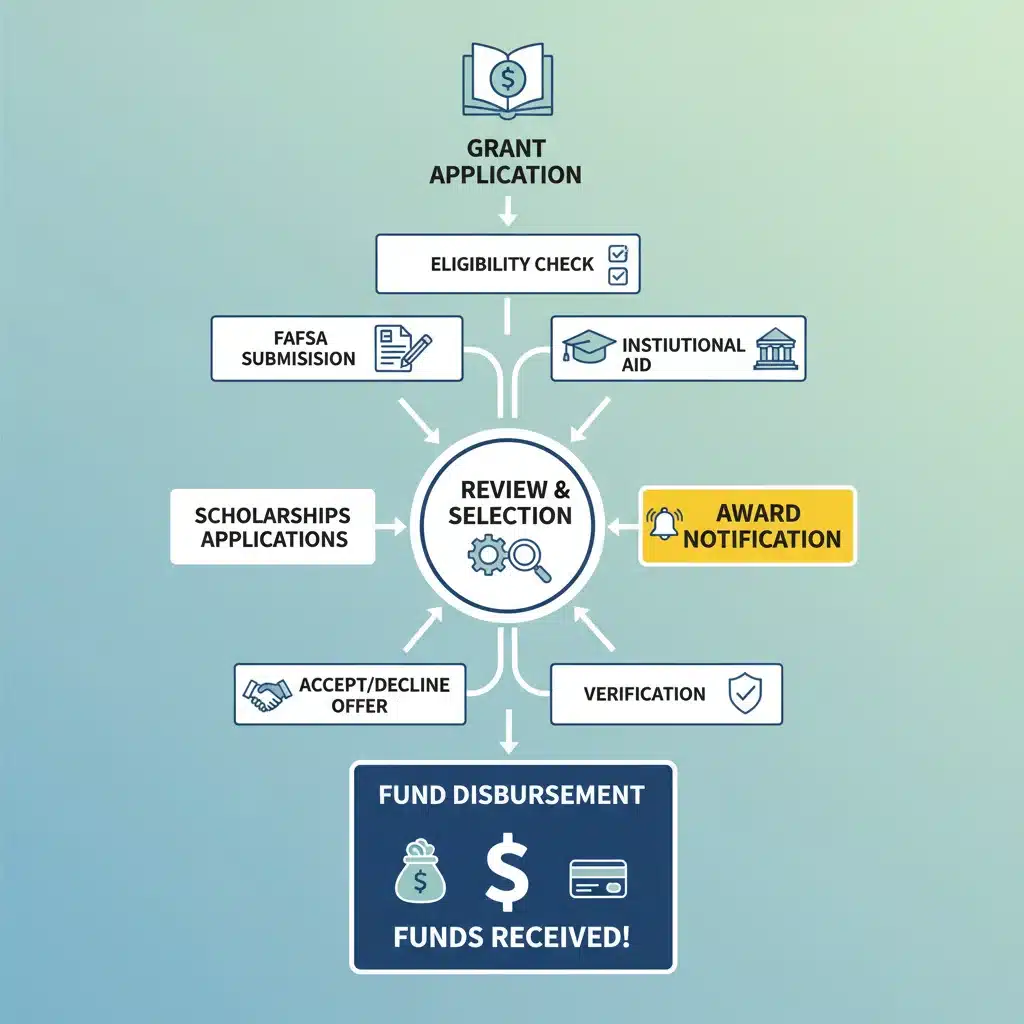
The primary source for most federal student aid, including grants, is the U.S. Department of Education. The amount of federal grant money a student can receive depends on several factors, including their financial need, the cost of attendance at their chosen institution, and their enrollment status (full-time or part-time). The application process typically begins with the FAFSA, which collects detailed financial information to determine a student’s eligibility.
For federal grants 2026, it’s important to remember that while the core programs remain consistent, specific funding levels and eligibility criteria can be subject to legislative changes. Therefore, staying updated with official Department of Education announcements is crucial. This guide provides a snapshot based on current trends and anticipated program structures, but always cross-reference with official sources as the application cycle for 2026 approaches.
1. The Pell Grant: A Cornerstone of Federal Financial Aid
The Federal Pell Grant is arguably the most well-known and widely distributed federal grant program. It serves as the foundation for many students’ financial aid packages, particularly those from low-income backgrounds. The Pell Grant aims to provide financial assistance to undergraduate students who demonstrate exceptional financial need and have not yet earned a bachelor’s or professional degree.
Eligibility for the Pell Grant
- Financial Need: This is calculated based on your Expected Family Contribution (EFC) or, starting with the 2024-2025 aid year, your Student Aid Index (SAI). A lower SAI indicates greater financial need.
- Enrollment Status: You must be enrolled as an undergraduate student.
- Academic Progress: You must maintain satisfactory academic progress as defined by your college or university.
- Citizenship: You must be a U.S. citizen or an eligible non-citizen.
- Degree Status: You generally cannot have already earned a bachelor’s or professional degree.
Pell Grant Amounts for 2026
The maximum Pell Grant award changes annually based on congressional appropriations. While the exact maximum for 2026 is yet to be finalized, it typically sees incremental increases. For context, the maximum Pell Grant for the 2024-2025 award year was set at $7,395. Students can receive a Pell Grant for up to 12 semesters or the equivalent (roughly six years). Understanding these potential amounts is key when planning for federal grants 2026.
Applying for the Pell Grant
The application for the Pell Grant is seamlessly integrated with the FAFSA. By completing and submitting the FAFSA, you are automatically considered for the Pell Grant. It’s crucial to submit the FAFSA as early as possible each year, as some funds are limited. The FAFSA for the 2026-2027 academic year typically opens on October 1st, 2025.
2. Federal Supplemental Educational Opportunity Grant (FSEOG): Additional Support for High Need
The Federal Supplemental Educational Opportunity Grant (FSEOG) is designed to supplement the Pell Grant for undergraduate students with exceptional financial need. Unlike the Pell Grant, FSEOG funds are limited and distributed directly to participating schools, which then award them to eligible students. This means that not all schools participate, and even at participating schools, funds can run out quickly.

Eligibility for FSEOG
To be considered for an FSEOG, you must:
- Have exceptional financial need (students with the lowest Student Aid Index (SAI) are prioritized).
- Be an undergraduate student.
- Be enrolled at a school that participates in the FSEOG program.
- Meet general federal student aid eligibility requirements.
FSEOG Amounts for 2026
FSEOG awards range from $100 to $4,000 per academic year, depending on your financial need, when you apply, and the amount of other aid you receive. Because funds are limited, applying early is paramount. Schools have discretion in how they award these funds, so contacting your college’s financial aid office is recommended to understand their specific FSEOG policies for federal grants 2026.
Applying for FSEOG
Similar to the Pell Grant, you apply for FSEOG by completing the FAFSA. However, because funds are limited and awarded by individual schools, early FAFSA submission is even more critical. Schools typically award FSEOG funds on a first-come, first-served basis to their most financially needy students.
3. TEACH Grant: For Future Educators
The Teacher Education Assistance for College and Higher Education (TEACH) Grant is unique among federal grants because it has a service requirement. This grant provides up to $4,000 per year to students who are completing coursework necessary to begin a career in teaching and agree to serve for a specified period in a high-need field at a low-income school.
Eligibility for the TEACH Grant
To be eligible for a TEACH Grant, you must:
- Complete a FAFSA, though financial need is not a requirement for the TEACH Grant itself.
- Be enrolled in a program of study designated as TEACH Grant-eligible by your school.
- Maintain a cumulative GPA of at least 3.25 (on a 4.0 scale) or score above the 75th percentile on a college admissions test.
- Sign a TEACH Grant Agreement to Serve (ATS).
- Be a U.S. citizen or eligible non-citizen.
The TEACH Grant Service Obligation
The core of the TEACH Grant is its service obligation. After completing your program, you must teach for at least four academic years within eight calendar years of completing (or ceasing enrollment in) the program for which you received the grant. This teaching must be in a high-need field (e.g., mathematics, science, foreign language, special education) at a low-income elementary or secondary school. Failure to meet this obligation will result in the TEACH Grant converting into a Federal Direct Unsubsidized Loan, with interest accrued from the date of each grant disbursement. This conversion is permanent and cannot be reversed.
Applying for the TEACH Grant
To apply for the TEACH Grant for federal grants 2026, you must first complete the FAFSA. Then, you need to work directly with your college’s financial aid office to confirm your eligibility and complete the necessary paperwork, including the ATS. It’s vital to fully understand the service obligation before accepting this grant.
4. Iraq and Afghanistan Service Grant: Supporting Military Families
The Iraq and Afghanistan Service Grant provides financial aid to students who are not eligible for a Pell Grant based on their Expected Family Contribution (EFC) or Student Aid Index (SAI) but whose parent or guardian died as a result of military service in Iraq or Afghanistan after September 11, 2001.
Eligibility for the Iraq and Afghanistan Service Grant
Specific criteria for this grant include:
- You are not eligible for a Pell Grant based on your SAI.
- Your parent or guardian died as a result of military service in Iraq or Afghanistan after September 11, 2001.
- You were under 24 years old or enrolled in college at least part-time at the time of your parent’s or guardian’s death.
- You meet general federal student aid eligibility requirements.
Grant Amounts for 2026
The maximum Iraq and Afghanistan Service Grant for the 2024-2025 award year was the same as the maximum Pell Grant for that year, but cannot exceed the cost of attendance. This amount is also subject to change for 2026, but typically aligns with the Pell Grant maximum. This grant is a crucial component of federal grants 2026 for eligible students from military families.
Applying for the Iraq and Afghanistan Service Grant
You apply for this grant by completing the FAFSA. The Department of Education uses the information provided to determine eligibility for both the Pell Grant and, if you don’t qualify for a Pell Grant but meet the specific criteria, the Iraq and Afghanistan Service Grant.
5. Federal Work-Study Program: Earning While Learning
While technically not a grant in the traditional sense (as it’s earned, not simply awarded), the Federal Work-Study (FWS) Program is a form of federal student aid that allows students to earn money to help pay for educational expenses. It provides part-time jobs for undergraduate and graduate students with financial need, allowing them to earn money to help pay for their education.
Eligibility for Federal Work-Study
Eligibility for FWS is determined by:
- Financial Need: You must demonstrate financial need through your FAFSA.
- Enrollment Status: You must be enrolled as an undergraduate or graduate student.
- Citizenship: You must be a U.S. citizen or an eligible non-citizen.
- Academic Progress: You must maintain satisfactory academic progress.
How Federal Work-Study Works
If you are awarded FWS, you will be offered a job, usually on campus, that allows you to work a certain number of hours per week. The wages earned are generally at least the federal minimum wage, but can be higher depending on the job and your skills. The total amount you can earn is capped by your FWS award amount. The money you earn helps cover your educational expenses and provides valuable work experience.
Applying for Federal Work-Study
To be considered for Federal Work-Study for federal grants 2026, you must indicate your interest on the FAFSA. Funding for FWS is limited and awarded by individual schools, so again, early FAFSA submission is highly recommended. Your school’s financial aid office will inform you if you’ve been awarded FWS and provide information on available job opportunities.
Maximizing Your Chances for Federal Grants 2026: Key Strategies
Securing federal grants requires a strategic approach. Here are essential tips to maximize your chances of receiving these impactful funds:
1. Complete the FAFSA Early and Accurately
This cannot be stressed enough. The FAFSA is the gateway to almost all federal student aid. Submitting it as soon as it becomes available (October 1st for the upcoming academic year) is crucial, especially for grants like FSEOG and Federal Work-Study, which have limited funding. Any errors can delay your application, potentially causing you to miss out on funds. Double-check all information before submitting.
2. Understand Your Student Aid Index (SAI)
The SAI (formerly EFC) is a crucial number derived from your FAFSA that colleges use to determine your financial aid eligibility. A lower SAI indicates greater financial need and generally qualifies you for more need-based aid, including Pell Grants and FSEOG. Understanding how your income, assets, and family size affect your SAI can help you plan for the best possible outcome for federal grants 2026.
3. Research State and Institutional Grants
While this guide focuses on federal grants, remember that state governments and individual colleges also offer their own grant programs. These often complement federal aid. Many institutional grants are also FAFSA-based, so completing the FAFSA often puts you in consideration for these as well. Explore your state’s higher education agency website and contact the financial aid offices of prospective schools.
4. Maintain Satisfactory Academic Progress (SAP)
To continue receiving federal student aid, including grants, you must maintain satisfactory academic progress (SAP). This typically means maintaining a minimum GPA, completing a certain percentage of your attempted credits, and completing your degree within a maximum timeframe. Failing to meet SAP can result in the loss of federal aid eligibility, which is a significant setback for any student relying on federal grants 2026.
5. Communicate with Your Financial Aid Office
Your college’s financial aid office is your best resource. They can provide personalized advice, clarify eligibility requirements, inform you about institutional aid, and help you navigate the application process. Don’t hesitate to reach out with any questions or if your financial circumstances change.
6. Be Aware of Deadlines
Federal, state, and institutional financial aid programs all have their own deadlines. Missing a deadline, especially for the FAFSA, can severely limit your access to grant funding. Create a calendar with all relevant deadlines and stick to it. This proactive approach is vital for securing federal grants 2026.
7. Understand Grant Terms and Conditions
Especially for grants like the TEACH Grant, it’s critical to fully understand all terms and conditions, including any service obligations or repayment clauses. Misunderstanding these terms can lead to unexpected financial burdens down the line. Always read the fine print and ask questions if anything is unclear.
The Future of Federal Grants: What to Expect for 2026 and Beyond
The landscape of federal student aid is dynamic, with potential legislative changes impacting funding levels and program structures. While the core federal grants are expected to remain in place for 2026, students should always monitor official announcements from the U.S. Department of Education and their chosen institutions.
There’s ongoing discussion around simplifying the FAFSA even further and potentially adjusting eligibility criteria to reach more students. Keep an eye on news related to higher education policy, as these changes could influence the availability and accessibility of federal grants 2026. Advocacy for increased funding for Pell Grants and other student aid programs is also a continuous effort, aiming to ensure that financial barriers do not prevent deserving students from accessing higher education.
Conclusion: Empowering Your Educational Journey with Federal Grants
Federal grants are an indispensable component of financial planning for higher education in the U.S. By understanding the intricacies of programs like the Pell Grant, FSEOG, TEACH Grant, Iraq and Afghanistan Service Grant, and Federal Work-Study, students can significantly reduce the financial burden of college. The key to unlocking these opportunities lies in proactive planning, diligent FAFSA submission, and continuous engagement with financial aid resources.
As you prepare for the 2026 academic year, remember that knowledge is power. Arm yourself with the information provided in this guide, stay informed about any updates, and don’t hesitate to seek guidance from financial aid professionals. With the right strategy, federal grants 2026 can pave the way for a successful and affordable higher education experience, transforming aspirations into achievements. Your academic journey is an investment, and federal grants are designed to support that investment, ensuring that financial constraints do not stand in the way of your future.
