

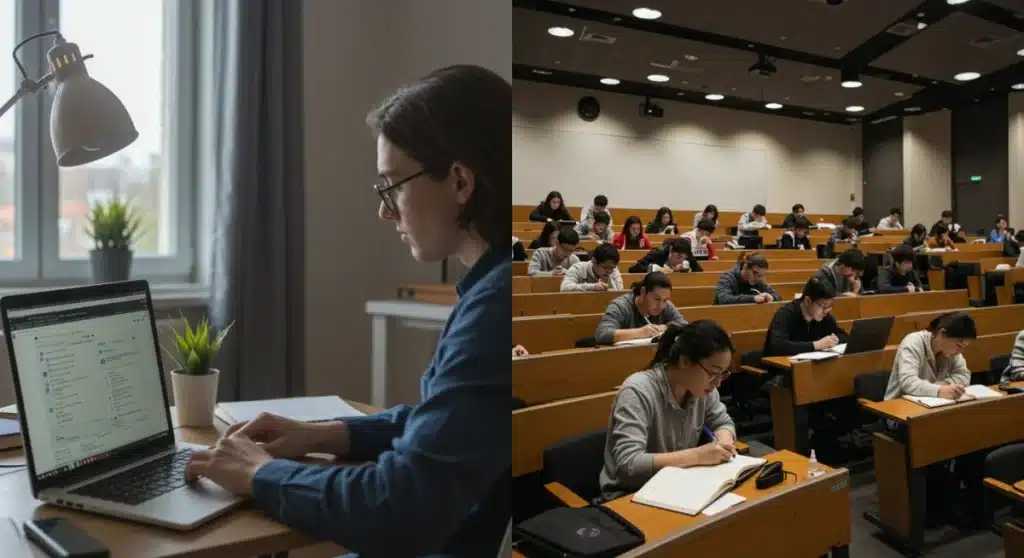
Comparing online and in-person degree programs in 2025 reveals distinct advantages and disadvantages across five key factors, significantly influencing career advancement opportunities for prospective students.
Choosing between an online and an in-person degree program is a pivotal decision that shapes not only your educational journey but also your future career trajectory. In 2025, with advancements in technology and evolving workplace demands, understanding the nuances of each option is more crucial than ever. This comprehensive analysis delves into five key factors for career advancement when considering online in-person degrees, helping you make an informed choice.
Flexibility and Accessibility: Tailoring Education to Your Life
The allure of flexibility often draws students towards online degree programs. The ability to set your own schedule, learn from anywhere, and balance studies with work or family commitments is a significant advantage. This adaptability can be a game-changer for many, particularly those with existing professional responsibilities or geographical constraints.
In contrast, in-person programs demand a fixed schedule and physical presence, which can be restrictive for some. However, this structure also offers a clear routine and dedicated learning environment, which can be beneficial for students who thrive on predictability and direct interaction.
Scheduling Freedom and Pace
Online learning platforms typically offer asynchronous courses, allowing students to access materials and submit assignments at their convenience within a given timeframe. This freedom enables individuals to tailor their academic pace to their personal rhythm.
- Online: Self-paced modules, 24/7 access to course materials, adaptable deadlines.
- In-Person: Fixed class times, structured campus life, consistent weekly schedule.
Geographic and Time Zone Considerations
For those living in remote areas or frequently traveling, online degrees eliminate the need for relocation, opening up access to institutions worldwide. This global reach extends educational opportunities beyond local offerings.
Furthermore, the absence of a daily commute saves considerable time and resources, which can be reinvested into studies or personal life. This aspect is particularly appealing in urban areas where commutes can be lengthy and expensive.
Ultimately, the choice between online and in-person flexibility hinges on individual lifestyle, discipline, and preferred learning structure. While online offers unparalleled adaptability, in-person provides a more traditional, structured learning environment that some students find more conducive to their academic success.
Networking Opportunities and Professional Connections
Building a robust professional network is indispensable for career advancement, and the pathways to achieving this differ significantly between online and in-person degree programs. Each modality presents unique advantages and challenges when it comes to fostering connections.
In-person programs inherently facilitate direct interaction with peers, professors, and industry professionals through campus events, group projects, and face-to-face discussions. These organic encounters often lead to enduring relationships and valuable professional leads.

Online programs, while sometimes perceived as less conducive to networking, have evolved to offer various virtual networking tools and platforms. These can be highly effective for individuals who are proactive in seeking out and engaging with their online community.
Cultivating In-Person Relationships
Campus life provides a fertile ground for networking. Students participate in clubs, attend seminars, and engage in extracurricular activities, all of which are opportunities to meet like-minded individuals and potential future colleagues or mentors.
- Campus Events: Career fairs, guest lectures, alumni gatherings.
- Classroom Dynamics: Group projects, study sessions, direct professor interaction.
- Student Organizations: Professional clubs, academic societies, social groups.
Leveraging Virtual Connections
Online programs often utilize discussion forums, video conferencing, and dedicated social platforms to encourage interaction. While different from in-person, these tools can still lead to meaningful connections if utilized effectively.
Many online universities also host virtual career fairs and networking events, allowing students to connect with employers and alumni from various locations. The key to successful online networking lies in active participation and a willingness to engage beyond formal assignments. Both avenues offer distinct benefits; the most effective approach depends on individual preferences and proactive engagement.
Cost-Effectiveness and Financial Aid Considerations
The financial investment required for a degree program is a major factor for most students. When comparing online in-person degrees, it’s essential to look beyond tuition fees to understand the total cost of attendance, which includes various hidden and explicit expenses.
Online degrees often boast lower tuition costs, as institutions may have fewer overheads associated with physical infrastructure. However, this is not a universal rule, and some specialized online programs can be just as expensive, if not more so, than their in-person counterparts. The savings typically come from reduced living expenses, transportation, and other campus-related fees.
Tuition and Fees
While online tuition can sometimes be lower, it’s crucial to compare specific program costs. Many universities charge the same per-credit rate regardless of modality, but online students often avoid certain campus fees.
In-person students, on the other hand, typically pay for campus amenities, recreational facilities, and student services that are not always accessible or relevant to online learners.
Indirect Costs and Savings
The most significant financial difference often lies in indirect costs. Online students save on housing, meal plans, and daily commuting expenses, which can amount to thousands of dollars annually. They also have more flexibility to work full-time or part-time while studying, potentially offsetting tuition costs.
- Online Savings: No relocation, reduced transportation, fewer campus fees.
- In-Person Expenses: Room and board, daily commute, campus activity fees.
Financial aid opportunities, including scholarships, grants, and loans, are generally available for both online and in-person programs, though eligibility criteria can vary. It’s advisable to thoroughly research financial aid options for the specific program and institution you are considering, regardless of the delivery method. Understanding the full financial picture is critical for making an economically sound decision.
Learning Styles and Academic Environment
The effectiveness of a degree program is deeply intertwined with a student’s individual learning style and how well it aligns with the academic environment offered. Both online and in-person settings cater to different preferences, and recognizing your own learning needs is paramount for success.
In-person learning provides a traditional classroom setting with direct instruction, immediate feedback, and structured group activities. This environment is often ideal for students who thrive on face-to-face interaction, routine, and a clear distinction between academic and personal spaces. The physical presence of instructors and peers can foster a sense of community and accountability.
Structured vs. Self-Directed Learning
Online learning, conversely, demands a high degree of self-discipline and motivation. Students are responsible for managing their time, staying on track with assignments, and actively seeking clarification when needed. While this fosters independence, it may not suit everyone.
The flexibility of online programs can be a double-edged sword; it empowers self-starters but can overwhelm those who require more external structure and frequent reminders.
Interaction and Engagement Methods
In-person classes offer real-time Q&A sessions, spontaneous discussions, and immediate non-verbal cues that enhance communication. This dynamic interaction can deepen understanding and foster critical thinking skills.
- In-Person: Direct dialogue, immediate feedback, collaborative group work.
- Online: Asynchronous forums, virtual discussions, scheduled video calls.
Online engagement often relies on written communication, which can be advantageous for introverted students or those who prefer to articulate their thoughts carefully. However, it may lack the spontaneity of in-person discussions. The optimal choice depends on whether you prefer a highly structured, interactive setting or a more independent, self-paced learning journey.
Employer Perception and Career Outcomes
A common concern among prospective students is how employers perceive online versus in-person degrees, and whether one holds more weight in the job market. While historically there might have been a bias, the landscape has significantly shifted, especially in 2025.
Today, the reputation of the institution and the quality of the program often outweigh the delivery method. Employers are increasingly focused on skills, experience, and the demonstrable value a candidate brings, rather than solely on how their degree was obtained. This shift is largely due to the widespread adoption of online learning and its proven efficacy, particularly accelerated by recent global events.
Reputation and Accreditation
The most critical factor is the accreditation of the institution and the specific program. A degree from a reputable, accredited university, whether online or in-person, generally holds equal standing in the eyes of employers. Unaccredited online degrees, however, may still face scrutiny.
Prospective students should thoroughly research the accreditation status of any program they consider, ensuring it meets recognized academic standards.
Skills and Experience
Employers prioritize candidates who possess the necessary skills and relevant experience. An online degree, coupled with internships, projects, or work experience gained during study, can be just as impactful as an in-person degree.
- Focus on Skills: Technical competencies, soft skills, problem-solving abilities.
- Demonstrable Experience: Internships, volunteer work, relevant projects.
Many online programs are specifically designed for working professionals, allowing them to gain practical experience concurrently with their studies, which can be a significant advantage. Ultimately, the perceived value of a degree is increasingly tied to the individual’s performance and achievements, rather than strictly the format of their education.
Future Trends and Adaptability in Education
The educational landscape is continuously evolving, with technology playing an increasingly pivotal role. Understanding future trends and the adaptability of both online and in-person degree programs is crucial for long-term career planning. The year 2025 marks a period where blended learning models are becoming more prevalent, blurring the traditional lines between modalities.
Hybrid programs, which combine elements of both online and in-person instruction, offer a flexible yet structured approach. These models often provide the best of both worlds: the convenience of online learning for certain modules and the benefits of face-to-face interaction for others, such as labs, workshops, or critical discussions. This adaptability caters to a wider range of learning preferences and life circumstances.
Technological Integration in Learning
Online education continues to benefit from rapid advancements in learning technologies, including AI-powered tutors, virtual reality simulations, and sophisticated analytics that personalize learning paths. These innovations enhance engagement and provide more immersive educational experiences.
Even traditional in-person classrooms are integrating more technology, utilizing digital tools for assignments, collaboration, and resource access, ensuring that all students benefit from modern pedagogical approaches.
Lifelong Learning and Skill Development
The demand for continuous learning and upskilling is growing, making the adaptability of educational formats even more critical. Online platforms are particularly well-suited for lifelong learning, offering micro-credentials, certifications, and short courses that can be completed flexibly.
- Online: Ideal for continuous professional development, specialized certifications.
- In-Person: Opportunities for advanced research, specialized equipment access.
Institutions are recognizing the need to offer diverse learning pathways to support career progression in a dynamic job market. The future of education is likely to be characterized by a mix of modalities, allowing individuals to tailor their learning journey to their specific needs and career goals, making the distinction between purely online and purely in-person less rigid over time.
| Key Factor | Comparison Overview |
|---|---|
| Flexibility | Online offers high adaptability; In-person provides structured routine. |
| Networking | In-person excels in direct connections; Online uses virtual platforms. |
| Cost | Online often saves on indirect costs; In-person includes campus fees. |
| Employer View | Focus is on institution reputation and skills, less on delivery method. |
Frequently Asked Questions About Degree Programs
Yes, increasingly so. In 2025, employer perception largely depends on the institution’s accreditation and the program’s quality, rather than solely the delivery format. Demonstrable skills and experience associated with the degree are paramount.
Online degrees often lead to significant savings on indirect costs such as housing, meal plans, and transportation. While tuition can vary, avoiding campus living expenses and commuting can make online programs more cost-effective overall.
Online students can network through virtual discussion forums, video conferencing, dedicated social platforms, and virtual career fairs. Active participation and leveraging professional online communities like LinkedIn are key for building connections.
Online programs are ideal for self-disciplined, motivated learners who thrive in independent study environments. They suit individuals who can manage their time effectively and are comfortable with self-directed learning and written communication.
Yes, hybrid programs are gaining popularity in 2025. They offer a blend of online flexibility and in-person interaction, catering to a broader range of student needs and learning preferences by combining the strengths of both modalities.
Conclusion
The decision between pursuing an online or in-person degree program in 2025 is a deeply personal one, influenced by a multitude of factors ranging from individual learning styles to financial considerations and career aspirations. Both modalities offer distinct advantages that can significantly contribute to career advancement. Online degrees provide unparalleled flexibility and often reduced indirect costs, catering to those who require adaptability. In-person programs excel in fostering direct networking opportunities and providing a structured academic environment. Ultimately, the most effective path is the one that best aligns with your personal circumstances, learning preferences, and professional goals, ensuring that your educational investment yields the desired career outcomes. Evaluating these five key factors thoroughly will empower you to make an informed choice for your future.

 Future Skills: What U.S. Employers Seek in Graduates
  AI in U.S. Classrooms: 3 Practical Strategies for Educators