
U.S. Higher Education Enrollment Trends: What to Expect in the Next Year
Anúncios
In the dynamic landscape of American education, understanding Higher Ed Enrollment Trends is more crucial than ever. As we look ahead to the next 12 months, institutions across the U.S. are grappling with a complex interplay of demographic shifts, economic pressures, technological advancements, and evolving student expectations. The traditional models of higher education are being challenged, and adaptability will be key for survival and growth. This comprehensive analysis delves into the critical factors shaping enrollment, offering insights into where U.S. higher education is headed.
The past decade has seen significant fluctuations in student numbers, driven by a variety of internal and external forces. From the lingering effects of the 2008 recession to the unprecedented disruption of the COVID-19 pandemic, colleges and universities have been forced to innovate and reconsider their strategies. Now, as we navigate a post-pandemic world, new challenges and opportunities are emerging, demanding a proactive and data-driven approach to recruitment and retention.
Anúncios
This article will explore the most prominent Higher Ed Enrollment Trends, examining the underlying causes and potential consequences for institutions, students, and the broader economy. We will look at demographic cliffs, the impact of rising tuition costs, the burgeoning role of online and hybrid learning, and the increasing demand for workforce-aligned education. By understanding these trends, stakeholders can better prepare for the future and make informed decisions that will shape the trajectory of higher education in the United States.
Anúncios
Demographic Shifts: The Looming Enrollment Cliff
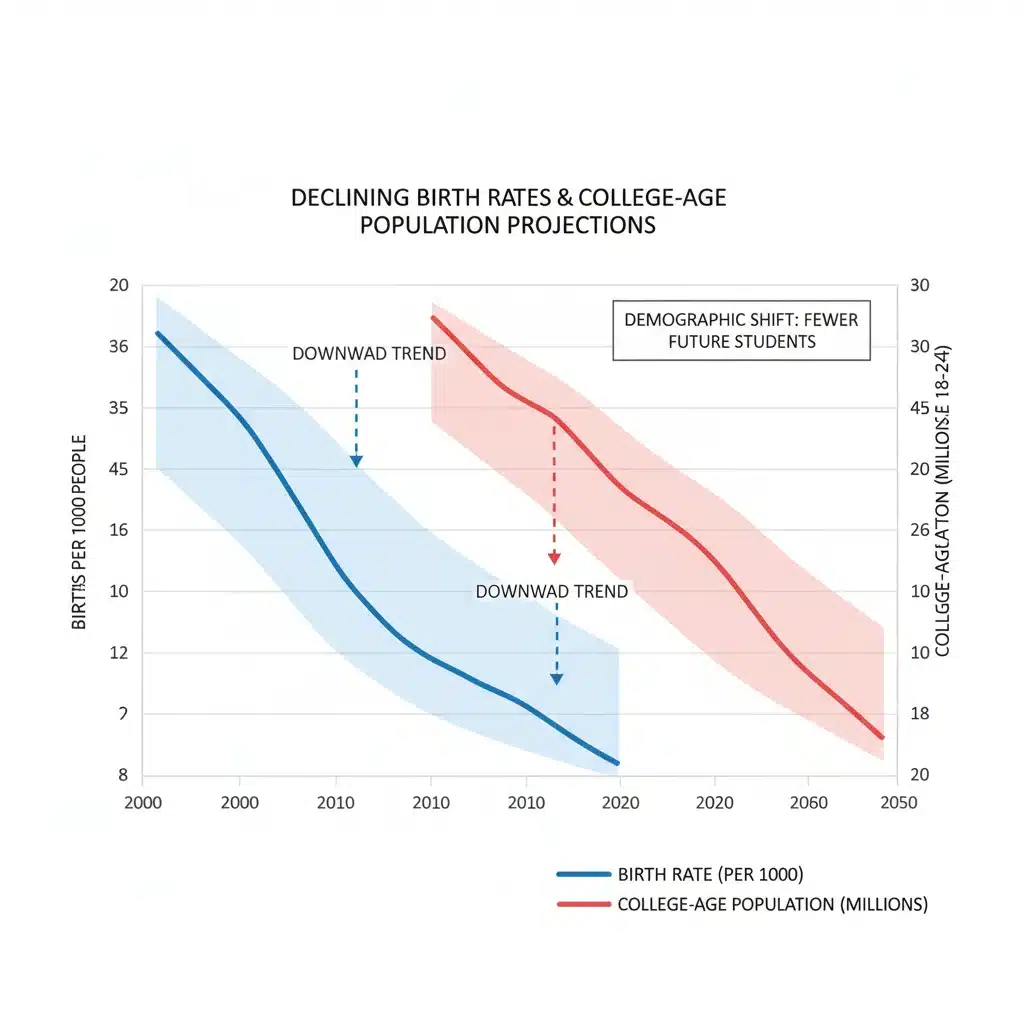
One of the most widely discussed and significant factors influencing Higher Ed Enrollment Trends is the impending demographic cliff. This refers to the projected decline in the number of high school graduates starting around 2025, a direct consequence of the dip in birth rates following the 2008 financial crisis. While the full impact of this cliff is still a few years away, institutions are already feeling its precursors and must prepare for a future with a smaller pool of traditional-age college applicants.
The Western Interstate Commission for Higher Education (WICHE) projects a peak in high school graduates around 2025-26, followed by a steady decline. This demographic reality means that colleges and universities, especially those heavily reliant on traditional 18-22 year old students, will face intensified competition for a shrinking cohort. This will particularly affect regional public universities and smaller private colleges that often draw students from local populations.
To counteract this, institutions are exploring several strategies. Diversifying recruitment efforts to include non-traditional students – such as adult learners, transfer students, and international students – is becoming paramount. Furthermore, focusing on retention strategies to ensure current students complete their degrees will be just as important as attracting new ones. The demographic cliff isn’t just a challenge; it’s an impetus for innovation in recruitment, program development, and student support services.
Beyond the overall decline, there are also significant shifts in the racial and ethnic composition of the graduating class. The proportion of non-white high school graduates is increasing, presenting both opportunities and responsibilities for institutions to create more inclusive and equitable learning environments. Understanding these nuances within the demographic shifts is critical for developing effective and targeted recruitment strategies that resonate with diverse student populations.
The implications extend beyond just student numbers. A smaller student body can impact institutional budgets, faculty hiring, and the overall campus experience. Colleges must consider how to maintain financial viability while upholding academic quality in a more competitive environment. This might involve exploring new revenue streams, optimizing operational efficiencies, or forging stronger partnerships with industry to demonstrate clear career pathways for graduates.
Economic Pressures and Affordability Concerns
The economic climate continues to exert significant influence on Higher Ed Enrollment Trends, with affordability remaining a top concern for prospective students and their families. Rising tuition costs, coupled with increasing living expenses and a challenging job market for some graduates, are forcing many to reconsider the value proposition of a traditional four-year degree.
Student loan debt has reached staggering levels, leading to increased scrutiny of return on investment (ROI) for higher education. Students are increasingly pragmatic, seeking programs that offer clear career pathways and strong earning potential. This shift places pressure on institutions to demonstrate the tangible benefits of their degrees and to provide transparent information about post-graduation outcomes.
In response, many institutions are exploring various financial aid models, scholarships, and tuition freezes or reductions to make education more accessible. State governments also play a crucial role through public funding and grant programs. However, the fundamental challenge of balancing institutional costs with student affordability persists, especially for institutions with limited endowments or state support.
The current inflationary environment further exacerbates these pressures. As the cost of living increases, families have less discretionary income to allocate to higher education. This can lead to students opting for more affordable alternatives, such as community colleges, vocational training, or directly entering the workforce, at least temporarily. The perception of value for money is paramount, and institutions that can clearly articulate their unique benefits and provide flexible financial solutions will be better positioned to attract and retain students.
Furthermore, the economic uncertainty can also influence enrollment patterns among adult learners. Some may see economic downturns as an opportunity to upskill or reskill, leading to increased enrollment in certificate programs or graduate studies. Conversely, others might prioritize immediate employment over further education, depending on their financial circumstances. Understanding these diverse motivations is key to tailoring recruitment efforts.
The Enduring Impact of Online and Hybrid Learning Models
The COVID-19 pandemic irrevocably altered the landscape of higher education, accelerating the adoption of online and hybrid learning models. What started as a necessity has evolved into a permanent feature of many institutions’ offerings, profoundly shaping Higher Ed Enrollment Trends. For the next 12 months, the flexibility and accessibility offered by these models will continue to be a major draw for a wide range of students.
Online learning has opened up access to education for individuals who might not otherwise be able to attend a traditional campus – working professionals, caregivers, students in remote areas, or those with disabilities. Institutions that have invested in robust online infrastructure and high-quality digital pedagogy are well-positioned to capture this growing market segment. The convenience of learning from anywhere, often on a flexible schedule, is a powerful motivator.
Hybrid models, which combine elements of online and in-person instruction, are also gaining traction. These models offer the best of both worlds, allowing students to benefit from face-to-face interaction and campus resources while retaining the flexibility of remote learning. This approach can be particularly appealing for programs that require hands-on experience or collaborative projects, but also benefit from asynchronous content delivery.
However, the shift to online and hybrid learning is not without its challenges. Ensuring equitable access to technology and reliable internet, maintaining student engagement and a sense of community, and adapting faculty training to new pedagogical approaches are ongoing tasks. The quality of online education is also under scrutiny, with students expecting a comparable learning experience to in-person instruction.
As the market for online education matures, competition is intensifying. Institutions are not only competing with traditional universities offering online programs but also with a proliferation of alternative credentials, bootcamps, and massive open online courses (MOOCs). Differentiating offerings through unique program design, strong career services, and demonstrable learning outcomes will be crucial for success in this crowded space. The future of Higher Ed Enrollment Trends will undoubtedly involve a continued evolution and refinement of these flexible learning modalities.

Workforce Alignment and Skills-Based Education
In an increasingly competitive global economy, the demand for higher education to directly align with workforce needs is stronger than ever. This focus on skills-based education and clear career outcomes is a dominant force in shaping current and future Higher Ed Enrollment Trends. Students are seeking degrees and credentials that equip them with practical skills and knowledge immediately applicable in the job market.
Employers, too, are placing a greater emphasis on specific competencies rather than solely on degree titles. This has led to a rise in interest in vocational programs, certificate programs, micro-credentials, and stackable degrees that allow individuals to gain specialized skills quickly and efficiently. Community colleges are particularly well-positioned to thrive in this environment, offering affordable and relevant training that directly feeds into local and regional industries.
Universities are responding by developing more interdisciplinary programs, strengthening experiential learning opportunities like internships and co-ops, and collaborating more closely with industry partners to ensure curricula meet current and future workforce demands. The integration of career services throughout the student journey, from program selection to post-graduation job placement, is becoming a key differentiator.
Furthermore, the concept of lifelong learning is gaining prominence. As industries evolve rapidly, individuals need to continuously update their skills to remain competitive. This creates a new market for higher education institutions to offer professional development courses, executive education, and reskilling programs for adult learners. Institutions that can quickly adapt to emerging skill gaps will attract a diverse pool of students seeking continuous professional growth.
The emphasis on workforce alignment also impacts how institutions market themselves. Prospective students are looking for evidence of strong employment outcomes, salary potential, and relevant industry connections. Data transparency regarding graduate success rates, median salaries, and job placement within specific fields will be critical for attracting students concerned about the return on their educational investment. This pragmatic approach to education will continue to drive many Higher Ed Enrollment Trends in the coming year.
The Role of International Students and Global Mobility
International students have historically played a vital role in U.S. higher education, contributing significantly to campus diversity, academic excellence, and institutional revenue. Their enrollment patterns are a crucial component of overall Higher Ed Enrollment Trends, and their future trajectory is influenced by a complex mix of geopolitical factors, visa policies, economic conditions, and global competition.
Following a dip during the pandemic, international student enrollment has shown signs of recovery, but challenges remain. Visa processing delays, perceived unwelcoming immigration policies, and increased competition from other English-speaking countries (like Canada, the UK, and Australia) are all factors that impact the U.S.’s attractiveness as a study destination. Geopolitical tensions can also influence decisions of students from specific regions.
Institutions are actively working to rebuild and strengthen their international recruitment pipelines. This involves enhanced outreach efforts, streamlined application processes, increased scholarship opportunities for international students, and robust support services once they arrive on campus. Creating a welcoming and inclusive environment is paramount to attracting and retaining this valuable student population.
Beyond traditional degree-seeking international students, there’s also a growing interest in short-term programs, exchange opportunities, and global collaborations. Institutions are exploring partnerships with universities abroad to offer dual degrees, research opportunities, and virtual exchange programs, further diversifying their international engagement. This global outlook is not just about enrollment numbers; it’s about enriching the educational experience for all students.
The economic contribution of international students, both through tuition fees and local spending, is substantial. Therefore, fluctuations in their numbers can have a significant financial impact on institutions, particularly those that have come to rely heavily on international tuition revenue. Monitoring and strategically responding to global mobility trends will be essential for U.S. higher education in the next 12 months and beyond.
Mental Health and Student Well-being
While not a direct enrollment driver in the traditional sense, the increasing focus on mental health and student well-being is profoundly impacting Higher Ed Enrollment Trends indirectly. Prospective students and their families are paying closer attention to the support services available on campus, recognizing that a supportive environment is crucial for academic success and overall flourishing.
The pandemic highlighted and exacerbated a pre-existing mental health crisis among young adults. Colleges and universities are now under immense pressure to provide comprehensive mental health services, including counseling, psychiatric support, peer support networks, and proactive well-being programs. Institutions that demonstrate a strong commitment to student mental health are likely to be viewed more favorably by applicants.
This emphasis extends beyond just crisis intervention to creating a holistic culture of well-being. This includes promoting healthy lifestyle choices, fostering a sense of belonging, addressing issues of diversity and inclusion that can impact mental health, and integrating well-being into academic life. Students are seeking environments where they feel seen, supported, and can thrive both academically and personally.
Furthermore, institutions are recognizing that student well-being is directly linked to retention. Students struggling with mental health issues are more likely to drop out or take a leave of absence. Investing in robust support services is not just a moral imperative; it’s a strategic move to improve student success and, consequently, enrollment stability.
As competition for students intensifies, the quality and accessibility of mental health services could become a significant differentiating factor. Websites and admissions materials are increasingly highlighting these resources, signaling to prospective students that their well-being is a priority. This shift reflects a broader societal recognition of mental health as an integral part of overall health and academic readiness, influencing how students choose their higher education path.
The Rise of Micro-credentials and Alternative Pathways
The traditional four-year degree is no longer the sole pathway to career success. The emergence of micro-credentials, bootcamps, and other alternative educational pathways is significantly influencing Higher Ed Enrollment Trends, particularly among adult learners and those seeking rapid skill acquisition.
Micro-credentials, often shorter, focused programs that grant specific skills or competencies, are gaining popularity because they offer flexibility, affordability, and direct relevance to employer needs. These can range from certificates in data analytics and cybersecurity to specialized badges in project management or digital marketing. They appeal to individuals looking to upskill for career advancement, reskill for a career change, or simply explore new areas of interest without committing to a full degree program.
Non-degree programs are also attracting students who may not be ready or able to pursue a full degree but still desire formal education. This includes professional development courses, workshops, and short-term training programs. The value proposition here is often immediate applicability and a clear return on investment in terms of enhanced employability or earning potential.
For traditional institutions, embracing these alternative pathways presents both a challenge and an opportunity. It challenges the long-held dominance of the degree, but it also opens up new markets and revenue streams. Universities can develop their own micro-credentials, partner with industry to offer specialized training, or create stackable credential pathways that can eventually lead to a degree.
The demand for these flexible, skills-focused offerings is expected to grow as the pace of technological change accelerates and the need for continuous learning becomes a constant in the modern workforce. Institutions that can adapt their offerings to meet this demand, providing agile and relevant educational solutions, will be better positioned to navigate the evolving landscape of Higher Ed Enrollment Trends and attract a broader range of learners.
Strategic Enrollment Management: A Holistic Approach
In light of these multifaceted challenges and opportunities, institutions are increasingly adopting a comprehensive approach known as Strategic Enrollment Management (SEM). SEM is not just about recruitment; it’s a holistic, data-driven strategy that integrates recruitment, admission, financial aid, retention, and student success initiatives to achieve enrollment goals and institutional mission.
Effective SEM involves a deep understanding of market trends, competitor analysis, and internal institutional strengths and weaknesses. It requires collaboration across various departments, from admissions and marketing to academic affairs and student services. The goal is to optimize the entire student lifecycle, from initial inquiry to graduation and beyond.
Key components of a successful SEM strategy for the next 12 months will include:
- Data Analytics: Utilizing predictive analytics to identify prospective students most likely to enroll and succeed, and to understand factors influencing attrition.
- Personalized Communication: Tailoring outreach and messaging to individual student interests and needs, leveraging CRM systems.
- Program Innovation: Developing new academic programs and modifying existing ones to align with student demand and workforce needs.
- Affordability Strategies: Crafting competitive financial aid packages and communicating the value proposition effectively.
- Retention Initiatives: Implementing robust academic support, advising, and student engagement programs to ensure students persist and graduate.
- Marketing and Branding: Clearly articulating the unique identity and value of the institution to stand out in a crowded market.
The success of institutions in navigating the complex Higher Ed Enrollment Trends of the coming year will largely depend on their ability to implement a coherent and agile SEM strategy. It requires a long-term vision combined with the flexibility to adapt to rapidly changing conditions, ensuring that resources are allocated effectively to attract, support, and graduate a diverse and talented student body.
Conclusion: Adapting to a New Era in Higher Education
The next 12 months will be a period of significant evolution for U.S. higher education. The confluence of demographic shifts, economic pressures, technological advancements, and changing student expectations is creating a new normal. Institutions that thrive will be those that embrace adaptability, innovation, and a student-centric approach.
Understanding and proactively responding to Higher Ed Enrollment Trends is not merely an administrative task; it’s a strategic imperative that touches every aspect of an institution. From reimagining academic programs to enhancing student support services, from refining financial aid models to embracing diverse learning modalities, the path forward requires courage, foresight, and a commitment to continuous improvement.
While challenges are undeniable, they also present immense opportunities for growth and transformation. The demand for education, in its various forms, remains strong. By focusing on relevance, accessibility, affordability, and student success, U.S. higher education can continue to fulfill its vital role in preparing individuals for meaningful lives and contributing to societal advancement. The future of enrollment will be shaped by those institutions willing to evolve and redefine what it means to provide a valuable and impactful educational experience.
