
Future Skills: What U.S. Employers Seek in Graduates
Anúncios
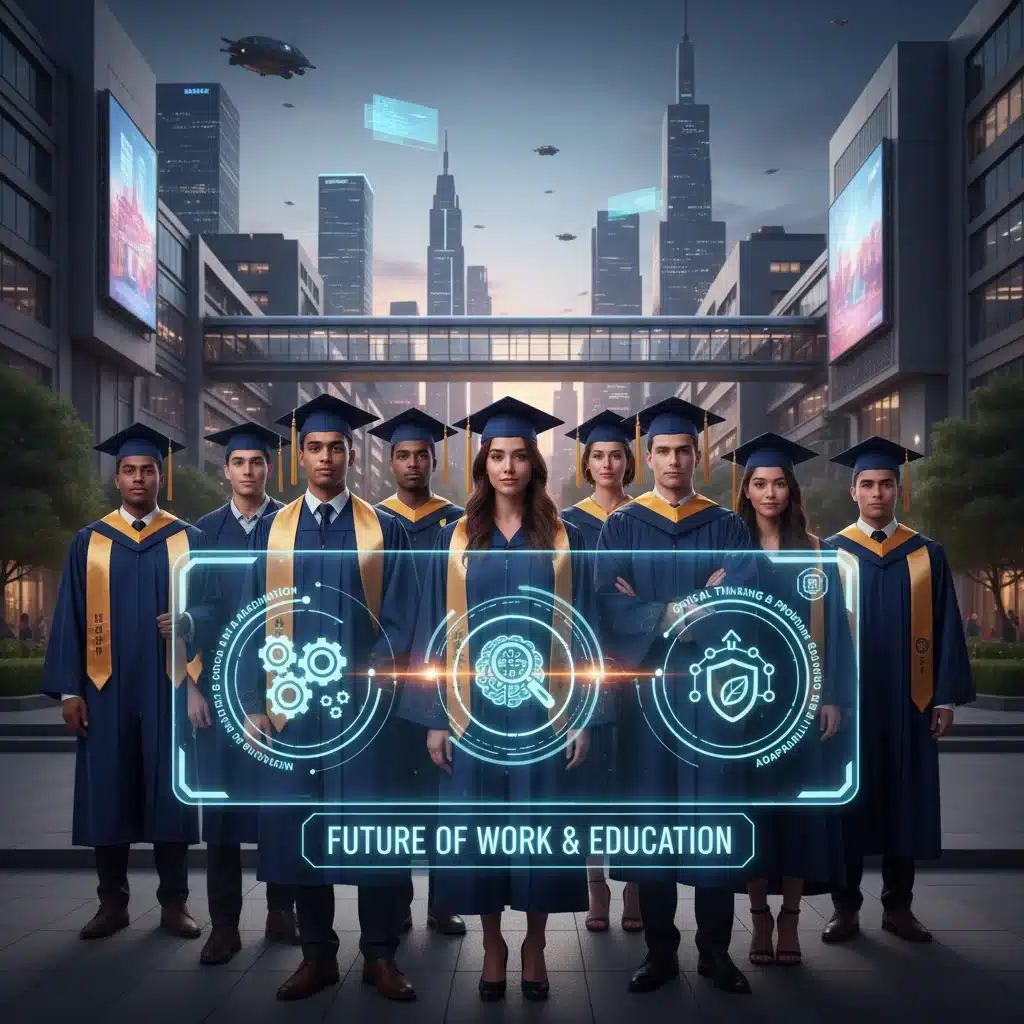
The landscape of the U.S. job market is in a constant state of flux, driven by technological advancements, global economic shifts, and evolving societal demands. For today’s students and recent graduates, understanding what U.S. employers are looking for in the next five years is not just beneficial, but absolutely crucial for career success. The traditional emphasis on degrees alone is giving way to a more nuanced appreciation for specific, demonstrable skills. This shift towards skill-based learning and hiring is profoundly reshaping how educational institutions prepare their students and how individuals approach their professional development. The demand for future graduate skills is becoming increasingly defined by adaptability, technological fluency, and a suite of human-centric competencies.
In this comprehensive exploration, we will delve into the critical future graduate skills that U.S. employers will prioritize. We’ll examine the forces driving these changes, dissect the specific competencies that will be most sought after, and provide actionable insights for graduates, educators, and policymakers alike. The goal is to paint a clear picture of what it takes to thrive in the workforce of tomorrow, ensuring that graduates are not just qualified, but truly ready for the challenges and opportunities ahead. Understanding these future graduate skills is the first step towards building a resilient and adaptable professional foundation.
Anúncios
The Evolving Job Market: A Paradigm Shift Towards Skills
For decades, a college degree was often considered the golden ticket to a successful career. While higher education remains invaluable, the focus is undeniably shifting. Employers are increasingly looking beyond the credential itself, prioritizing the practical skills and competencies that graduates bring to the table. This isn’t to say that degrees are becoming obsolete, but rather that they are now seen as a foundation upon which a robust skill set must be built. The emphasis on future graduate skills is a direct response to the rapid pace of change in industries across the board.
Several factors are catalyzing this paradigm shift. Firstly, the acceleration of technological innovation, particularly in areas like artificial intelligence, automation, and data analytics, means that job roles are evolving at an unprecedented rate. Skills that were cutting-edge yesterday might be baseline requirements tomorrow, and entirely new skill sets are emerging constantly. Secondly, the globalized and interconnected nature of modern business demands a workforce that can navigate complex, diverse environments, requiring strong cross-cultural communication and collaborative abilities. Thirdly, the rise of project-based work and agile methodologies means that employees need to be adaptable, self-directed, and capable of continuous learning. These factors collectively underscore the importance of demonstrable future graduate skills over mere academic qualifications.
Anúncios
The implications for both education and employment are significant. Educational institutions are being challenged to integrate more experiential learning, interdisciplinary programs, and skill-focused curricula. For individuals, it means a greater responsibility for continuous upskilling and reskilling throughout their careers. Employers, in turn, are rethinking their hiring processes, moving towards skill-based assessments, and often valuing alternative pathways to skill acquisition, such as bootcamps, certifications, and even self-taught expertise. This evolving ecosystem places future graduate skills at the very heart of workforce readiness.
Digital Fluency and Data Literacy: Non-Negotiable Competencies
In an increasingly digital world, digital fluency is no longer a niche skill but a fundamental requirement for nearly every profession. U.S. employers expect graduates to be comfortable and proficient with a wide array of digital tools and platforms, extending far beyond basic computer literacy. This includes, but is not limited to, advanced proficiency in productivity software, cloud-based collaboration tools, project management systems, and an intuitive understanding of cybersecurity best practices. The ability to quickly learn and adapt to new software and technologies is a hallmark of strong future graduate skills in this domain.
Beyond simply using digital tools, data literacy is emerging as a critical competency. This involves the ability to understand, interpret, and even manipulate data to inform decision-making. Graduates need to be able to identify relevant data, comprehend statistical concepts, visualize information effectively, and draw meaningful conclusions. This doesn’t necessarily mean every graduate needs to be a data scientist, but rather that they should possess a foundational understanding of data principles and how data can be leveraged in their respective fields. From marketing analysis to operational efficiency, data-driven insights are powering business strategy, making data literacy a core component of essential future graduate skills. Employers are looking for individuals who can not only access data but also transform it into actionable intelligence.
Furthermore, an understanding of emerging technologies like Artificial Intelligence (AI), Machine Learning (ML), and blockchain, even at a conceptual level, is becoming increasingly valuable. While not every role will require deep technical expertise in these areas, knowing how these technologies can impact industries, streamline processes, or create new opportunities demonstrates a forward-thinking mindset. Graduates who can articulate the potential applications and ethical implications of these technologies possess a distinct advantage. These advanced digital and data competencies are integral to the future graduate skills employers are seeking.
Critical Thinking and Problem-Solving: The Bedrock of Innovation
Amidst all the technological advancements, the human capacity for critical thinking and complex problem-solving remains irreplaceable and highly coveted. Employers consistently rank these as top future graduate skills. Critical thinking involves the ability to analyze information objectively, identify biases, evaluate arguments, and synthesize diverse perspectives to form reasoned judgments. It’s about asking the right questions, challenging assumptions, and not just accepting information at face value.
Problem-solving, often hand-in-hand with critical thinking, goes beyond merely identifying issues. It encompasses the entire process from defining a problem, generating creative solutions, evaluating their feasibility, and implementing the most effective course of action. In a world where challenges are rarely straightforward, graduates who can approach problems systematically, think outside the box, and adapt their strategies when faced with obstacles are invaluable. This requires a blend of analytical rigor and creative ingenuity. These future graduate skills are not just about finding answers, but about navigating ambiguity and creating value in dynamic environments.
Employers are looking for graduates who can tackle unstructured problems, those without clear precedents or easy answers. This involves resilience, a willingness to experiment, and the capacity to learn from failure. Whether it’s optimizing a business process, developing a new product, or resolving a customer complaint, the ability to think critically and solve problems effectively drives innovation and organizational success. These are timeless future graduate skills that become even more crucial as routine tasks are increasingly automated, leaving more complex, cognitive challenges for human workers.
Adaptability and Resilience: Navigating Constant Change
The one constant in today’s professional world is change. Therefore, adaptability and resilience have become paramount future graduate skills. Adaptability refers to an individual’s capacity to adjust to new conditions, environments, technologies, and work processes quickly and effectively. This means being open to learning new methods, embracing new tools, and comfortable with shifting priorities or organizational structures. Graduates who are rigid in their thinking or resistant to change will find it difficult to thrive in modern workplaces.
Resilience, on the other hand, is the ability to bounce back from setbacks, cope with stress, and maintain performance under pressure. The professional journey is rarely a smooth one; challenges, failures, and unexpected obstacles are inevitable. Employers value graduates who can face adversity with a positive attitude, learn from mistakes, and persevere towards their goals. This involves emotional intelligence, self-awareness, and effective stress management techniques. Both adaptability and resilience are crucial future graduate skills for sustained professional growth and well-being.
The COVID-19 pandemic served as a stark reminder of the importance of these qualities. Businesses had to pivot rapidly, and employees had to adjust to remote work, new technologies, and unprecedented uncertainties. Those who demonstrated high levels of adaptability and resilience were better equipped to navigate the crisis and emerge stronger. As economic and technological disruptions continue, these future graduate skills will only grow in importance. Employers are not just hiring for a specific role today, but for an individual’s potential to evolve with the company and the industry over the next five years and beyond.
Communication and Collaboration: The Power of Connection
Even in a highly technical world, the ability to communicate effectively and collaborate seamlessly remains a cornerstone of professional success. These are essential future graduate skills. Communication encompasses both written and verbal forms, requiring clarity, conciseness, and the ability to tailor messages to different audiences. This includes everything from crafting professional emails and reports to delivering compelling presentations and engaging in productive discussions.
Beyond individual communication, the capacity for effective collaboration is vital. Modern work is increasingly team-oriented, often involving cross-functional teams, remote colleagues, and diverse stakeholders. Graduates need to be able to work constructively with others, contribute positively to group dynamics, actively listen, provide constructive feedback, and resolve conflicts professionally. This means understanding team goals, respecting different working styles, and leveraging collective intelligence to achieve shared objectives. These collaborative future graduate skills are fundamental for project success and fostering a healthy work environment.
The rise of remote and hybrid work models has further amplified the importance of these future graduate skills. Graduates must be proficient in using virtual communication and collaboration tools, capable of maintaining strong team bonds despite geographical distances. The ability to articulate complex ideas simply, to persuade and influence others, and to build strong professional relationships are all facets of effective communication and collaboration that U.S. employers will continue to seek out in the next five years. These are not merely soft skills; they are foundational to how work gets done and value is created.
Creativity and Innovation: Driving Future Growth
In a competitive global marketplace, businesses constantly need to innovate to stay relevant and grow. This places a high premium on graduates who demonstrate creativity and a propensity for innovation. Creativity is not just about artistic talent; it’s about the ability to generate new ideas, connect seemingly disparate concepts, and approach challenges from novel perspectives. It’s about thinking differently and challenging the status quo.
Innovation takes creativity a step further, transforming those new ideas into tangible solutions, products, services, or processes that add value. Employers are looking for graduates who can contribute to this innovation cycle – individuals who can identify opportunities for improvement, conceptualize novel approaches, and help bring those ideas to fruition. This requires a proactive mindset, a willingness to experiment, and an understanding of design thinking principles. These future graduate skills are crucial for companies aiming to disrupt markets and stay ahead of the curve.
Graduates who can demonstrate a track record of creative problem-solving, whether through academic projects, extracurricular activities, or previous work experience, will stand out. This includes the ability to brainstorm effectively, iterate on ideas, and present innovative concepts clearly. As automation handles more routine tasks, the uniquely human capacity for creativity and innovation will become even more valuable, making them indispensable future graduate skills for the next generation of professionals. Companies are seeking individuals who can not only execute but also envision and create the future.
Emotional Intelligence and Empathy: The Human Element
While technical skills are vital, the importance of emotional intelligence (EQ) and empathy cannot be overstated. These human-centric future graduate skills are increasingly recognized as critical for effective leadership, team dynamics, and customer relations. Emotional intelligence involves understanding and managing one’s own emotions, as well as recognizing and influencing the emotions of others. It encompasses self-awareness, self-regulation, motivation, social skills, and empathy.
Empathy, a key component of EQ, is the ability to understand and share the feelings of another. In a professional context, this translates to understanding customer needs, appreciating diverse perspectives within a team, and building strong, trusting relationships with colleagues and clients. Graduates with high EQ can navigate complex social situations, manage conflicts constructively, inspire trust, and foster a positive work environment. These are invaluable future graduate skills in any role that involves interaction with others.
Employers understand that a highly skilled individual who lacks emotional intelligence can disrupt team harmony or alienate clients. Conversely, individuals with strong EQ can elevate team performance, improve client satisfaction, and contribute significantly to a company’s culture. As workplaces become more diverse and collaborative, the ability to connect with others on a human level, to truly listen and understand, will be a differentiator. These future graduate skills are essential for effective leadership and building robust professional networks.
Ethical Reasoning and Global Awareness: Responsible Professionals
In an era of increasing corporate responsibility and global interconnectedness, ethical reasoning and global awareness are becoming imperative future graduate skills. Ethical reasoning involves the ability to identify ethical dilemmas, analyze their implications, and make principled decisions that align with organizational values and societal expectations. This is particularly crucial as businesses grapple with issues like data privacy, AI ethics, environmental sustainability, and social equity.
Employers are looking for graduates who can not only perform their job duties but also do so with integrity and a strong moral compass. This means understanding the broader societal impact of their work and their organization’s decisions. Graduates who can navigate complex ethical landscapes and advocate for responsible practices are highly valued. This demonstrates maturity, sound judgment, and a commitment to more than just profit. These ethical future graduate skills are foundational for building trust and maintaining reputation.
Global awareness refers to an understanding of international markets, cultural differences, geopolitical dynamics, and their impact on business. In a globalized economy, many companies operate across borders or serve diverse customer bases. Graduates who possess cross-cultural communication skills, an appreciation for different perspectives, and an understanding of global trends can contribute significantly to a company’s international strategy and success. This includes proficiency in foreign languages where relevant, but more broadly, it’s about a mindset that embraces diversity and understands the interconnectedness of the world. These future graduate skills are vital for navigating an increasingly complex global business environment.
Lifelong Learning and Growth Mindset: The Ultimate Skill
Perhaps the most critical of all future graduate skills is the commitment to lifelong learning and the cultivation of a growth mindset. Given the rapid pace of change in technology and industry, the skills learned today may not be sufficient for the demands of tomorrow. Employers are not just hiring for what a graduate knows now, but for their capacity to learn, unlearn, and relearn throughout their career.
A growth mindset, as coined by Carol Dweck, is the belief that one’s abilities and intelligence can be developed through dedication and hard work. Graduates with a growth mindset view challenges as opportunities for growth, embrace feedback, and are constantly seeking to expand their knowledge and skill set. They are proactive in identifying new learning opportunities, whether through formal education, online courses, industry certifications, mentorships, or self-directed study. This intrinsic motivation to improve is a powerful indicator of future success.
Employers value individuals who are intellectually curious, self-motivated learners, and who take ownership of their professional development. These are the individuals who will stay relevant, adapt to new technologies, and drive innovation within an organization. The ability to continuously acquire new future graduate skills is not just a personal benefit but a strategic asset for any company. In essence, the ultimate skill for the next five years, and beyond, is the skill of learning itself.
Preparing for the Future: Actionable Steps for Graduates and Educators
For graduates, the takeaway is clear: focus on developing a diverse portfolio of future graduate skills that goes beyond your major. Seek out experiential learning opportunities such as internships, co-ops, and volunteer work. Engage in projects that require critical thinking, problem-solving, and collaboration. Pursue certifications in digital tools or emerging technologies that complement your field. Practice effective communication, both written and verbal, and actively seek feedback to improve your interpersonal skills. Cultivate a growth mindset by embracing challenges and viewing failures as learning opportunities. Networking with professionals in your desired field can also provide invaluable insights into the specific future graduate skills they prioritize.
For educators and institutions, the challenge is to evolve curricula to embed these future graduate skills more deeply. This means moving beyond rote memorization towards project-based learning, interdisciplinary studies, and real-world problem-solving scenarios. Collaborating with industry partners can ensure that educational programs are aligned with current and future employer needs. Emphasizing soft skills alongside technical competencies, and providing opportunities for students to develop emotional intelligence, adaptability, and ethical reasoning, will be paramount. Integrating career development resources that focus on skill identification and articulation will also empower students to effectively market their capabilities to employers. Ensuring a strong foundation in future graduate skills is key to student success.
Conclusion: Embracing the Skill-Based Future
The future of work in the U.S. is undeniably skill-based. While academic credentials will continue to hold value, they will increasingly serve as a starting point rather than the sole determinant of career success. U.S. employers, over the next five years, will be actively seeking graduates who possess a robust blend of digital fluency, critical thinking, adaptability, strong communication, creativity, emotional intelligence, ethical reasoning, and a relentless commitment to lifelong learning. These future graduate skills are the currency of the modern economy.
For students and recent graduates, the message is one of empowerment: take ownership of your skill development. Proactively identify the competencies that will be most valuable in your chosen field and dedicate yourself to acquiring and refining them. For educational institutions, it’s a call to action: innovate your programs to ensure they are producing graduates who are not just knowledgeable, but truly capable and adaptable. By embracing this skill-centric approach, we can collectively prepare a workforce that is resilient, innovative, and ready to meet the complex demands of the future. The emphasis on future graduate skills is not a trend, but a fundamental shift in how talent is identified, developed, and valued.
