
The Federal Reserve, often referred to as ‘the Fed,’ stands as the central bank of the United States. Its primary mandate is to foster maximum employment, maintain stable prices, and moderate long-term interest rates. The decisions made by the Federal Open Market Committee (FOMC), the Fed’s principal monetary policymaking body, reverberate throughout the global financial landscape, but none more directly than its pronouncements on interest rates. The latest Fed Rate Decision has once again captivated economists, investors, businesses, and everyday citizens alike, as its implications are far-reaching and deeply embedded in the fabric of the U.S. economy.
Understanding the rationale behind the Fed’s actions requires a grasp of the economic indicators it scrutinizes. Inflation, employment figures, GDP growth, and consumer sentiment are just a few of the critical data points that inform their decisions. When inflation is high, the Fed typically raises interest rates to cool down the economy by making borrowing more expensive, thereby reducing demand. Conversely, when the economy is sluggish or facing deflationary pressures, the Fed may lower rates to stimulate borrowing, investment, and spending. The recent Fed Rate Decision is a direct response to the current economic climate, aiming to strike a delicate balance between curbing inflationary pressures and sustaining economic growth without tipping into a recession.
Anúncios
The Mechanics of the Fed’s Interest Rate Adjustments
Before diving into the impacts, it’s crucial to understand how the Fed actually adjusts interest rates. The most prominent rate is the federal funds rate, which is the target rate for overnight lending between banks. While the Fed doesn’t directly set this rate, it influences it through open market operations, primarily by buying or selling government securities. When the Fed sells securities, it reduces the money supply in the banking system, leading to an increase in the federal funds rate. When it buys securities, it injects money, pushing the rate down.
This federal funds rate then serves as a benchmark for a myriad of other interest rates across the economy. Prime rates, mortgage rates, auto loan rates, and even credit card interest rates are all influenced by the Fed’s target. Therefore, a change in the Fed Rate Decision quickly translates into changes in the cost of borrowing for businesses and consumers, affecting everything from purchasing a home to financing business expansion.
Anúncios
Impact on Inflation: A Tightrope Walk
One of the primary objectives of any Fed Rate Decision is to manage inflation. When interest rates are raised, the cost of borrowing increases, which can discourage consumers from taking on new debt for purchases like cars or homes. Businesses also face higher costs for capital, potentially leading them to scale back expansion plans or reduce hiring. This reduction in overall demand helps to temper price increases, bringing inflation back towards the Fed’s target of around 2%.
However, this is a delicate balancing act. Raising rates too aggressively can stifle economic activity too much, leading to a recession and job losses. Conversely, not raising rates enough or lowering them too soon could allow inflation to become entrenched, eroding purchasing power and creating economic instability. The latest Fed Rate Decision reflects the FOMC’s assessment of current inflationary pressures and their projections for future price stability, attempting to navigate this narrow path successfully.
Employment and Wage Growth: The Dual Mandate
Beyond price stability, the Fed is also tasked with achieving maximum employment. The relationship between interest rates and employment is complex. Higher interest rates, by slowing economic growth, can lead to businesses cutting back on hiring or even laying off workers. This is a significant concern, as sustained job growth is vital for a healthy economy and individual well-being.
The Fed carefully monitors unemployment rates, job openings, wage growth, and labor force participation. A strong labor market with rising wages can contribute to inflationary pressures as consumers have more disposable income. Therefore, a Fed Rate Decision to raise rates might be seen as an attempt to cool down an overheating labor market, even if it risks some short-term job creation. The current labor market conditions, characterized by low unemployment but persistent wage growth, have been a key factor in the Fed’s recent deliberations.
Consumer Spending and Savings: Direct Effects
The average consumer feels the effects of a Fed Rate Decision in several direct ways. For those with variable-rate mortgages, credit card debt, or auto loans, an increase in the federal funds rate will likely translate into higher monthly payments. This reduces disposable income, potentially leading to a decrease in overall consumer spending. Conversely, a rate cut can make borrowing cheaper, encouraging spending and stimulating demand.
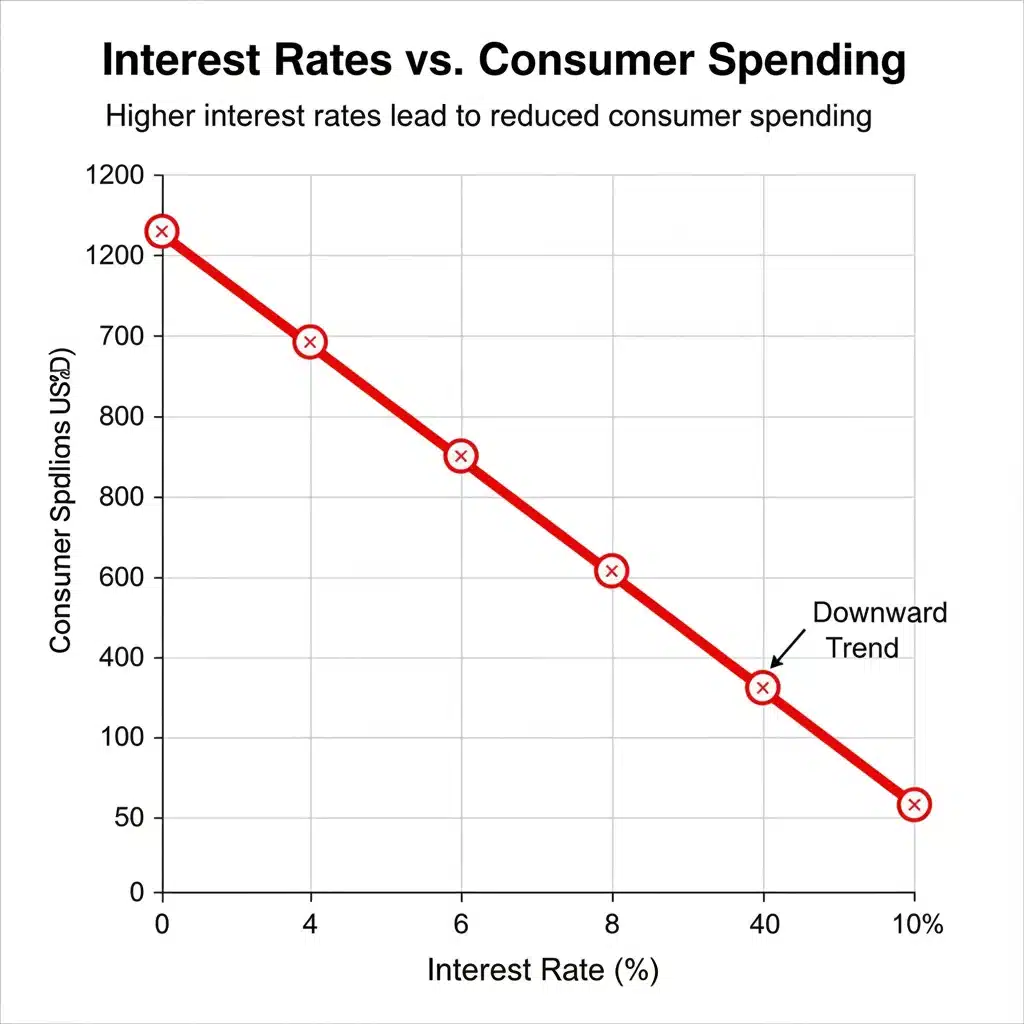
On the flip side, savers might welcome higher interest rates. Savings accounts, certificates of deposit (CDs), and money market accounts typically offer higher returns when the Fed raises rates, providing an incentive for individuals to save more. This dynamic creates a push and pull: while borrowing becomes more expensive, saving becomes more rewarding. The latest Fed Rate Decision will undoubtedly influence how households manage their budgets, whether they prioritize debt repayment, new purchases, or increasing their savings.
Investment and Business Expansion: Capital Costs and Confidence
For businesses, the Fed Rate Decision directly impacts the cost of capital. Companies often rely on loans to finance expansion, invest in new equipment, or manage day-to-day operations. Higher interest rates make these loans more expensive, potentially deterring new investments and slowing down business growth. This can have a ripple effect on innovation, productivity, and job creation.
Conversely, lower rates encourage businesses to borrow and invest, stimulating economic activity. Beyond the direct cost of capital, interest rate decisions also influence business confidence. A stable and predictable monetary policy environment allows businesses to plan more effectively. Uncertainty surrounding future rate movements can lead to cautious behavior, delaying important investment decisions. The current Fed Rate Decision sends a signal about the Fed’s outlook on the economy, which businesses will interpret and react to.
The Housing Market: A Sensitive Sector
Perhaps no sector is as sensitive to interest rate changes as the housing market. Mortgage rates are closely tied to the federal funds rate and broader bond yields. When the Fed raises rates, mortgage rates typically follow suit, making homeownership more expensive for prospective buyers. This can cool down a hot housing market, potentially leading to a decrease in home sales and a moderation in price growth.
Existing homeowners with adjustable-rate mortgages (ARMs) may also see their monthly payments increase. While most U.S. mortgages are fixed-rate, a significant portion of the market is still exposed to rate fluctuations. A Fed Rate Decision to increase rates can put pressure on affordability, particularly for first-time homebuyers, and can impact the overall health of the construction and real estate industries. Conversely, lower rates can reignite demand, making homes more accessible and boosting market activity.
Global Economic Implications: A Connected World
The U.S. dollar’s role as the world’s primary reserve currency means that the Fed Rate Decision has significant global ramifications. When the Fed raises interest rates, it tends to strengthen the U.S. dollar, as higher returns on dollar-denominated assets attract foreign investment. A stronger dollar makes U.S. exports more expensive for other countries and makes imports cheaper for U.S. consumers.
For emerging markets and countries with dollar-denominated debt, a stronger dollar and higher U.S. interest rates can create significant challenges. It makes their debt more expensive to service and can lead to capital outflows as investors seek higher returns in the U.S. This interconnectedness means that other central banks around the world often have to consider the Fed’s actions when formulating their own monetary policies, demonstrating the far-reaching influence of the Fed Rate Decision.
Stock Market Volatility: Investor Reactions
The stock market often reacts sharply to Fed Rate Decision announcements. Generally, higher interest rates are seen as a negative for corporate earnings. When borrowing costs increase, corporate profits can be squeezed. Additionally, higher interest rates make bonds more attractive relative to stocks, as they offer a safer, fixed return. This can lead to a reallocation of capital from equities to fixed-income investments.

However, the market’s reaction is not always straightforward. Sometimes, a rate hike that signals the Fed’s confidence in the economy can be viewed positively. Other times, a more aggressive stance than anticipated can trigger a sell-off. Investors constantly try to anticipate the Fed’s moves, and any deviation from expectations can lead to significant market volatility. The latest Fed Rate Decision has likely already been priced into current market valuations to some extent, but unforeseen nuances can still cause shifts.
The Future Outlook: What to Expect Next
Looking ahead, the future trajectory of interest rates will depend heavily on evolving economic data. The Fed has repeatedly emphasized its data-dependent approach, meaning that upcoming inflation reports, employment figures, and global economic developments will all play a crucial role in shaping future Fed Rate Decisions. Market participants will be closely watching for any forward guidance from Fed officials regarding the pace and magnitude of potential future rate adjustments.
There’s also the ongoing debate about the ‘neutral’ interest rate – the theoretical rate at which monetary policy is neither expansionary nor contractionary. Estimating this rate is challenging, and it can change over time. The Fed’s ultimate goal is to guide the economy to a sustainable path of stable prices and full employment, and the Fed Rate Decisions are the primary tool they use to achieve this.
Strategies for Businesses and Individuals
In light of the latest Fed Rate Decision, both businesses and individuals should consider adjusting their financial strategies. For businesses, this might involve reviewing debt structures, hedging against rising interest rates, or focusing on operational efficiencies to mitigate increased borrowing costs. For individuals, it could mean prioritizing debt reduction, exploring fixed-rate loan options, or taking advantage of higher savings rates.
Understanding the broader economic context and how monetary policy influences personal finances is key to navigating these periods of change. Staying informed about the Fed’s communications, economic indicators, and market trends can empower better financial decision-making.
Conclusion: Navigating the Economic Landscape
The Federal Reserve’s latest interest rate decision is more than just a number; it’s a powerful signal about the current state and future direction of the U.S. economy. Its ripple effects touch every corner of the financial system, from the cost of a mortgage to the profitability of multinational corporations. By influencing inflation, employment, consumer spending, and investment, the Fed Rate Decision plays a central role in shaping the economic landscape.
As the economy continues to evolve, the Fed will undoubtedly face new challenges and make further adjustments to its monetary policy. For businesses and individuals, a clear understanding of these decisions and their potential impacts is essential for sound financial planning and resilience in an ever-changing economic environment. The ongoing saga of interest rates will continue to be a defining feature of our economic reality, demanding continuous attention and adaptation.
