
Disability Benefits 2026: Your Guide to SSI/SSDI Application & Faster Approval

Navigating the complex world of disability benefits can be daunting, especially when facing health challenges. As we approach 2026, understanding the latest requirements, application processes, and strategies to expedite your claim for Social Security Disability Insurance (SSDI) and Supplemental Security Income (SSI) is more crucial than ever. This comprehensive guide aims to demystify the process, providing a step-by-step roadmap to successfully apply for Disability Benefits 2026 and, critically, reduce your wait times by up to 30%.
The Social Security Administration (SSA) offers two primary programs for individuals with disabilities: SSDI and SSI. While both provide financial assistance, their eligibility criteria differ significantly. SSDI is for those who have worked and paid Social Security taxes, accumulating sufficient work credits. SSI, on the other hand, is a needs-based program for individuals with limited income and resources, regardless of their work history. Understanding which program, or combination of programs, applies to your situation is the first vital step.
The application process, notoriously lengthy, can be a source of immense stress. However, with proper preparation, meticulous documentation, and strategic navigation, you can significantly improve your chances of approval and potentially shorten the waiting period. Our goal is to equip you with the knowledge and tools to confidently pursue your Disability Benefits 2026 claim.
Understanding SSDI and SSI: Which One Is For You?
Before diving into the application, it’s essential to distinguish between SSDI and SSI. While both are administered by the SSA and require you to meet the SSA’s definition of disability, their financial and work history requirements are distinct.
Social Security Disability Insurance (SSDI)
SSDI is an entitlement program funded by payroll taxes. To qualify for SSDI, you must have:
- A qualifying disability: The SSA defines disability as the inability to engage in any substantial gainful activity (SGA) due to a medically determinable physical or mental impairment that is expected to last for a continuous period of not less than 12 months or result in death.
- Sufficient work credits: These credits are earned through working and paying Social Security taxes. The number of credits needed depends on your age when your disability began. Generally, you need 40 credits, with 20 of them earned in the last 10 years ending with the year your disability began. Younger individuals may qualify with fewer credits.
SSDI benefits are typically higher than SSI benefits and are not needs-based. If approved, you may also be eligible for Medicare after a 24-month waiting period from your entitlement date.
Supplemental Security Income (SSI)
SSI is a needs-based program designed for disabled, blind, or aged individuals who have limited income and resources. To qualify for SSI, you must meet the SSA’s definition of disability and:
- Limited income: Your countable income must be below a certain threshold. Not all income is counted; for example, some forms of assistance or infrequent income might be excluded.
- Limited resources: Your countable resources (assets) must not exceed $2,000 for an individual or $3,000 for a couple. This excludes your home, one vehicle, and certain other essential items.
SSI benefits are generally lower than SSDI and are subject to federal and state maximums. If approved for SSI, you are typically eligible for Medicaid immediately in most states.
Can You Receive Both SSDI and SSI?
Yes, it’s possible to receive both SSDI and SSI, a situation often referred to as "concurrent benefits." This usually occurs when an individual qualifies for SSDI but receives a low monthly benefit amount. The SSI program can then supplement the SSDI payment to bring the total up to the SSI federal benefit rate, provided the individual also meets SSI’s income and resource limits.
The SSA’s Definition of Disability for Disability Benefits 2026
The SSA’s definition of disability is stringent and central to both SSDI and SSI applications. It’s not enough to have a medical condition; the condition must prevent you from performing "substantial gainful activity" (SGA). In 2026, the SGA limit is expected to be adjusted, so it’s crucial to check the most current figures on the SSA website. For non-blind individuals, the monthly SGA amount is typically around $1,550 (this figure is subject to change annually). For blind individuals, it’s higher.
The SSA uses a five-step sequential evaluation process to determine if you are disabled:
- Are you engaging in SGA? If you are, your claim will be denied.
- Is your condition severe? Your impairment must significantly limit your ability to perform basic work activities.
- Is your impairment listed in the "Blue Book"? The SSA maintains a list of impairments (the "Blue Book") that are considered severe enough to prevent SGA. If your condition meets or equals one of these listings, you are found disabled.
- Can you do your past relevant work? If your condition does not meet a listing, the SSA will assess if you can still perform any of your past jobs.
- Can you do any other type of work? If you cannot do your past work, the SSA will consider your age, education, work experience, and residual functional capacity (RFC) to determine if you can adjust to other work. If not, you are considered disabled.
Understanding this five-step process is vital for preparing your application and gathering the necessary medical evidence.
Step-by-Step Guide to Applying for Disability Benefits 2026
Applying for Disability Benefits 2026 involves several crucial steps. Thorough preparation and attention to detail are key to a successful claim and reducing processing times.
Step 1: Gather Essential Information and Documents
Before you even begin filling out forms, gather all necessary information. This is perhaps the most critical step for reducing wait times, as missing information is a primary cause of delays. You’ll need:
- Personal Information: Social Security number, birth certificate, proof of U.S. citizenship or lawful alien status.
- Medical Records: Names, addresses, and phone numbers of all doctors, hospitals, clinics, and caseworkers who have treated you. Dates of treatment, medical test results (X-rays, MRIs, lab tests), and medication lists are essential. Be as comprehensive as possible.
- Work History: Detailed information about your past jobs (up to 15 years), including job titles, duties, dates worked, and earnings.
- Education and Training: Your education history, including vocational training.
- Financial Information: Bank account information for direct deposit. For SSI, you’ll also need details about your income, resources, and living arrangements.
- Spouse and Children’s Information: If applicable, their names, dates of birth, and Social Security numbers.
Step 2: Start Your Application
You have several options to start your application:
- Online: For SSDI, you can apply online at the SSA’s website (www.ssa.gov). This is often the fastest and most convenient method. SSI applications cannot be completed entirely online, but you can start the process by filling out some forms.
- By Phone: Call the SSA at 1-800-772-1213 (TTY 1-800-325-0778) to schedule an appointment or apply over the phone.
- In Person: Visit your local Social Security office. It’s advisable to call ahead and make an appointment.
Regardless of the method, be prepared for detailed questions about your medical condition, daily activities, and work history. Be honest and thorough.
Step 3: Medical Evidence is King
This cannot be stressed enough: strong, comprehensive medical evidence is the backbone of your Disability Benefits 2026 claim. The SSA will primarily rely on your medical records to determine if you meet their definition of disability. Ensure your medical records include:
- Objective Medical Evidence: Test results (MRI, CT scans, X-rays, blood tests, nerve conduction studies), functional capacity evaluations, psychological assessments.
- Treatment History: Records of all treatments, medications, therapies, and surgeries, including their effectiveness and side effects.
- Doctor’s Notes: Detailed notes from your treating physicians outlining your diagnosis, prognosis, symptoms, limitations, and how your condition affects your ability to perform work-related activities. A Residual Functional Capacity (RFC) form completed by your doctor can be incredibly valuable.
- Opinions from Specialists: If you see specialists (e.g., neurologists, psychiatrists, orthopedists), their detailed reports are crucial.
The more consistent and detailed your medical records are, the less likely the SSA will need to send you for their own consultative examinations (CEs), which can add significant delays.
Step 4: The Disability Determination Services (DDS) Review
Once your application is submitted, it goes to a state agency called Disability Determination Services (DDS). A claims examiner and a medical consultant at DDS will review your application and medical evidence. They may contact your doctors for more information or schedule you for a consultative examination if they feel there isn’t enough evidence to make a decision.
During this phase, it’s crucial to:
- Respond Promptly: If DDS requests additional information, respond immediately. Delays on your part directly translate to delays in your claim.
- Keep in Contact: You or your representative should periodically check the status of your application.
Step 5: Decision and Appeals Process
After the DDS review, you will receive a decision letter. Unfortunately, a significant number of initial applications are denied. If your claim for Disability Benefits 2026 is denied, don’t despair. The appeals process has several stages:
- Reconsideration: A complete review of your claim by a different DDS examiner and medical consultant.
- Hearing by an Administrative Law Judge (ALJ): If reconsideration is denied, you can request a hearing before an ALJ. This is often the stage where applicants have the highest success rate, especially with legal representation.
- Appeals Council Review: If the ALJ denies your claim, you can appeal to the Appeals Council.
- Federal Court Review: The final stage, if all other appeals are exhausted.
Each appeal stage has strict deadlines, typically 60 days from the date you receive the denial letter. Missing a deadline can cause you to lose your right to appeal.
Strategies to Reduce Wait Times by 30% for Disability Benefits 2026
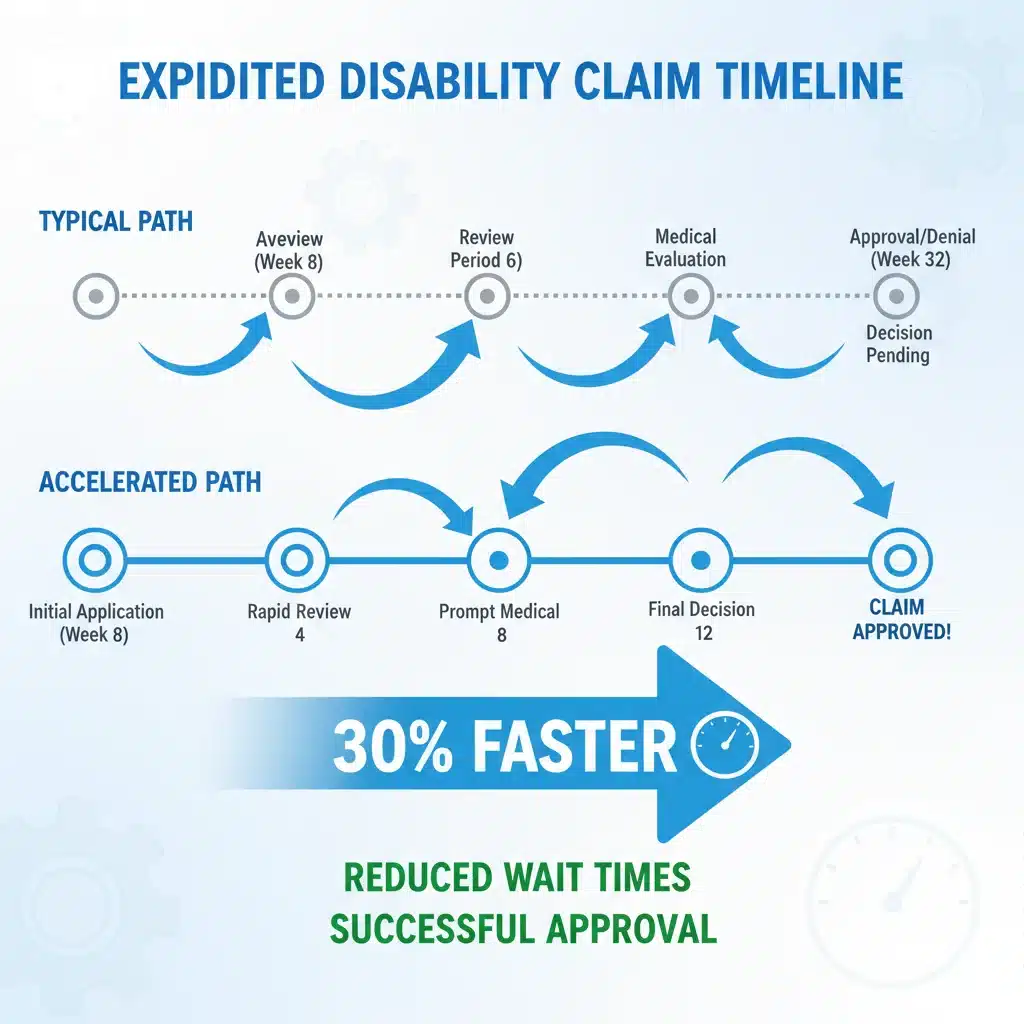
While no one can guarantee a specific reduction in processing time, implementing these strategies can significantly streamline your Disability Benefits 2026 application and potentially cut down the notorious wait times.
1. Meticulous and Complete Application Submission
The single biggest factor in delays is incomplete or inaccurate applications. Double-check every field, ensure all questions are answered, and provide precise dates and contact information. Any missing piece of information will lead to requests for clarification, slowing down the process considerably.
2. Proactive Medical Evidence Submission
Don’t wait for the SSA to request your medical records. Gather as many relevant records as possible yourself and submit them with your initial application or shortly thereafter. This includes:
- All relevant diagnostic test results.
- Detailed treatment notes from all providers.
- A comprehensive list of medications and dosages.
- A detailed statement from your primary care physician and specialists outlining your diagnosis, prognosis, functional limitations, and how these limitations prevent you from working.
This proactive approach can reduce the time DDS spends requesting records, which is a major bottleneck.
3. Provide a Detailed "Function Report"
When you apply, you’ll complete a Function Report (Form SSA-3373-BK for adults). This form asks about your daily activities and how your disability affects them. Be incredibly detailed and honest. Describe a typical day, focusing on your limitations. For example, instead of saying "I have back pain," say "My back pain prevents me from standing for more than 15 minutes, lifting more than 5 pounds, and sitting for more than 30 minutes without severe discomfort, requiring me to lie down several times a day." Consistency between your Function Report and your medical records is vital.
4. Consider a "Dire Need" or "Terminal Illness" Designation
If you are in a dire financial situation (e.g., facing homelessness, utility cut-offs) or have a terminal illness, you can inform the SSA. They have processes to flag these cases for expedited review. While this doesn’t guarantee approval, it can significantly speed up the processing time.
5. Seek Professional Representation Early On
Working with an experienced disability attorney or advocate from the beginning can be a game-changer. They understand the SSA’s requirements, know what evidence is needed, and can help you:
- Complete the application accurately.
- Gather comprehensive medical evidence.
- Communicate effectively with the SSA and DDS.
- Prepare for hearings and represent you.
Studies show that applicants with representation have a significantly higher approval rate, especially at the ALJ hearing level, and often experience a smoother process overall, which indirectly contributes to faster resolutions.
6. Avoid Missing Appointments and Deadlines
If the SSA schedules you for a consultative examination or requests additional information, attend the appointment and respond promptly. Missing an appointment or a deadline can lead to delays or even denial of your claim.
7. Maintain Consistent Medical Treatment
The SSA looks for consistent medical treatment for your disabling condition. If you stop seeing doctors or following prescribed treatments, it can be interpreted that your condition is not as severe as claimed or that you are not actively trying to improve it. Regular, ongoing medical care provides continuous documentation of your impairment and its impact.
8. Be Honest and Consistent
Provide consistent information across all forms and communications. Discrepancies between what you tell your doctors, what you write on your application, and what you tell the SSA can raise red flags and lead to further investigation, causing delays.
What to Expect After Approval of Your Disability Benefits 2026 Claim
If your claim for Disability Benefits 2026 is approved, congratulations! However, the process isn’t entirely over. Here’s what to expect:
- Award Letter: You will receive an official award letter detailing your monthly benefit amount, the date your benefits begin, and any back pay you are owed.
- Back Pay: For SSDI, back pay typically covers the period from your established onset date of disability (five months after your disability began) up to the date of approval. For SSI, back pay starts from the month after your application date.
- Medicare/Medicaid Eligibility: If you receive SSDI, you’ll generally be eligible for Medicare after a 24-month waiting period from your entitlement date. SSI recipients are usually eligible for Medicaid immediately.
- Continuing Disability Reviews (CDRs): The SSA periodically reviews disability cases to ensure recipients still meet the definition of disability. The frequency of these reviews depends on the nature of your condition (e.g., expected to improve, improvement possible, or not expected to improve).
Maintaining Your Benefits
Once you are receiving Disability Benefits 2026, it’s important to understand your responsibilities to avoid issues:
- Report Changes: For SSI recipients, any changes in income, resources, living arrangements, or marital status must be reported to the SSA promptly. For SSDI recipients, reporting changes in work activity is crucial.
- Continue Medical Treatment: Continue to follow your doctor’s advice and maintain consistent medical treatment. This is important for your health and for any future CDRs.
- Understand Work Incentives: The SSA has various work incentives programs (e.g., Ticket to Work) designed to help people with disabilities return to work without immediately losing their benefits. Explore these options if you are considering attempting to work again.
The Role of Technology in Disability Benefits 2026
As we move into 2026, the SSA continues to embrace technology to streamline its processes. While the core application remains largely manual in terms of evidence review, online portals and digital communication are becoming more prevalent. Utilizing the SSA’s online account services to track your application status, respond to requests, and upload documents can contribute to a more efficient process.
Furthermore, the increasing integration of electronic health records (EHRs) among medical providers may eventually lead to faster and more direct access to medical evidence for the SSA, potentially reducing the time spent requesting records. However, applicants should still proactively gather and submit their own records to ensure completeness.
Conclusion
Applying for Disability Benefits 2026 is a challenging but necessary journey for many. By thoroughly understanding the distinction between SSDI and SSI, meticulously preparing your application, providing robust medical evidence, and strategically navigating the process, you can significantly improve your chances of approval and potentially reduce your waiting period by 30% or more. Remember, persistence, attention to detail, and professional guidance are your strongest allies in securing the benefits you deserve. Don’t hesitate to seek help from a qualified disability attorney or advocate to guide you through every step of this complex process.
Your well-being is paramount, and securing your financial stability through disability benefits can provide the peace of mind needed to focus on your health. Stay informed, stay prepared, and advocate for yourself throughout your Disability Benefits 2026 journey.
