
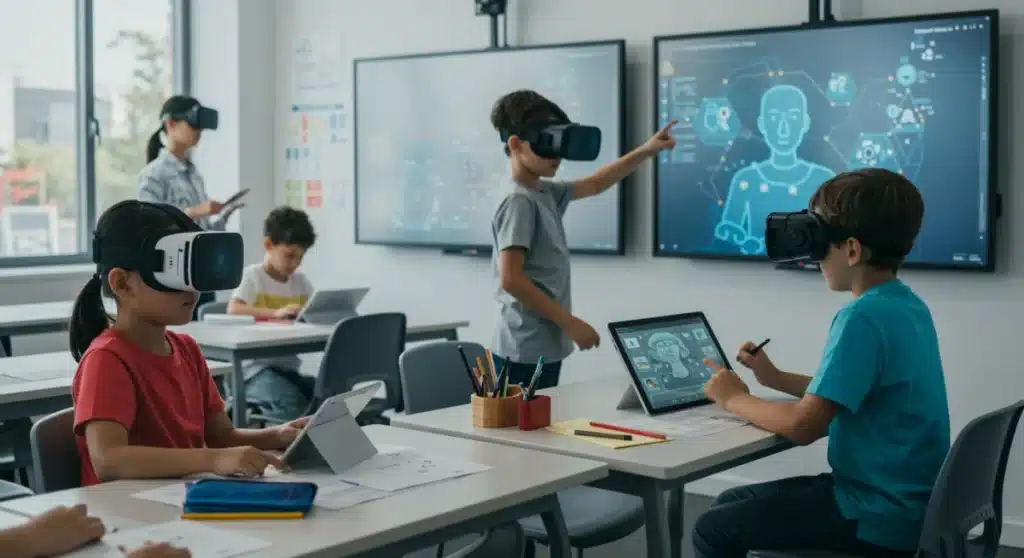
The Future of Learning: 4 Emerging Educational Technologies Transforming U.S. Classrooms by 2026
The educational landscape is on the cusp of a profound transformation, driven by an accelerating pace of technological innovation. As we cast our gaze towards 2026, U.S. classrooms are poised to integrate several groundbreaking technologies that promise to redefine teaching methodologies, enhance student engagement, and ultimately, improve learning outcomes. This isn’t just about digitizing textbooks; it’s about creating dynamic, interactive, and highly personalized learning environments. The shift towards an education system that is more adaptive, accessible, and effective is being spearheaded by a handful of emerging education technology trends that are quickly moving from experimental concepts to practical applications.
For decades, educators have sought ways to make learning more engaging and relevant to the real world. Now, with the advent of sophisticated digital tools, these aspirations are becoming a reality. The four key technologies we will explore are not merely tools; they are catalysts for a fundamental paradigm shift in how knowledge is acquired, processed, and applied. From intelligent systems that tailor content to individual needs to immersive experiences that transport students to distant lands or historical events, the potential for enrichment is immense. Understanding these shifts is crucial for policymakers, educators, parents, and students alike, as they will shape the very foundation of future generations’ learning experiences.
Anúncios
The integration of emerging education technology is not without its challenges. Issues of equitable access, teacher training, data privacy, and the ethical implications of AI are all critical considerations that must be addressed as these innovations become more widespread. However, the benefits in terms of enhanced learning, increased accessibility, and preparation for a rapidly changing global workforce are compelling enough to warrant significant investment and focus. By 2026, these technological advancements could lead to a more equitable and effective education system, fostering a generation of critical thinkers and lifelong learners.
Anúncios
1. Artificial Intelligence (AI) and Machine Learning (ML) for Personalized Learning
Artificial Intelligence (AI) and Machine Learning (ML) are rapidly evolving from futuristic concepts to indispensable tools within the educational sector. By 2026, their presence in U.S. classrooms is expected to be pervasive, fundamentally altering how students learn and how teachers teach. The core strength of AI in education lies in its ability to analyze vast amounts of data to understand individual student needs, learning styles, and progress, thereby facilitating truly personalized learning experiences. This capability marks a significant departure from the traditional ‘one-size-fits-all’ approach to education.
AI-powered platforms can adapt curriculum content, pacing, and instructional methods to suit each student. For example, intelligent tutoring systems can provide real-time feedback, identify knowledge gaps, and suggest additional resources or practice problems tailored to a student’s specific areas of weakness. This adaptive learning approach ensures that students are neither bored by overly simple material nor overwhelmed by content that is too advanced. It allows each learner to progress at their optimal pace, maximizing comprehension and retention. This level of individualized attention, once only available through expensive private tutoring, is becoming scalable and accessible through emerging education technology.
Beyond personalized instruction, AI is also revolutionizing assessment. Instead of relying solely on standardized tests, AI can evaluate student performance through a wider range of activities, including essays, projects, and even participation in online discussions. AI-driven tools can grade assignments, detect plagiarism, and provide detailed analytical reports to teachers, highlighting areas where students collectively struggle or excel. This frees up valuable teacher time, allowing them to focus more on direct instruction, mentorship, and addressing complex student needs, rather than administrative tasks.
Furthermore, AI is instrumental in identifying at-risk students much earlier than traditional methods. By analyzing patterns in performance, attendance, and engagement, AI algorithms can flag students who might be falling behind, enabling educators to intervene proactively. This predictive analytics capability can be a game-changer in preventing academic failure and ensuring that all students receive the support they need to succeed. The ethical implications, such as data privacy and algorithmic bias, require careful consideration and robust safeguards to ensure fair and equitable application of these powerful tools.
The development of AI companions and virtual assistants for students is another exciting frontier. These AI entities can answer questions, provide explanations, and even engage in Socratic dialogues, encouraging critical thinking and deeper understanding. For teachers, AI can assist in curating educational resources, designing lesson plans, and even managing classroom logistics. The integration of this emerging education technology promises a future where learning is more efficient, effective, and deeply personalized, preparing students for a world where adaptability and continuous learning are paramount.
2. Virtual Reality (VR) and Augmented Reality (AR) for Immersive Learning
The boundaries of the physical classroom are dissolving with the rise of Virtual Reality (VR) and Augmented Reality (AR). By 2026, these immersive technologies are set to transform U.S. classrooms into dynamic portals, offering unparalleled opportunities for experiential learning. VR and AR move beyond passive consumption of information, enabling students to actively explore, interact with, and manipulate digital environments and objects, making abstract concepts tangible and complex subjects more accessible.
Virtual Reality, by creating fully simulated environments, can transport students to places and times otherwise inaccessible. Imagine a history lesson where students walk through ancient Rome, explore the surface of Mars in a simulated spacecraft, or witness the inner workings of the human heart in 3D. These experiences are not merely engaging; they foster deeper understanding and retention by allowing students to learn by doing and experiencing, rather than just reading or listening. VR field trips can democratize access to educational experiences, allowing students from all socioeconomic backgrounds to explore museums, historical sites, and natural wonders around the globe. This emerging education technology bridges geographical and financial barriers, making world-class learning accessible to all.
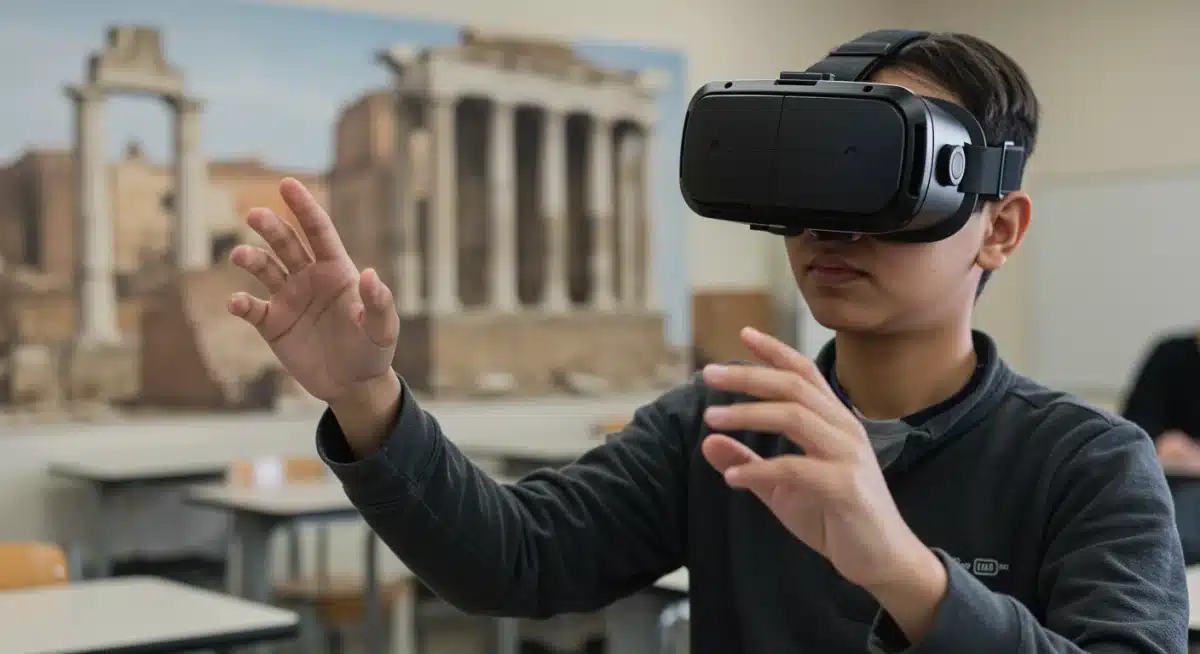
Augmented Reality, on the other hand, overlays digital information onto the real world, enhancing existing learning environments without fully replacing them. Using tablets or smartphones, students can point their devices at a textbook illustration of a cell and see a 3D animated model appear on their screen, dissect it virtually, and learn about its functions interactively. AR applications can bring textbooks to life, turn classroom walls into interactive displays, or allow students to collaborate on virtual projects overlaid onto their physical desks. This technology enhances engagement by making learning interactive and contextual within the student’s immediate surroundings.
The applications extend across various subjects. In science, students can conduct virtual experiments without the need for expensive or dangerous lab equipment. In geometry, they can manipulate 3D shapes to understand spatial relationships. In art, they can virtually sculpt or paint. The tactile and visual nature of VR and AR experiences caters to diverse learning styles, particularly kinesthetic and visual learners who benefit from hands-on interaction and visual representation. The development of robust, user-friendly content and affordable hardware will be key to the widespread adoption of this emerging education technology.
While the initial investment for VR/AR hardware might seem substantial, the long-term benefits in terms of student engagement, deeper understanding, and the ability to simulate complex scenarios safely and repeatedly offer a compelling return on investment. As the technology matures and becomes more accessible, VR and AR will cease to be novelties and become integral components of a rich, immersive, and highly effective learning experience in U.S. classrooms.
3. Adaptive Learning Platforms and Gamification
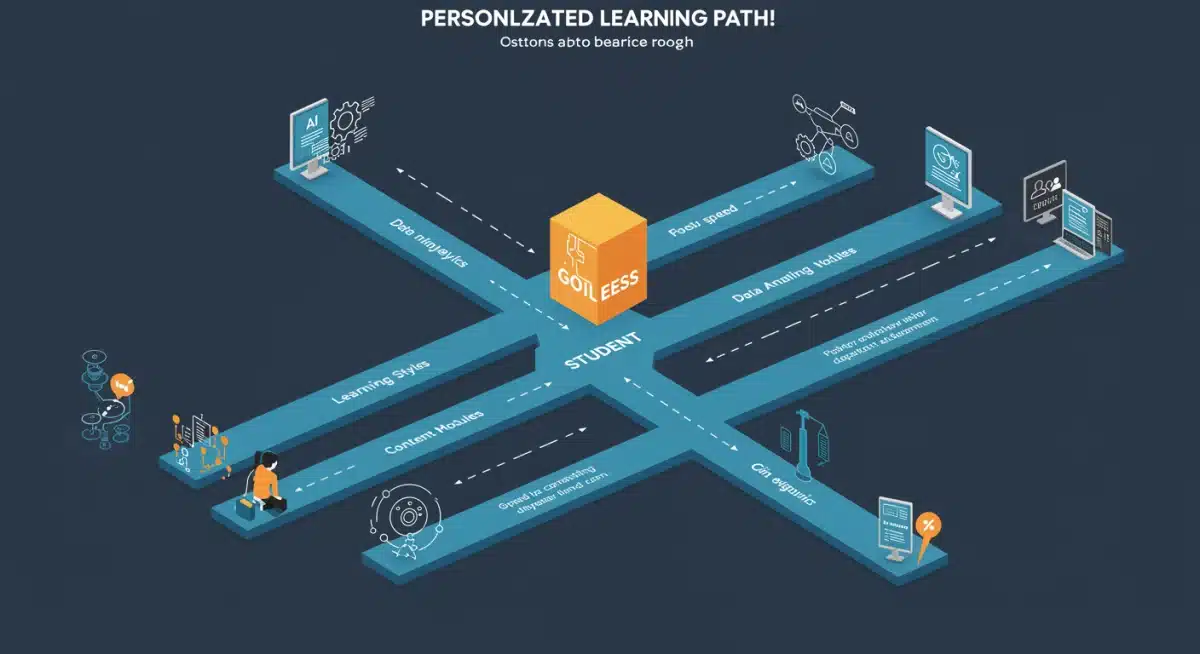
Adaptive learning platforms, often powered by AI and machine learning, represent a significant leap forward in delivering truly personalized education. These platforms continuously assess a student’s knowledge, skills, and progress, then dynamically adjust the learning content, pace, and instructional strategies to meet individual needs. This ensures that every student receives instruction that is optimally challenging, preventing both frustration from overly difficult material and disengagement from content that is too easy. By 2026, such platforms will be a cornerstone of emerging education technology in U.S. classrooms.
The core concept behind adaptive learning is to create a unique learning path for each student. Unlike traditional linear curricula, adaptive platforms use algorithms to identify a student’s strengths and weaknesses, then provide targeted interventions, additional practice, or accelerated content as needed. This data-driven approach not only optimizes learning efficiency but also empowers students to take ownership of their educational journey. Teachers, in turn, gain invaluable insights into each student’s performance, allowing them to provide more focused support and differentiate instruction more effectively across a diverse classroom.
Complementing adaptive learning, gamification is increasingly recognized as a powerful tool for boosting student motivation and engagement. Gamification involves applying game-design elements and game principles in non-game contexts, such as education. This includes features like points, badges, leaderboards, levels, challenges, and rewards to make learning more interactive and enjoyable. By transforming learning tasks into engaging challenges, gamification can significantly increase student participation and persistence, particularly in subjects traditionally perceived as dry or difficult.
When combined, adaptive learning platforms and gamification create a highly compelling educational experience. Imagine an adaptive platform that presents a student with a personalized math problem, and upon successful completion, awards them points and a virtual badge, unlocking the next level of challenge. This immediate feedback and reward system taps into intrinsic motivators, encouraging students to continue learning and striving for mastery. The competitive yet collaborative nature of leaderboards and team challenges can also foster a sense of community and healthy competition among students.
The data generated by these platforms is also a goldmine for educational research and improvement. Aggregated, anonymized data can reveal trends in student learning, identify effective teaching strategies, and highlight areas where curriculum development might be needed. This continuous feedback loop allows for iterative improvements in both the technology and the pedagogical approaches. As this emerging education technology matures, its ability to create highly engaging, effective, and data-informed learning environments will become indispensable for fostering academic success in U.S. schools.
4. Blockchain Technology for Secure Credentials and Records
While AI, VR, and AR focus on the delivery and experience of learning, blockchain technology addresses a critical aspect of education often overlooked in discussions of innovation: the secure and verifiable management of academic credentials and records. By 2026, blockchain is poised to become a foundational emerging education technology for U.S. classrooms, offering unparalleled security, transparency, and efficiency in managing student achievements and qualifications.
At its core, blockchain is a decentralized, distributed ledger technology that records transactions (in this case, academic achievements) across a network of computers. Once a record is added to the blockchain, it is immutable and transparent, making it virtually impossible to alter or forge. This characteristic is incredibly valuable in an educational context, where the authenticity of diplomas, transcripts, and certifications is paramount. Imagine a world where employers or higher education institutions can instantly verify a candidate’s credentials with absolute certainty, without relying on intermediaries or lengthy verification processes.
For students, blockchain-based credentials mean they own their academic records in a digital, tamper-proof format. They can easily share their verified qualifications with prospective employers, universities, or scholarship committees, streamlining application processes and reducing administrative burdens. This not only enhances the portability of credentials but also empowers students with greater control over their personal academic data. The concept of a ‘digital backpack’ of verifiable skills and achievements, accessible and shareable at will, is a powerful application of this emerging education technology.
For educational institutions, blockchain offers a robust solution for issuing and managing academic records. It reduces the administrative overhead associated with verifying credentials, combats fraud, and ensures the integrity of their academic programs. Furthermore, blockchain can facilitate the recognition of micro-credentials and competency-based learning. As education moves towards a more modular and skills-focused approach, blockchain can securely record smaller achievements, such as completion of specific courses, workshops, or demonstrated proficiencies, providing a more granular and accurate representation of a student’s capabilities.
The implementation of blockchain in education also has implications for lifelong learning and professional development. Individuals can build a continuous, verifiable record of their learning journey, from formal degrees to informal certifications and professional training, all stored securely on the blockchain. This comprehensive digital ledger can be invaluable for career progression and demonstrating continuous skill development in a rapidly changing job market. While the technical complexities and initial setup costs are considerations, the long-term benefits of enhanced security, trust, and efficiency make blockchain a transformative emerging education technology for the future of U.S. education.
Challenges and Opportunities for Emerging Education Technology
While the promise of emerging education technology is immense, its widespread adoption in U.S. classrooms by 2026 also presents significant challenges and opportunities that must be carefully navigated. Addressing these aspects proactively will be crucial for maximizing the positive impact of these innovations and ensuring equitable access and effective integration.
Ensuring Equitable Access
One of the most pressing challenges is ensuring equitable access to these advanced technologies. The digital divide, which often mirrors socioeconomic disparities, could be exacerbated if access to AI tutors, VR headsets, or robust adaptive platforms is not universal. Schools in underfunded districts may struggle to acquire the necessary hardware, software, and internet infrastructure. Bridging this gap requires concerted efforts from policymakers, technology providers, and community organizations to ensure that all students, regardless of their background, can benefit from these advancements. Programs that provide devices, subsidize internet access, and offer public access points will be vital.
Teacher Training and Professional Development
The most sophisticated emerging education technology is only as effective as the educators wielding it. Teachers will require comprehensive and ongoing professional development to effectively integrate AI, VR/AR, and adaptive platforms into their pedagogical practices. This training should go beyond technical proficiency, focusing on how these tools can enhance learning outcomes, foster critical thinking, and support diverse student needs. Educators need to understand how to leverage data from adaptive platforms, design engaging VR lessons, and interpret AI-generated insights. Investing in teacher training is not merely an expense but an essential investment in the future of education.
Data Privacy and Security
The increased use of AI and personalized learning platforms generates vast amounts of student data. Protecting this sensitive information from breaches and ensuring its ethical use are paramount. Robust data privacy policies, transparent data handling practices, and adherence to regulations like FERPA (Family Educational Rights and Privacy Act) are critical. Parents and students must be informed about how their data is collected, stored, and utilized, and have control over its use. Building trust in these systems is essential for their widespread acceptance and success.
Curriculum Integration and Pedagogical Shifts
Simply introducing new technology into the classroom without aligning it with curriculum goals and pedagogical approaches will yield limited results. Educators and curriculum developers must work collaboratively to design learning experiences that strategically leverage these tools. This may involve rethinking traditional lesson structures, emphasizing project-based learning, and fostering collaborative problem-solving. The focus should always be on how technology can enhance learning, not just replace existing methods. The goal is to move towards a more student-centered, inquiry-based approach, facilitated by emerging education technology.
The Role of Human Connection
Despite the advancements in AI and automated learning, the irreplaceable role of human connection in education must not be overlooked. Teachers provide mentorship, emotional support, and foster social-emotional learning that technology cannot replicate. The aim of emerging education technology should be to augment, not replace, the human element of teaching. By automating routine tasks and providing personalized insights, technology can free up teachers to focus more on higher-order teaching, building relationships, and addressing the unique social and emotional needs of their students.
Opportunities for Innovation and Research
The integration of these technologies opens up vast opportunities for educational research and innovation. Data from adaptive platforms can provide unprecedented insights into how students learn, allowing researchers to refine pedagogical theories and develop more effective instructional strategies. The field of learning science will undoubtedly benefit from the ability to conduct large-scale, data-driven experiments. Furthermore, the demand for new educational content and software tailored for AI, VR, and AR will spur innovation in the edtech industry, creating new jobs and economic opportunities.
In conclusion, while the path to fully integrating these emerging education technology trends is fraught with challenges, the potential rewards for U.S. classrooms are profound. By proactively addressing issues of access, training, privacy, and pedagogical integration, we can harness the power of AI, VR/AR, adaptive learning, and blockchain to create a more engaging, equitable, and effective educational system for all students by 2026 and beyond.
Conclusion: A New Era for U.S. Classrooms with Emerging Education Technology
The trajectory of education in the United States is undeniably pointed towards a future deeply intertwined with technology. By 2026, the four emerging education technology trends discussed – Artificial Intelligence, Virtual and Augmented Reality, Adaptive Learning Platforms, and Blockchain for credentials – are set to move beyond experimental stages and become integral components of the U.S. classroom experience. This transformation promises a more dynamic, personalized, and engaging learning environment, preparing students more effectively for the complexities of the 21st century.
The power of AI to tailor education to individual student needs, providing adaptive pathways and intelligent tutoring, will democratize access to personalized instruction previously unimaginable. VR and AR will shatter the confines of physical classrooms, offering immersive experiences that make learning tangible, memorable, and deeply engaging, from exploring ancient civilizations to conducting virtual science experiments. Adaptive learning platforms, enhanced by gamification, will keep students motivated and on track, optimizing their learning trajectory based on real-time performance data. Finally, blockchain technology will bring unprecedented security, transparency, and efficiency to academic records, empowering students with verifiable digital credentials and streamlining administrative processes for institutions.
However, realizing this ambitious vision requires more than just technological adoption. It demands a holistic approach that addresses the critical challenges of equitable access, comprehensive teacher training, robust data privacy frameworks, and thoughtful curriculum integration. The success of these emerging education technology innovations hinges on our collective commitment to ensuring that all students benefit from these advancements, and that educators are empowered to leverage them effectively.
As we move towards 2026, the collaboration between policymakers, technology developers, educators, parents, and students will be paramount. By working together, we can harness the transformative potential of these technologies to foster a generation of critical thinkers, creative problem-solvers, and lifelong learners. The future of learning in U.S. classrooms is not just about adopting new tools; it’s about reimagining education itself, creating an environment where every student can thrive and reach their full potential in an ever-evolving world.
