
US Middle East Diplomacy: Peace Talks & Outcomes
Anúncios
The geopolitical landscape of the Middle East has always been a complex tapestry of historical grievances, strategic interests, and cultural nuances. In recent times, the United States has intensified its diplomatic efforts in the region, signaling a renewed commitment to fostering stability, resolving long-standing conflicts, and addressing emerging threats. This surge in engagement comes at a critical juncture, as the region grapples with various internal and external pressures, from ongoing conflicts to the shifting alliances and the persistent challenge of extremist ideologies. Understanding the intricacies of these U.S. Middle East Diplomacy initiatives, the specific objectives of recent peace talks, and their potential outcomes is crucial for anyone seeking to comprehend the future trajectory of this pivotal part of the world.
The Biden administration, much like its predecessors, recognizes the strategic importance of the Middle East to global security and economic stability. However, the approach has evolved, adapting to new realities and seeking to leverage a blend of traditional diplomacy, economic incentives, and security partnerships. The goal is not merely to react to crises but to proactively shape a more peaceful and prosperous future for the region. This involves engaging with a diverse array of actors, from traditional allies to former adversaries, all while navigating the delicate balance of competing interests.
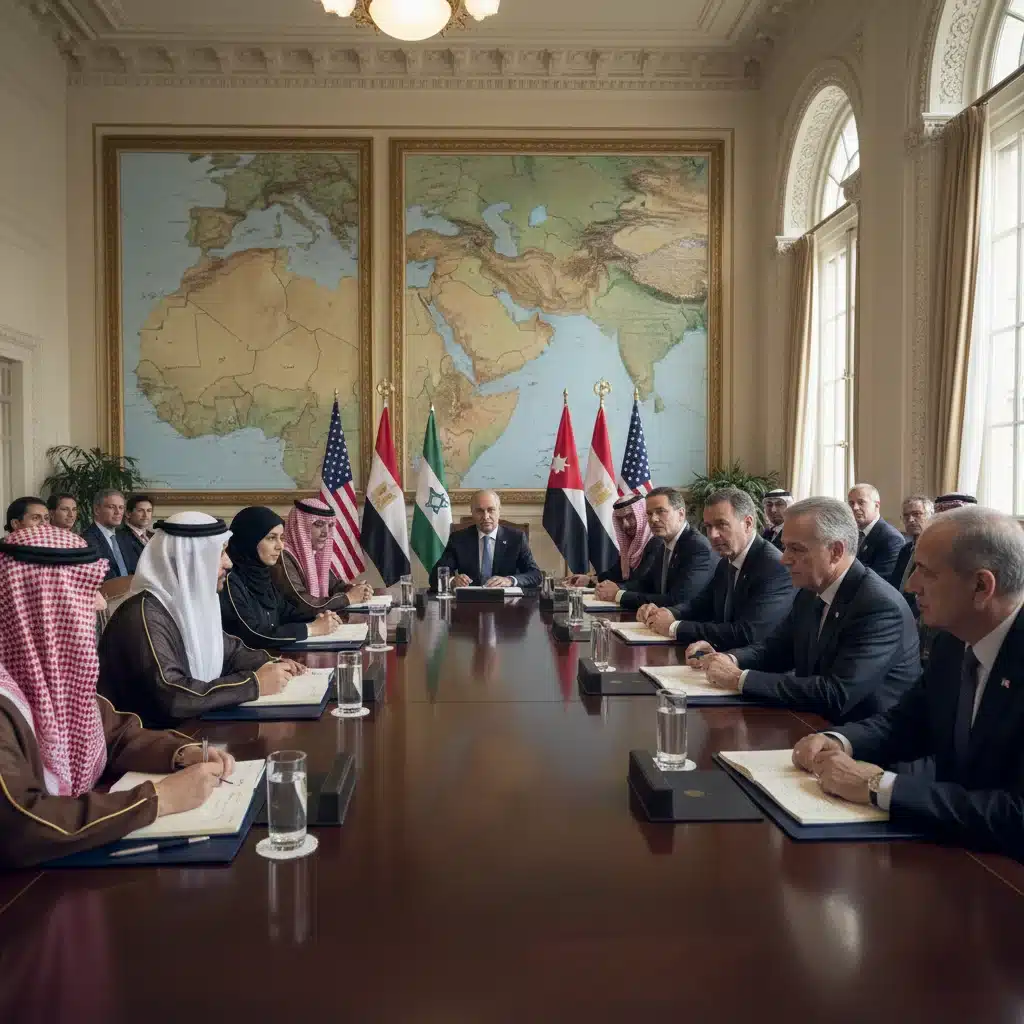
Recent peace talks, often conducted behind closed doors or with carefully managed public appearances, represent the most visible manifestation of these intensified diplomatic efforts. These discussions are multifaceted, addressing a range of issues from direct conflict resolution between specific states or factions to broader regional security architectures, economic cooperation, and humanitarian concerns. The success or failure of these talks has profound implications, not just for the immediate parties involved but for the entire international community. This article will delve deep into the motivations behind this intensified U.S. Middle East Diplomacy, analyze the structure and participants of recent peace talks, evaluate their progress, and ultimately, explore the potential outcomes that could reshape the region for decades to come.
Anúncios
The Shifting Sands of U.S. Middle East Diplomacy: A Historical Perspective
To fully grasp the current intensity of U.S. Middle East Diplomacy, it is essential to contextualize it within a historical framework. The United States’ involvement in the Middle East has been characterized by periods of intense engagement and relative withdrawal, driven by shifting global priorities, energy needs, and geopolitical rivalries. From the Cold War era, where the region was a battleground for ideological supremacy, to the post-9/11 period, which saw a heightened focus on counter-terrorism, U.S. policy has always been dynamic.
Anúncios
Early U.S. diplomatic efforts in the region largely revolved around securing oil supplies and containing Soviet influence. The establishment of Israel in 1948 introduced a new and enduring dimension to U.S. foreign policy, leading to decades of efforts to mediate the Israeli-Palestinian conflict. The Camp David Accords in 1978 and the Oslo Accords in the 1990s stand as significant, albeit ultimately incomplete, examples of successful U.S. brokerage in the peace process.
The 21st century brought new challenges. The Iraq War, the Arab Spring uprisings, and the rise of ISIS fundamentally altered the regional power dynamics and forced a re-evaluation of U.S. strategy. While some administrations pursued a more interventionist approach, others sought to pivot towards other global priorities, leading to perceptions of disengagement. However, the underlying strategic interests – stability, counter-terrorism, freedom of navigation, and preventing the proliferation of weapons of mass destruction – have remained constant.
The current intensification of U.S. Middle East Diplomacy can be seen as an attempt to reassert American leadership and influence, not necessarily through military might, but through diplomatic prowess and coalition-building. This involves a recognition that a stable and prosperous Middle East is in the best interest of the United States and the global community. The lessons learned from past engagements, both successes and failures, are informing the present strategy, aiming for more sustainable and inclusive peace solutions. The focus is increasingly on regional solutions, empowering local actors, and fostering economic interdependence as a pathway to long-term stability.
Key Drivers Behind the Intensified U.S. Engagement
Several critical factors are driving the current surge in U.S. Middle East Diplomacy. Understanding these drivers is essential to appreciating the motivations and objectives behind the ongoing peace talks and broader diplomatic initiatives. These factors are interconnected, creating a complex web of challenges and opportunities that demand a robust diplomatic response.
Regional Destabilization and Conflict Prevention
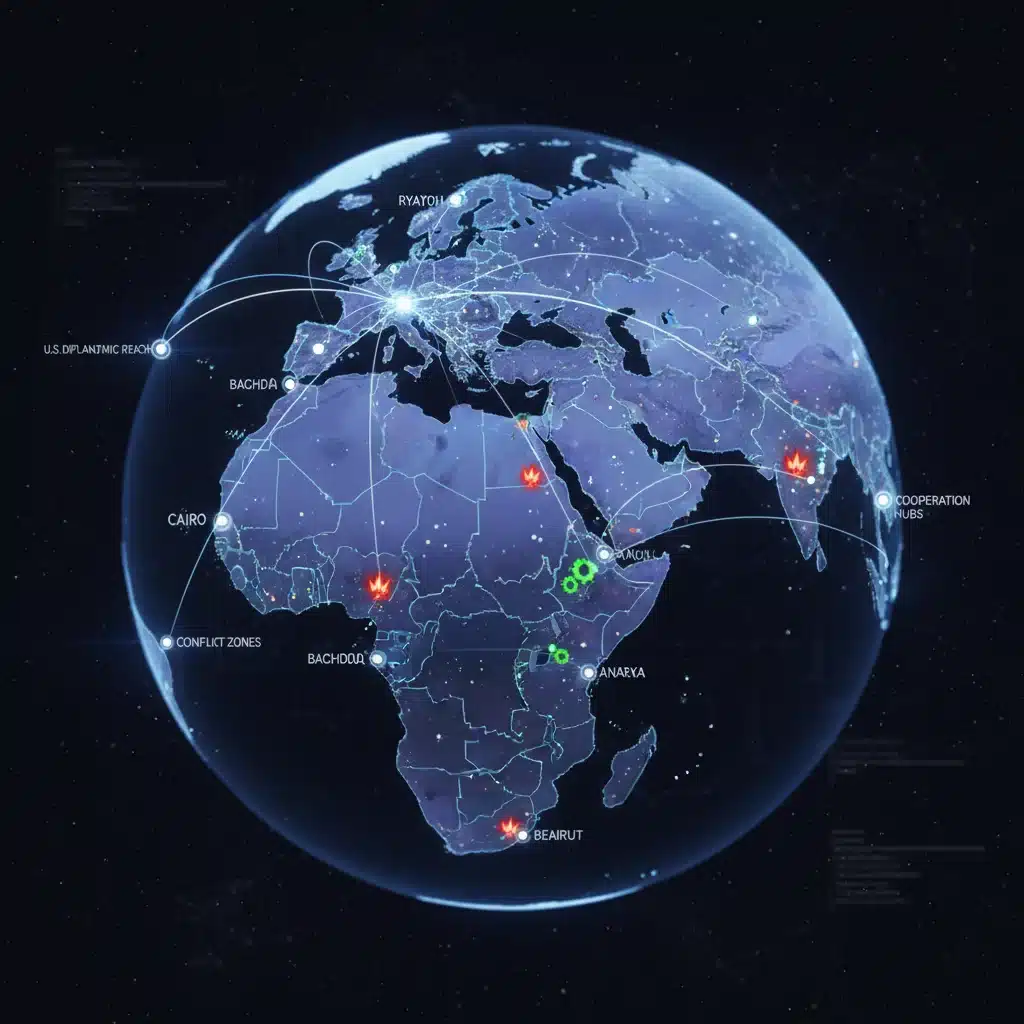
The Middle East remains a hotbed of regional conflicts, proxy wars, and internal strife. From the ongoing civil war in Yemen to the political instability in Lebanon and the persistent tensions surrounding Iran’s nuclear program, the potential for wider escalation is ever-present. The U.S. recognizes that these conflicts not only cause immense human suffering but also create breeding grounds for extremist groups and disrupt global trade routes. Diplomatic efforts are thus geared towards de-escalation, conflict resolution, and the establishment of mechanisms for regional dialogue to prevent future outbreaks of violence.
Countering Malign Influence
The vacuum created by perceived U.S. disengagement in previous years has allowed other global and regional powers to expand their influence. Russia, China, and even regional actors like Iran and Turkey have sought to reshape the geopolitical landscape to their advantage. U.S. Middle East Diplomacy aims to counter these malign influences by strengthening alliances, offering alternatives to coercive partnerships, and promoting a rules-based international order. This involves robust engagement with traditional partners while also seeking to build bridges with states that may have previously been viewed with suspicion.
Economic Interests and Energy Security
Despite global shifts towards renewable energy, the Middle East remains a crucial source of global oil and gas. Ensuring the free flow of energy resources and protecting vital shipping lanes through the Persian Gulf and the Red Sea is a paramount U.S. economic and security interest. Diplomatic efforts often include discussions on energy security, trade agreements, and investments that can foster economic growth and reduce dependence on volatile commodity markets. Furthermore, the U.S. seeks to promote economic diversification within the region, creating more resilient economies less susceptible to external shocks.
Humanitarian Concerns and Human Rights
The numerous conflicts and political repression in the Middle East have resulted in severe humanitarian crises, mass displacement, and widespread human rights abuses. The U.S., while balancing its strategic interests, often incorporates humanitarian considerations and human rights advocacy into its diplomatic agenda. This includes providing aid, supporting international organizations, and pressuring governments to uphold human rights standards. While often a point of contention, the promotion of democratic values and good governance is seen as a long-term strategy for fostering stability and reducing the root causes of conflict.

Breakdown of Recent Peace Talks: Actors, Agendas, and Challenges
The recent intensification of U.S. Middle East Diplomacy is best understood by examining specific peace talks and diplomatic initiatives. These discussions vary widely in scope, participants, and objectives, reflecting the multifaceted nature of regional challenges. From bilateral engagements to multilateral forums, each negotiation carries its own set of complexities and potential for breakthroughs or setbacks.
The Israeli-Palestinian Conflict: A Lingering Challenge
Despite numerous attempts over decades, a comprehensive resolution to the Israeli-Palestinian conflict remains elusive. While direct, high-level peace talks have been less frequent in recent years, U.S. Middle East Diplomacy continues to focus on de-escalation, humanitarian aid to Palestinians, and promoting confidence-building measures. Recent efforts have involved encouraging dialogue between Israeli and Palestinian officials on specific security and economic issues, aiming to lay groundwork for future political negotiations. Challenges include deeply entrenched positions, internal political divisions on both sides, and the impact of regional events on the conflict dynamics. The U.S. role often involves managing expectations, preventing escalation, and maintaining the possibility of a two-state solution, even if its immediate realization seems distant.
Normalization Agreements: Expanding Regional Cooperation
The Abraham Accords, facilitated by the previous U.S. administration, marked a significant shift in regional dynamics by normalizing relations between Israel and several Arab nations. Current U.S. Middle East Diplomacy seeks to build upon these agreements, encouraging further normalization and expanded cooperation in areas such as trade, technology, and security. These talks often involve discreet negotiations with other Arab states, exploring the political and economic incentives for establishing formal ties with Israel. The primary challenge lies in balancing the benefits of normalization with the unresolved Israeli-Palestinian issue, which remains a central concern for many Arab populations.
Iran Nuclear Deal (JCPOA) Negotiations: A Thorny Path
The negotiations surrounding Iran’s nuclear program and the potential resuscitation of the Joint Comprehensive Plan of Action (JCPOA) have been a cornerstone of recent U.S. Middle East Diplomacy. These talks, often indirect, involve the U.S. and its European allies seeking to bring Iran back into compliance with nuclear restrictions in exchange for sanctions relief. The agenda is highly technical, focusing on uranium enrichment levels, centrifuges, and international inspections. Major challenges include deep distrust between Washington and Tehran, Iran’s demands for guarantees, and the influence of regional rivals like Saudi Arabia and Israel, who view Iran’s nuclear ambitions as a direct threat. The potential outcomes range from a revived deal, which could stabilize the region, to a complete breakdown, potentially leading to increased tensions and a nuclear arms race.
Yemen Peace Efforts: A Humanitarian Imperative
The civil war in Yemen has caused one of the world’s worst humanitarian crises. U.S. Middle East Diplomacy has focused on supporting UN-led peace efforts, brokering ceasefires, and providing humanitarian assistance. Talks typically involve representatives from the internationally recognized government, the Houthi movement, and regional powers like Saudi Arabia. The agenda centers on a comprehensive political settlement, power-sharing arrangements, and humanitarian access. Challenges include the fragmentation of actors, external interference, and the deep-seated grievances that fuel the conflict. Success would mean an end to hostilities, a unified government, and a massive reconstruction effort.
Regional Security Dialogues: Building Bridges
Beyond specific conflict resolution, U.S. Middle East Diplomacy is increasingly promoting broader regional security dialogues. These forums bring together diverse stakeholders to discuss common threats such as terrorism, maritime security, and climate change. Examples include the Negev Forum, which brings together Israel and Arab states, and various GCC+ U.S. meetings. The agenda often includes intelligence sharing, joint military exercises, and economic development initiatives. The main challenge is overcoming historical animosities and building trust among states with differing geopolitical priorities. Potential outcomes include enhanced regional cooperation, reduced tensions, and a more integrated security architecture.
Potential Outcomes and Their Implications
The intensifying U.S. Middle East Diplomacy and the ongoing peace talks carry a range of potential outcomes, each with significant implications for the region and beyond. These outcomes are not mutually exclusive and can often interact in complex ways, shaping the future trajectory of the Middle East.
Increased Regional Stability and De-escalation
One of the most hoped-for outcomes is a significant increase in regional stability. Successful peace talks, particularly those addressing long-standing conflicts like Yemen or de-escalating tensions with Iran, could lead to a reduction in proxy wars, a decrease in military confrontations, and a more predictable security environment. This would free up resources for economic development, encourage foreign investment, and improve the daily lives of millions of people. Greater stability would also reduce the flow of refugees and migrants, alleviating pressure on neighboring countries and Europe. The success of U.S. Middle East Diplomacy in fostering such an environment would be a major foreign policy achievement.
Enhanced Economic Cooperation and Prosperity
Beyond security, many diplomatic initiatives aim to foster greater economic integration and prosperity. Expanded normalization agreements, coupled with regional security dialogues, can pave the way for new trade routes, joint infrastructure projects, and technology transfers. This could lead to diversified economies less reliant on oil, creating jobs and opportunities for the region’s large youth population. Increased economic interdependence often acts as a deterrent to conflict, as states have more to lose from instability. The U.S. plays a crucial role in facilitating these economic partnerships, offering expertise, investment, and market access.
Strengthened Alliances and Partnerships
U.S. Middle East Diplomacy also seeks to strengthen existing alliances and forge new partnerships. This involves robust security cooperation with traditional allies like Saudi Arabia, UAE, and Jordan, while also engaging with emerging partners. The goal is to build a more cohesive front against common threats, share intelligence, and coordinate responses to regional challenges. Stronger alliances can provide a bulwark against external aggression and internal destabilization, enhancing collective security. However, this also requires careful navigation of intra-regional rivalries and ensuring that U.S. engagement does not inadvertently exacerbate existing tensions.
Challenges and Risks: The Road Ahead
Despite the intensified efforts, U.S. Middle East Diplomacy faces significant challenges and risks. The region’s inherent complexities, coupled with the legacy of past interventions and the presence of powerful non-state actors, mean that success is far from guaranteed.
Deep-Seated Mistrust and Historical Grievances
Centuries of conflict, colonialism, and competing narratives have created deep-seated mistrust among various states and communities in the Middle East. Overcoming these historical grievances requires sustained diplomatic engagement, empathy, and a willingness to compromise. The U.S. must navigate these sensitivities carefully, avoiding actions that could be perceived as biased or undermining the sovereignty of regional actors.
Internal Political Instability
Many Middle Eastern countries are grappling with internal political instability, economic hardship, and popular discontent. These internal dynamics can significantly impact the feasibility and durability of peace agreements. A government facing domestic challenges may be less willing to make concessions or may struggle to implement agreements, even if reached. U.S. Middle East Diplomacy must therefore consider the internal political contexts of its partners and adversaries alike.
External Interference and Proxy Wars
The Middle East remains a battleground for external powers, with countries like Iran, Turkey, and Russia often supporting different factions in regional conflicts. This external interference complicates peace efforts, as it can prolong conflicts and undermine diplomatic solutions. U.S. Middle East Diplomacy needs to address these external dimensions, either through direct engagement with these powers or by empowering regional actors to resist such interference.
Extremist Ideologies and Non-State Actors
The persistence of extremist ideologies and the presence of powerful non-state actors like ISIS and various militant groups pose a continuous threat to stability. These groups often thrive on conflict and instability, actively working to derail peace processes. U.S. Middle East Diplomacy must integrate counter-terrorism efforts with broader diplomatic initiatives, recognizing that a comprehensive approach is necessary to address the root causes of extremism.
The Future of U.S. Middle East Diplomacy
The intensified U.S. Middle East Diplomacy reflects a pragmatic recognition that sustained engagement, rather than disengagement, is necessary to protect U.S. interests and promote a more stable global order. The Biden administration’s approach emphasizes multilateralism, regional ownership, and a focus on de-escalation and economic development. This shift aims to move beyond a purely security-centric approach to one that fosters long-term, sustainable peace.
Looking ahead, the success of U.S. Middle East Diplomacy will hinge on several key factors. Firstly, consistency and predictability in U.S. foreign policy are paramount. Frequent shifts in strategy or rhetoric can undermine trust and make it difficult for regional partners to commit to long-term agreements. Secondly, the U.S. must continue to listen to and empower regional voices, ensuring that solutions are locally owned and tailored to specific contexts, rather than imposed from the outside. Thirdly, a balanced approach that addresses both security concerns and economic and humanitarian needs will be crucial. Peace cannot be sustained without prosperity and justice.
The role of technology and innovation will also become increasingly important. Digital diplomacy, data analysis, and advanced communication tools can facilitate negotiations, track progress, and build consensus. Furthermore, addressing cross-cutting issues like climate change, water scarcity, and food security – which are increasingly impacting the Middle East – will require collaborative diplomatic efforts. The U.S. can play a vital role in bringing scientific expertise and resources to bear on these challenges.
Ultimately, the path to a peaceful and prosperous Middle East is long and fraught with challenges. However, the current intensification of U.S. Middle East Diplomacy, characterized by a renewed commitment to dialogue, cooperation, and a comprehensive approach, offers a glimmer of hope. While immediate breakthroughs may be rare, the sustained effort to build bridges, resolve conflicts, and foster mutual understanding is a worthwhile endeavor that holds the promise of a more stable and secure future for all.
Conclusion: A Diplomatic Marathon, Not a Sprint
The intensifying U.S. Middle East Diplomacy is not a fleeting moment but a testament to the enduring strategic importance of the region. The breakdown of recent peace talks reveals a complex mosaic of actors, agendas, and formidable challenges. From the intractable Israeli-Palestinian conflict to the intricate dance around Iran’s nuclear program and the humanitarian imperative in Yemen, each diplomatic front demands nuanced understanding and persistent engagement. The potential outcomes, ranging from enhanced regional stability and economic prosperity to strengthened alliances, offer a hopeful vision. However, the road is paved with deep-seated mistrust, internal instabilities, and external interferences that could easily derail progress.
The current U.S. administration’s approach, emphasizing multilateralism and regional ownership, signifies a mature evolution in foreign policy, moving beyond reactive measures to proactive peacebuilding. Success in this diplomatic marathon will require not only strategic acumen but also patience, consistency, and an unwavering commitment to fostering dialogue even amidst profound disagreements. The future of the Middle East, and indeed global stability, will be significantly shaped by the efficacy and sustainability of these intensified U.S. diplomatic efforts. It is a journey of continuous negotiation, adaptation, and the relentless pursuit of shared interests in a region often defined by divergence. The world watches, hopeful that these efforts will ultimately pave the way for a more peaceful and prosperous era.
